Does duct cleaning help allergies in New Jersey

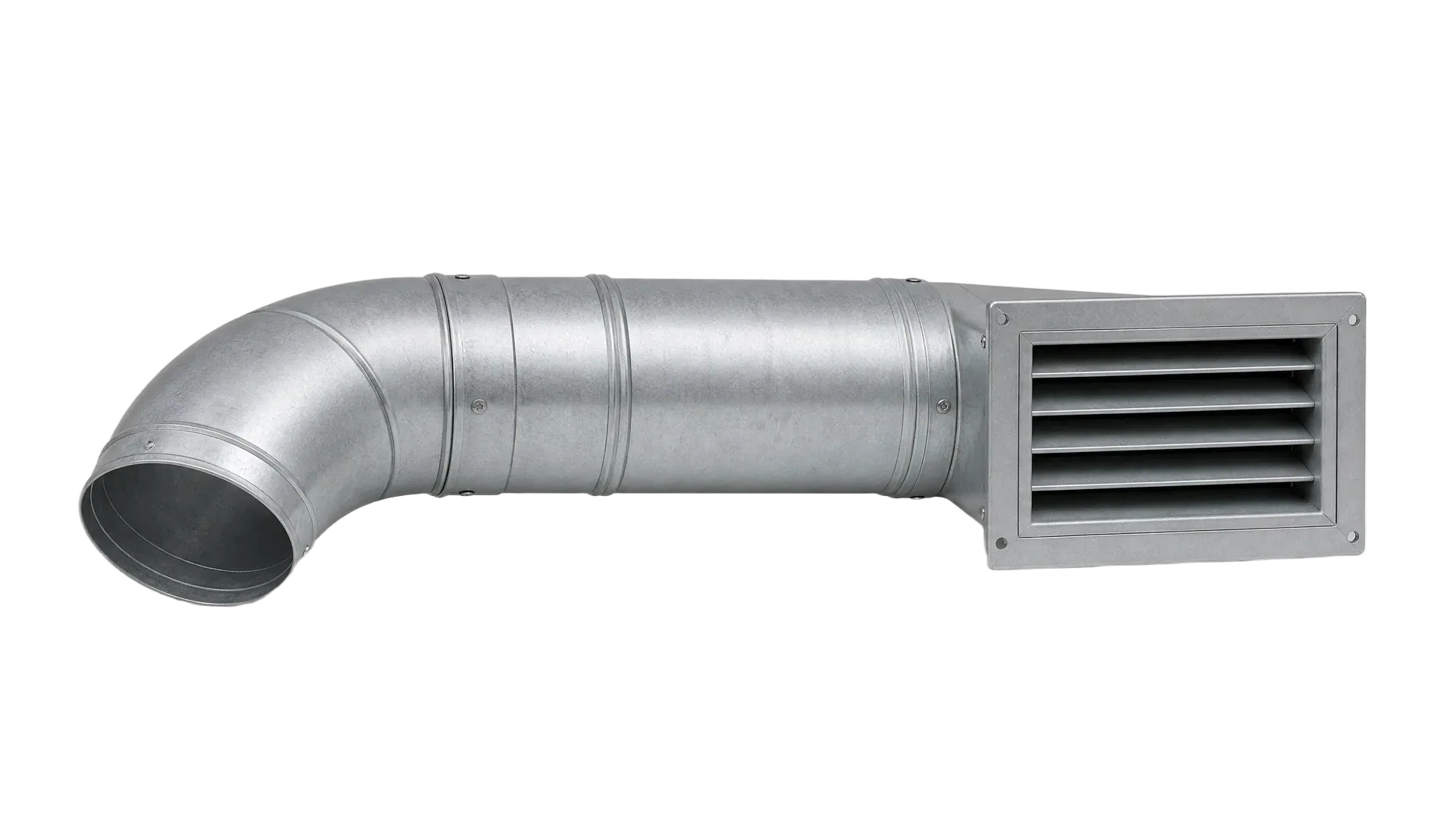
A galvanized metal round duct with a 90-degree elbow connected to a rectangular louvered vent grille, shown against a plain gray background.
Let a pro reach out

Cleaning your ducts can ease allergies if dust, pet dander, or pollen has built up inside them and keeps getting blown back into the air every time the system runs. It will not help if your allergies come from something the ducts never touch, like what is already in the air outside or in the room itself. New Jersey summers get sticky enough that air conditioners run long hours pulling air through those same ducts, so dust and dander sitting in there gets more chances to circulate on a humid July day than it would in milder weather. If your filter is always gray within weeks, or you notice sneezing gets worse right after the heat or AC kicks on, that points to the ducts. A clean duct system will not fix seasonal pollen allergies, but it can cut down what is stirred up inside your own home.


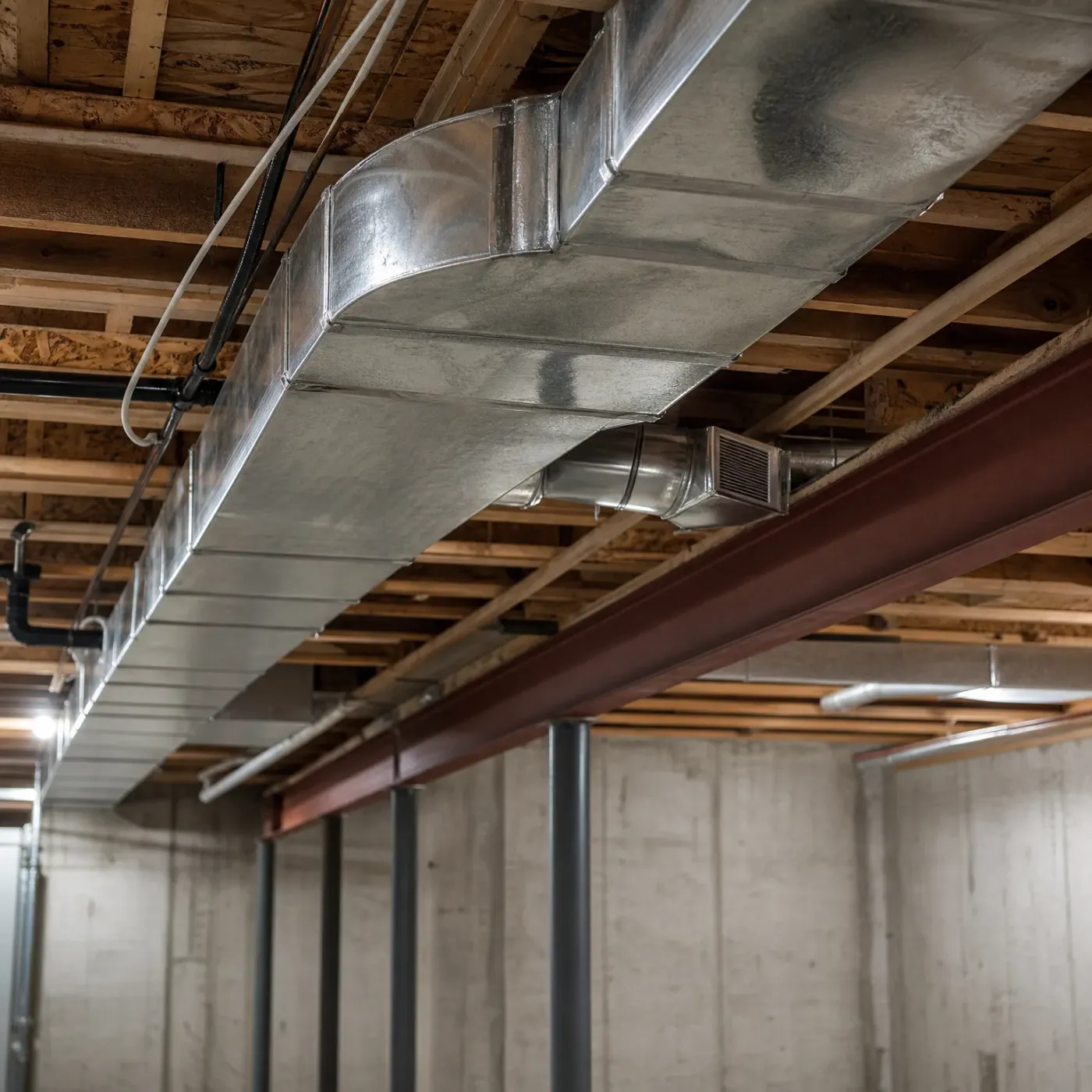
Unfinished basement with bare concrete walls and floor, showing exposed wood floor joists overhead with sheet-metal rectangular ductwork, insulated flexible ducts, and pipes.
Here the ducts are just moving air. No dust tracked along the metal, no buildup sitting in the trunk lines waiting to blow out the next vent.
Basement ceiling with galvanized sheet metal rectangular ducts and round pipes running between wooden joists above a bare concrete wall and floor.
Dust and pet hair coat the inside of the trunk line and the flex runs, and the blower pushes a little of it into every room each time it kicks on.

A crew working your ducts isn't just running a shop vac down the supply vents. Most of what's built up sits in the trunk line and the first stretch of flex duct, not spread evenly through the whole system, so that's where the work concentrates. A brush or whip gets fed down each branch while a vacuum unit holds suction at the trunk line, pulling loosened dust out rather than letting it scatter back into the room. The return side is usually dirtier than the supply side, since that's the air pulled in off your floors before it ever reaches the filter. Register boots and the few feet of flex right behind them get missed more often than people expect, and that's often where pet hair sits thickest. None of it holds if the filter doesn't fit tight in its slot afterward, since a gap there lets the ducts start filling back up within months. And if the coil behind the blower has its own coating of dust, cleaning the ducts won't stop that dust from working its way through the house anyway.


How a duct cleaning actually works

  • Dust and dander settle mostly in the trunk line and the first few feet of flex duct off the supply plenum, not evenly through the whole run.
  • A cleaning crew runs a brush or whip down each branch while a vacuum unit holds negative pressure at the trunk line, so loosened debris pulls out instead of scattering into the room.
  • The return side usually holds more buildup than the supply side, since that is the air coming back in off your floors before the filter catches it.
  • A new filter fitted tight in its slot, with no gap at the edges, is what keeps the ducts from refilling with the same dust within a season.
  • Register boots and the first few feet of flex right behind them often get missed, and that is where pet hair tends to collect the thickest.
  • If the coil behind the blower is coated with dust, cleaning the ducts alone will not stop that dust from recirculating through the house.
A smiling man with dark curly hair in a dark green henley shirt sits on a light sofa in a living room with large windows, a lamp, shelving, a stone fireplace, and a bowl of popcorn in the foreground.
A smiling man in a dark long-sleeved henley shirt sits on a beige sofa in a living room, with a bowl of popcorn and a remote on the table in the foreground and shelves, a lamp, and a doorway behind him.
A smiling man with graying hair and stubble in a blue henley shirt sits on a gray sofa with cushions in a living room, with a bowl of popcorn on a wooden table in the foreground.
A smiling man in a dark green long-sleeve shirt reclines on a sofa in a dimly lit living room, with a bowl of popcorn on a side table in the foreground and a bookshelf, lamp, and houseplant behind him.

Humidity feeds dust mites

New Jersey summers run humid, and dust mites multiply in that moisture. Their droppings collect in ductwork and are a common allergy trigger worth ruling out.

I'm done searching

Pollen season runs months

Trees, grass, and ragweed each have their own stretch here, so pollen can work its way into return air and settle in the ducts for much of the year.


I'm done searching

After The Cleaning, Two Outcomes

Clean and done

  • Dust stops recirculating through the registers, so less of it settles back into the air you breathe.
  • A visible layer of pet hair and lint in the trunk line is gone, and nothing is left to shed off the metal.
  • Your gas furnace and AC blower push air through ducts that no longer coat each cycle with buildup.
  • If the ducts were the source, symptoms that showed up most when the system kicked on should ease.
  • You are not left guessing anymore whether the ductwork was ever the problem.

Clean and still sneezing

  • Mold on a cold air return gets cleaned off the metal but keeps growing back if moisture is still getting in.
  • Pollen drifting in through open windows during a New Jersey spring has nothing to do with what is inside the ducts.
  • Pet dander settling into carpet and upholstery keeps circulating no matter how clean the duct walls are.
  • A leaky duct seam in the basement or attic can keep pulling in dust and insulation fiber after the cleaning.
  • If the real source was never inside the ductwork, the air feels about the same a week later.
A woman with dark hair in a bun reclines on a gray sofa with her eyes closed and a slight smile, wrapped in a cream knit sweater and blanket, with an open book resting in the foreground and a lit lamp in the dim room behind.
A smiling bearded man in a dark crewneck sweater sits at a dinner table with a lit candle, glasses of wine and water, and plates of food in the foreground, with a lamp, framed art and a potted plant behind him.
Galvanized sheet metal trunk ductwork with a round branch and register running beneath wood floor joists in an unfinished basement, alongside pipes, wiring, a steel beam and concrete walls.

Let someone else find the pro

Skip calling around for someone who cleans ducts.

Send it once and finding someone is no longer on you.

Hand it over

You only hire the pro if you want to.

Empty concrete-walled basement room with galvanized rectangular and round HVAC ducts and pipes running along the exposed wood-joist ceiling.
Before you get your ductwork cleaning
Unfinished basement with galvanized sheet-metal ductwork and pipes beneath wood joists, a gray furnace unit at left, insulated plastic-covered walls over a concrete foundation, and a bare concrete floor.
After you get your ductwork cleaning
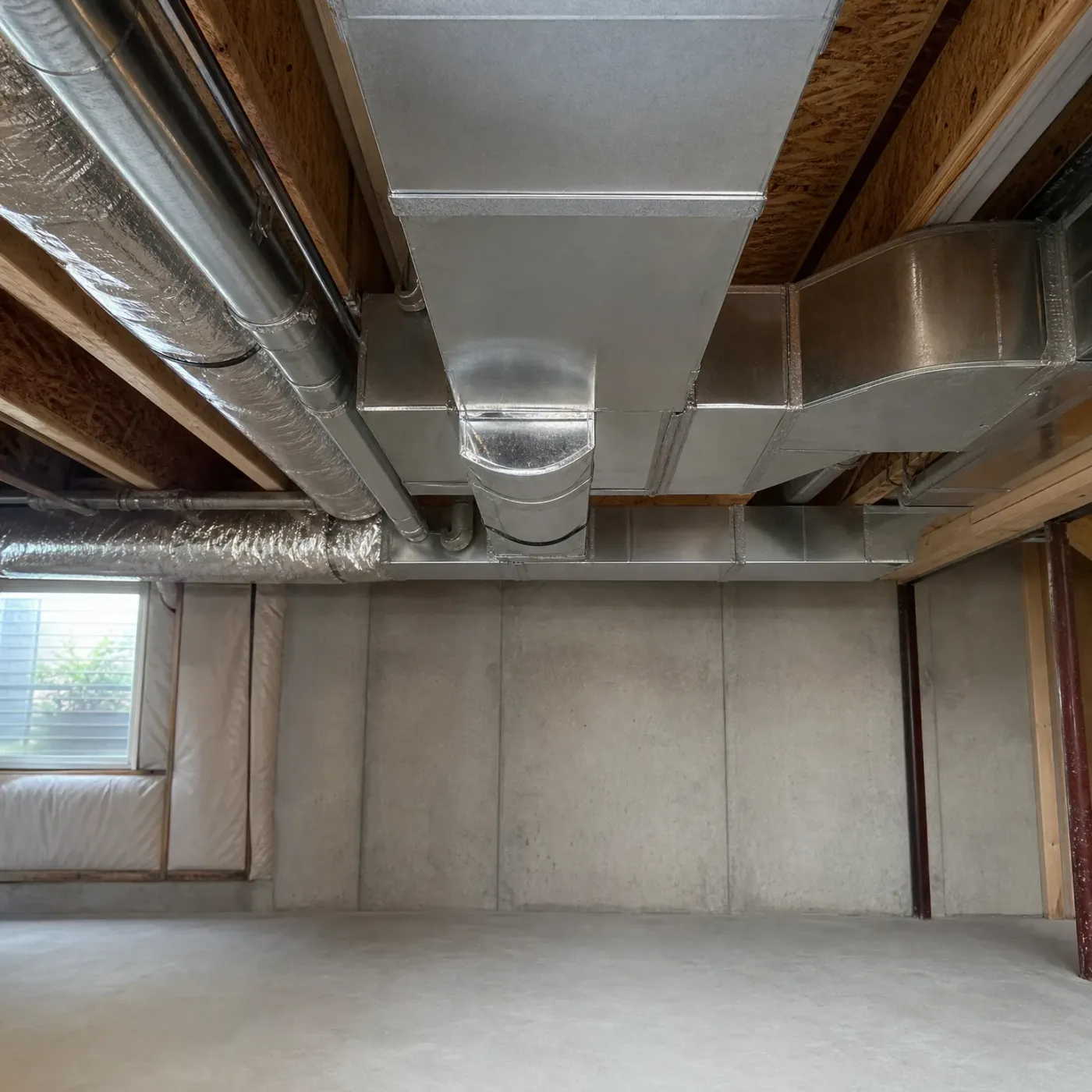
Empty unfinished basement with bare concrete walls and floor, showing galvanized sheet metal ductwork, insulated flexible duct, and pipes running along the wood-framed ceiling, with a small window at left.

Ducts running clean

Air moves through the trunk line and out the vents without picking anything up. No dust coating the metal, no pet hair sitting in the flex runs waiting for the blower to kick it loose. What comes out the register is just air.
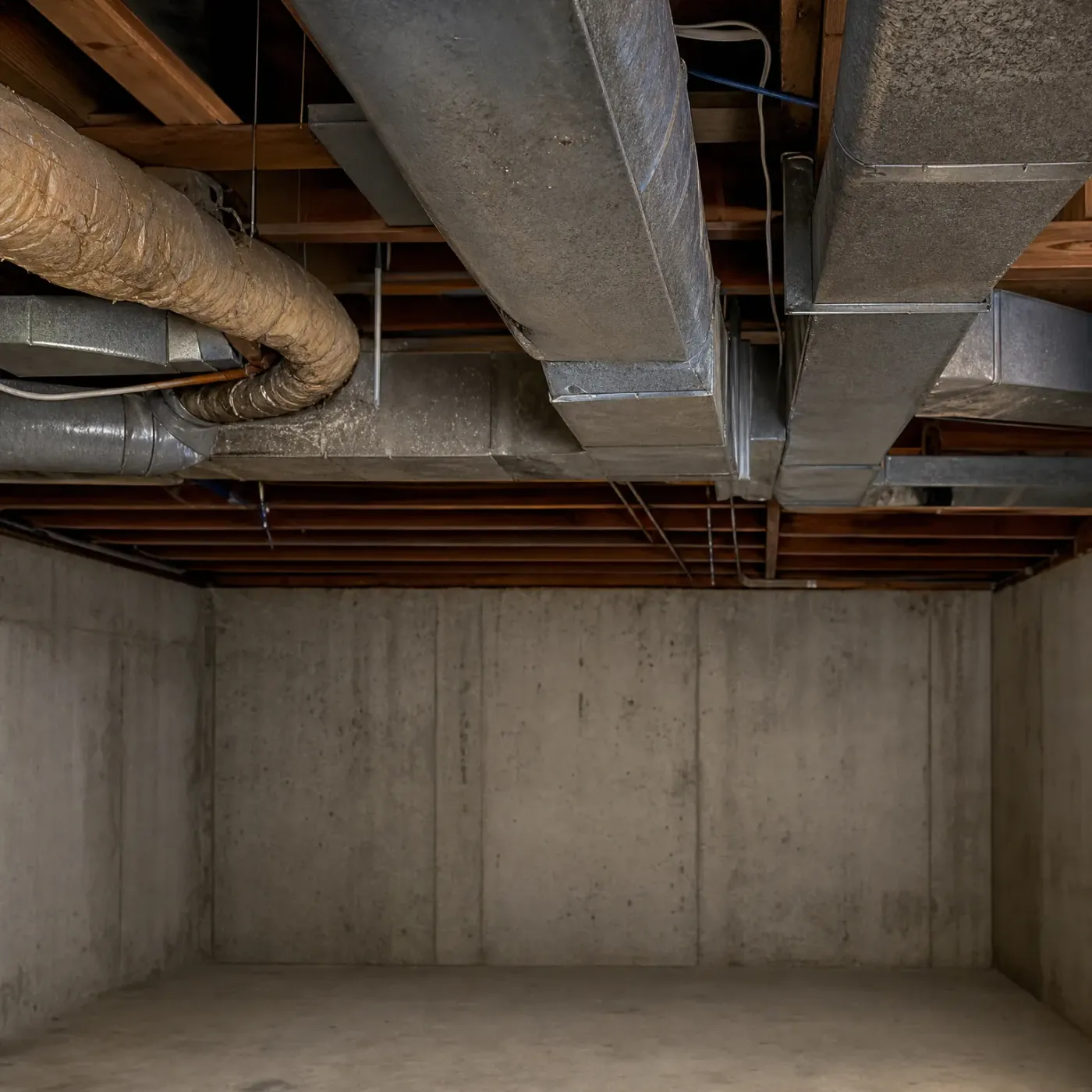
Empty basement room with bare concrete walls and floor, with exposed wooden joists, sheet-metal HVAC ducts, an insulated flexible duct, and pipes running across the ceiling.

Ducts holding buildup

Dust and pet hair have coated the sheet metal and settled into the flex duct. Every time the furnace or AC kicks on, the blower stirs some of it loose and sends it back through the house, so the same dust keeps showing up in the air you breathe.

Power costs 22.48 cents per kilowatt-hour statewide

At 22.48 cents per kilowatt-hour, running your blower longer than it needs to costs more here than almost anywhere else. A clogged duct system makes the fan work harder to push the same air, and you pay for that extra runtime on every bill, all year.

EIA-861 2025 statewide residential average
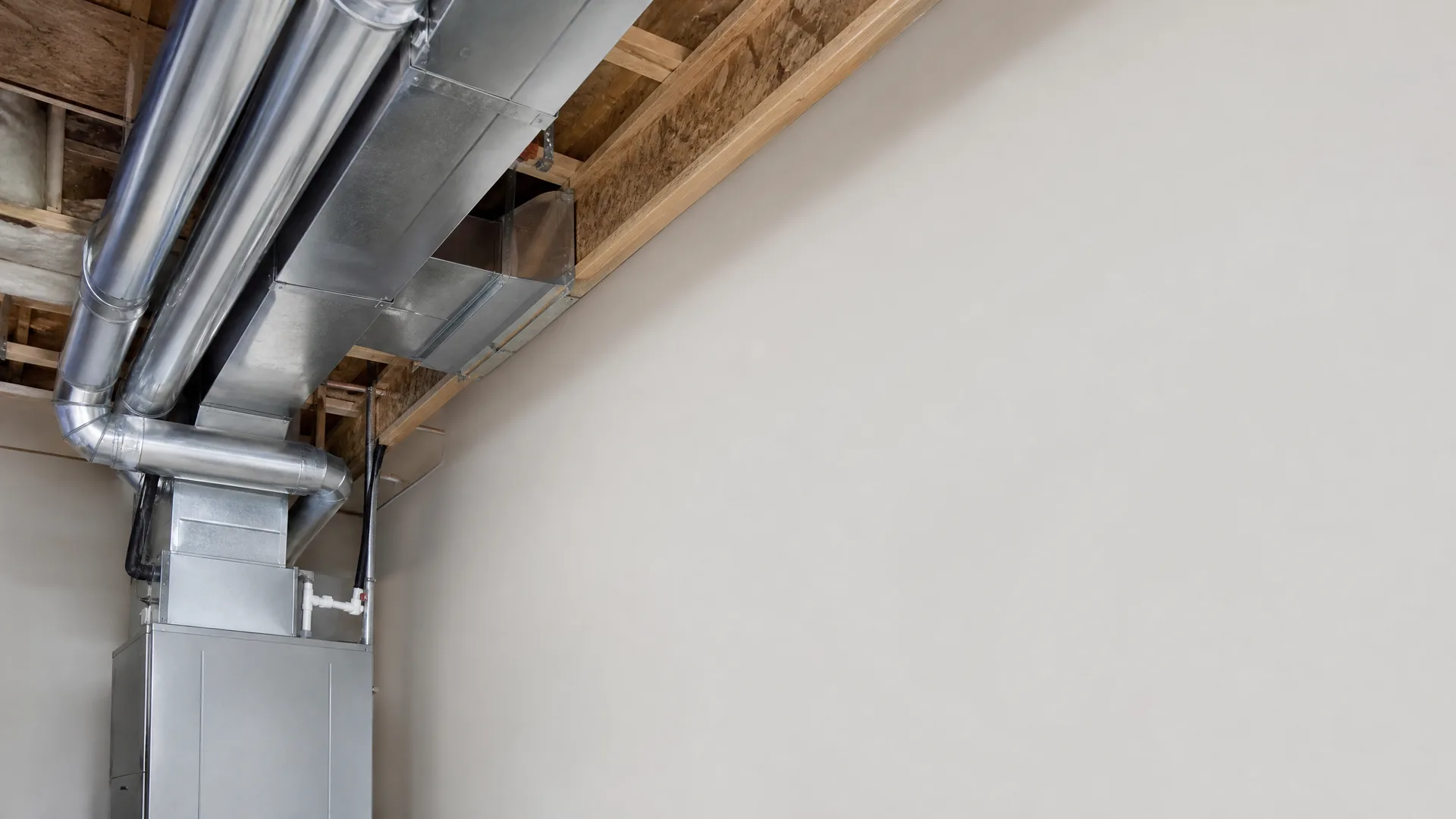
Galvanized sheet-metal ductwork and round pipes running along an exposed wood-joist ceiling with insulation, above a furnace unit beside a blank painted wall.

What you'd notice in your house

If the ducts are the cause, you already know the pattern. The sneezing starts a minute or two after the furnace or AC kicks on, not before. Dust shows up on the furniture again days after you wiped it down. The vents themselves have a ring of gray buildup around the edges. None of that proves the ducts are the only source, but if you see it, cleaning them is worth doing before you spend more on air filters or a purifier that won't touch what's sitting in the trunk line.
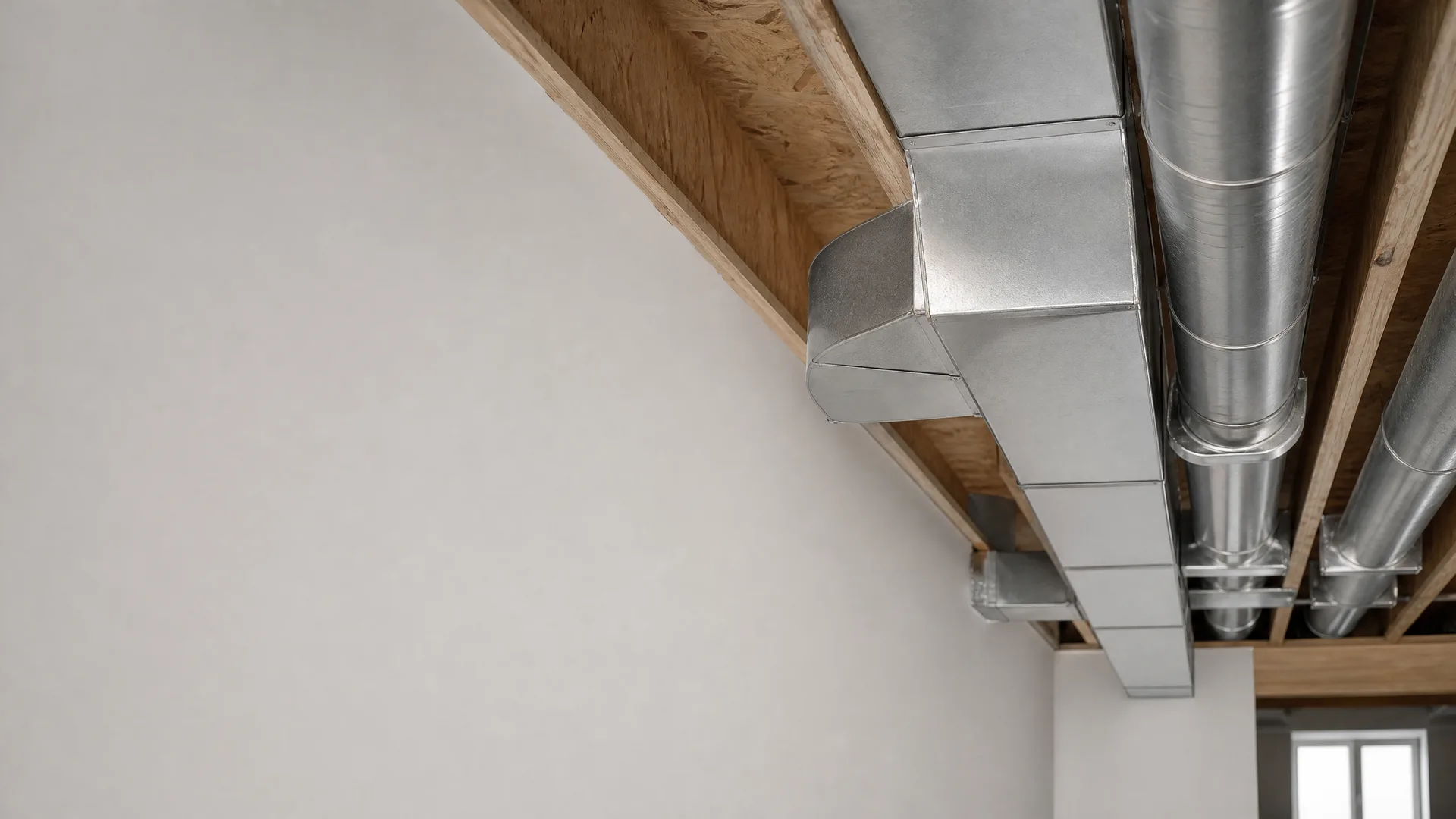
Galvanized rectangular and round sheet-metal ductwork mounted beneath an exposed wooden joist and OSB ceiling, next to a plain white wall and a window at lower right.

What it puts at risk left alone

A system that keeps recirculating dust and dander doesn't stay the same, it adds to itself. Every pass through the blower pushes a little more out the vents and a little more settles back in the ducts, so the buildup grows across a New Jersey summer and into the months the furnace runs. Meanwhile you're paying 22.48 cents per kilowatt-hour to move air that's doing your allergies no good, and whoever in the house reacts to dust or pet dander keeps reacting, season after season, until something changes.

A wooden table in the foreground holds a closed laptop and a ceramic mug of coffee, with a spindle-back wooden chair behind it, a beige wall with paneled wainscoting, a window at left, and a kitchen counter with a cutting board, bowl of fruit and greenery at right.

So, does it help

If dust and dander have been building up in your trunk line and flex runs, cleaning them out takes away a source that's been feeding your allergies every time the furnace or AC kicks on. If your allergies come from something the ducts never touch, cleaning them won't change how you feel. The pattern in your house, sneezing on startup, dust back on the furniture within days, tells you which one you're dealing with.

Either way, finding out shouldn't mean a string of phone calls, explaining the same symptoms to every company that picks up, and lining up quotes to see who's fair. Send the form once and that part is off your plate. You'll be dealing with a contractor who can look at your actual ducts, not another search result.


A large weathered ceramic vase and a shallow wooden bowl sit on a rustic wooden table beside a window with linen curtains, with a blurred sofa with cushions and a hanging fabric panel in the background.
A single-story stone-clad house with low-voltage path lights along a gravel bed and lawn at dusk, with a tree line and orange sky on the horizon.

Ductwork Cleaning

One request and it's handed off

Duct and vent cleaningDucts or ventsNew Jersey
Step 1 of 2

What ZIP code is the job in?

  • A living room corner with a beige upholstered armchair holding a green pillow and knitted throw, a ceramic table lamp on a side table, white built-in bookshelves, a framed landscape print, a curtained window, and a round wooden table with a lit candle and bowl in the foreground.
    • A local pro who cleans ducts gets in touch with you.
    • Your duct cleaning request goes to a local pro who does this work.
  • A lit table lamp with a tapered beige fabric shade and a speckled rounded ceramic base sits on a wooden surface beside a potted plant, with curtains and a window in the background.
    • One request and the duct cleaning stops waiting on you.
    • Once you send the form, finding a pro is off your list.
  • A cream upholstered armchair with a gray pillow and knit throw sits beside a wooden table with a eucalyptus-filled vase, in front of a lit stone fireplace with stacked firewood.
    • Answer a few questions instead of calling shop after shop.
    • Describe your ductwork job once, to one pro.
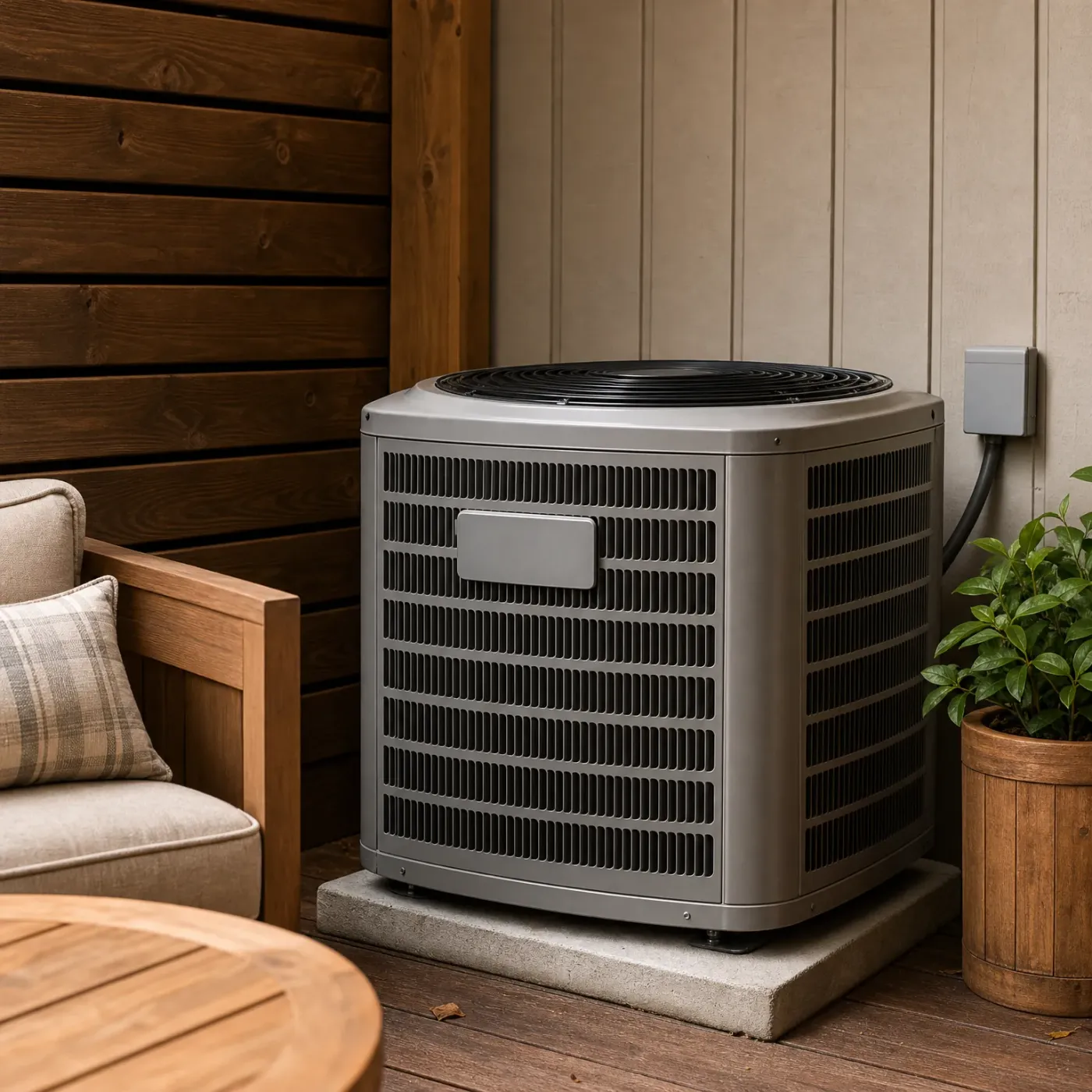
  • A gray outdoor air conditioner condenser unit on a concrete pad beside a wood-sided wall, with a horizontal wood slat fence, a cushioned patio chair, a wooden table, and a potted green plant nearby.
    • Only one pro gets your request, so you hear from one company.
    • Your request stays with one local pro.