






Is duct cleaning worth it in Newark, NJ

Get matched

You typed that question because something's making you wonder. Maybe it's dust on the registers, or someone in the house with allergies that won't quit, or you just moved into a place and don't know what's sitting in those ducts. In Newark and around Essex County, your system runs hard in both directions, cold gas heat all winter and AC working against the humidity all summer, and the ductwork carries that air through your whole house every day. Whether cleaning is worth it depends on what's actually in your ducts right now, not on a general rule. That's not something to guess at from a search result. The way to know is to have someone who does this look at your specific setup and tell you straight. Fill out the form and you'll be matched with a contractor who serves Newark and the surrounding area. Once that's sent, you're not the one tracking down someone trustworthy anymore. That part's off your plate.

For most homes, duct cleaning is not something you need on a schedule. It is worth doing when there is a real reason: a renovation that left drywall dust in the system, a rodent or pest problem in the ducts, visible mold growth, or registers that blow out dust no matter how often you change the filter. Newark homes with forced-air heat run that system hard from October through April, which pushes whatever is in the ducts through every room in the house all winter. If nobody in the house has allergies and you don't see dust kicking out of the vents, cleaning the ducts probably won't change much. If you do have a reason, it's worth having someone look at the system before you pay for a full cleaning, since not every duct problem needs the same fix.

Does the age of homes here mean the ducts need cleaning?

  • Half the homes here were built by 1958

    Half the homes in Essex County were built in 1958 or earlier. Older ductwork is more likely to have gaps, rust, or old insulation worth a look before cleaning.

  • Heat runs October through May

    Heat runs October through May here, about eight months. That is eight months of air moving through the same ducts, carrying whatever has settled in them.

  • Cooling runs June through August

    Cooling runs June through August. Those three months push humid air through the system, and damp ducts are where mold and buildup actually take hold.

ACS 2020-2024 · NOAA nClimDiv 1991-2020

Skip it if the ducts are just dusty and nobody in the house is bothered by it. Dust alone, without allergies, mold, or a pest problem behind it, doesn't justify the cost or the disruption of a full cleaning.

Get it done if there's a reason you can point to. Mold on a register, a smell when the furnace kicks on, or droppings in the vents mean the ducts need attention now, not on a schedule.

An older man with gray hair and a beard stands in a dimly lit entryway wearing a dark hooded coat dusted with snow, with a lit table lamp, framed picture, and front door with glass panels behind him.
An older man with gray hair and a beard, wearing a dark snow-dusted jacket and scarf, stands smiling in a dimly lit entry hall with a lamp, wooden front door and staircase behind him.
A gray-haired bearded man in a dark coat with snow flecks on the shoulders stands just inside a dimly lit home entryway, with a lamp, framed pictures, sofa and candle-style lights in the background.
An older man with gray hair and a beard, wearing a dark coat and scarf dusted with snow, stands in a warmly lit home entryway with an arched doorway, lamps, and a living room visible behind him.

What actually happens during a cleaning

A contractor doing this right opens the system at the supply and return vents and runs a vacuum with negative pressure against the ductwork, usually with a brush or air whip to knock buildup loose along the way. That covers the supply runs, the return runs, the grilles, and the coil if it's accessible. What it does not reach is sealed behind drywall or buried in a slab, and it does nothing for a leak in the duct itself. If the real problem is a gap in the ductwork letting in attic or crawlspace air, cleaning will leave the system looking better without fixing what's pulling dust and allergens into it in the first place.

What a clean system doesn't guarantee

Cleaning the ducts doesn't touch the furnace or the AC unit, and it won't fix a system that's short on airflow for other reasons, like a clogged filter or a blocked return. It also doesn't stop new dust from building up again if the house has an open source, like a dusty crawlspace or pets shedding into the return. A one-time cleaning after a renovation or a pest problem should solve that specific issue. It's not a step that needs repeating every year unless whatever caused the problem the first time is still happening in the house.

A woman wrapped in a thick cream knit blanket sits in an armchair beside a lit table lamp, with an open book in the foreground and a frost-covered window behind her.
A woman in a cream knit sweater sits in an armchair with her eyes closed and head tilted back, beside a window showing orange autumn foliage and a wooden side table with a mug.

Get matched with a duct system pro in Essex County

You've read what duct cleaning actually fixes and what it doesn't. If what's going on in your house matches one of those real reasons, a rodent problem in the ducts, mold you can see, dust from a renovation that never got cleared out, the next step is finding out what's actually in your system before you decide anything. A contractor who works on homes in Newark and around Essex County can look at your ductwork and tell you whether it needs a full cleaning or just a filter change and a look at the registers. Half the ductwork here is older than you'd think, and that changes what a cleaning should involve. You don't have to figure out which contractor handles that, or call around to find one who'll actually show up and look instead of just quoting a price over the phone. Send the request and that part is off your plate.

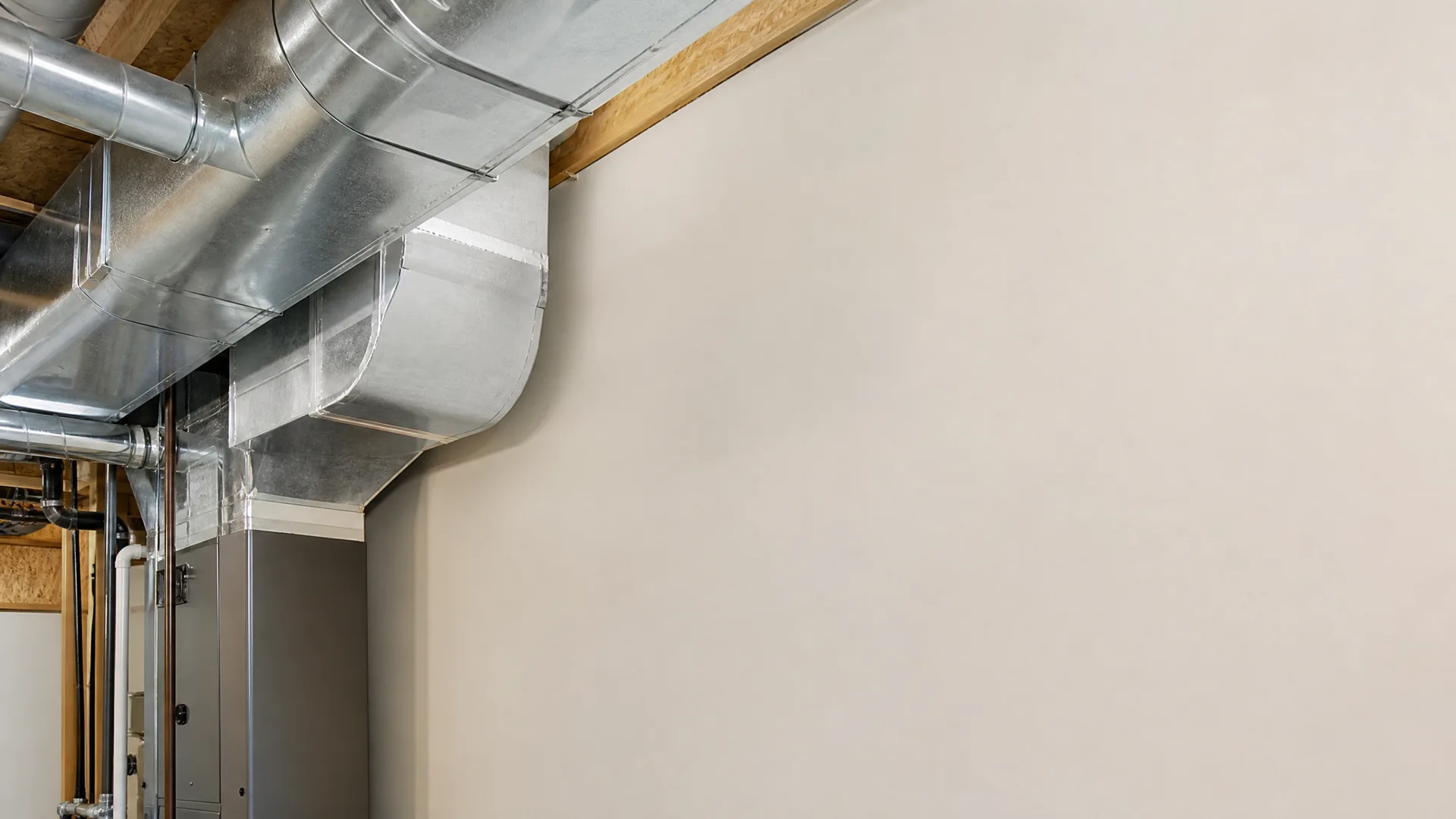
Galvanized sheet-metal ductwork and pipes running along an unfinished basement ceiling beside a plain beige wall, with a gray equipment cabinet below.

What that old ductwork is hiding

If your house dates to the 50s or earlier, the ducts have had a long time to collect more than dust. Sheet metal joints loosen over the years. Old insulation inside the duct, the kind some homes still have, breaks down and sheds fibers into the air stream. None of that means you need a cleaning. It means that if you're already having one done, it's worth asking the contractor to look at the joints and the insulation while the system is open, since that's the one time anyone's really looking.

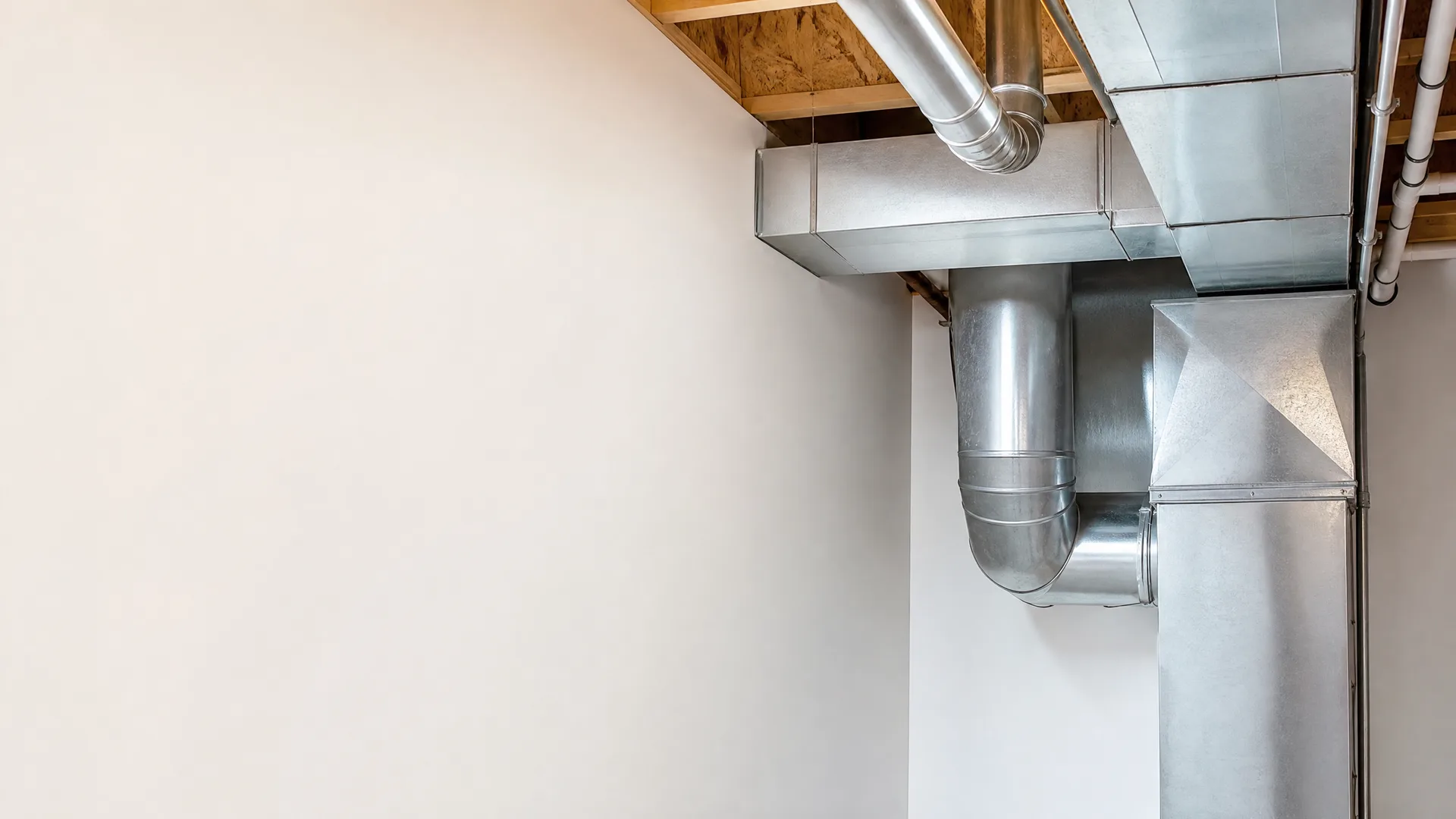
Galvanized sheet metal rectangular and round HVAC ducts running along a ceiling and down a white interior wall, with exposed wood joists and subfloor above.

What a bad job costs you

A contractor who skips the negative pressure step, or runs a brush without sealing the vents first, can push dust further into the system instead of pulling it out. You'd see it as more dust at the registers after the job than before, not less. The reader looking for relief from allergies or dust needs the vacuum and the sealed system, not just someone running a brush through the main trunk and calling it done.

How does a contractor know if your ducts actually need cleaning?

You're not going to take someone's word for it that your ducts need cleaning, especially after reading that most homes don't need it on a schedule. You want to know what a contractor actually checks before telling you to spend money on this. If it's just a quick look with a flashlight, that's different from someone who can show you what's really in there.

A camera inspection, not a guess

A contractor who knows what they're doing pulls a vent cover and runs a camera into the duct before saying anything about cleaning it. That shows what's actually built up along the inside, whether it's a light layer of household dust or something heavier like rodent droppings, insulation breakdown, or mold on the metal. They'll check a few different runs, not just one, since buildup in a duct near the furnace can look different from one at the far end of the house. If the camera shows nothing but dust, that's not a reason to clean. If it shows droppings or mold, you'll see it on the screen yourself.

Unfinished basement with exposed wood joists, galvanized sheet-metal ductwork, insulated flex ducts, piping, a small window, and a furnace or air handler against a gray wall.

Ductwork that's doing its job

Sealed metal trunks and flex runs like this move air without much drama. The joints hold, the connections to the furnace are tight, and there's nothing sitting in the system that doesn't belong there. A setup like this rarely needs more than a filter change.


Empty basement room with bare concrete walls and floor, and an exposed ceiling of wooden joists with large galvanized sheet-metal ductwork and pipes.

Ductwork worth a second look

Older sheet-metal runs like these, open to exposed joists and bare concrete, have had decades to collect more than dust. Seams loosen, insulation breaks down, and anything that got in from the floor or foundation has had somewhere to settle. This is the kind of system worth having a contractor open up and check.

Power here costs 24.38 cents per kilowatt-hour

At that rate, air leaking out of a loose duct joint before it ever reaches a register is money the furnace blower just spent for nothing. A sealed, clean system gets what it's heating or cooling where it's supposed to go instead of into the attic or crawl space.

EIA-861 2025

A woman in a gray sweater and jeans stands in an open wood front door of a white stucco house while a man in a dark jacket walks toward her on the entry path.

Clean ducts when there's a reason, not a date on the calendar

So is duct cleaning worth it in Newark. Worth it when something put it there: a renovation, a pest problem, mold you can see, registers blowing out dust that's bothering someone in the house. Not worth it just because the ducts are old or the house hasn't had it done. A system that's sealed and clear doesn't need touching.

Figuring out which one describes your house means someone looking at the actual ductwork, not guessing from the outside. That's the part you don't have to carry on your own. Once you're matched with a contractor who knows Essex County duct systems, they'll look at what's really going on in yours and tell you straight whether cleaning fixes it or something else does.

Interior corner with sheer white curtains at a window, a brown upholstered sofa in the foreground, and a wooden multi-drawer cabinet holding a round ceramic vase with leafy branches.
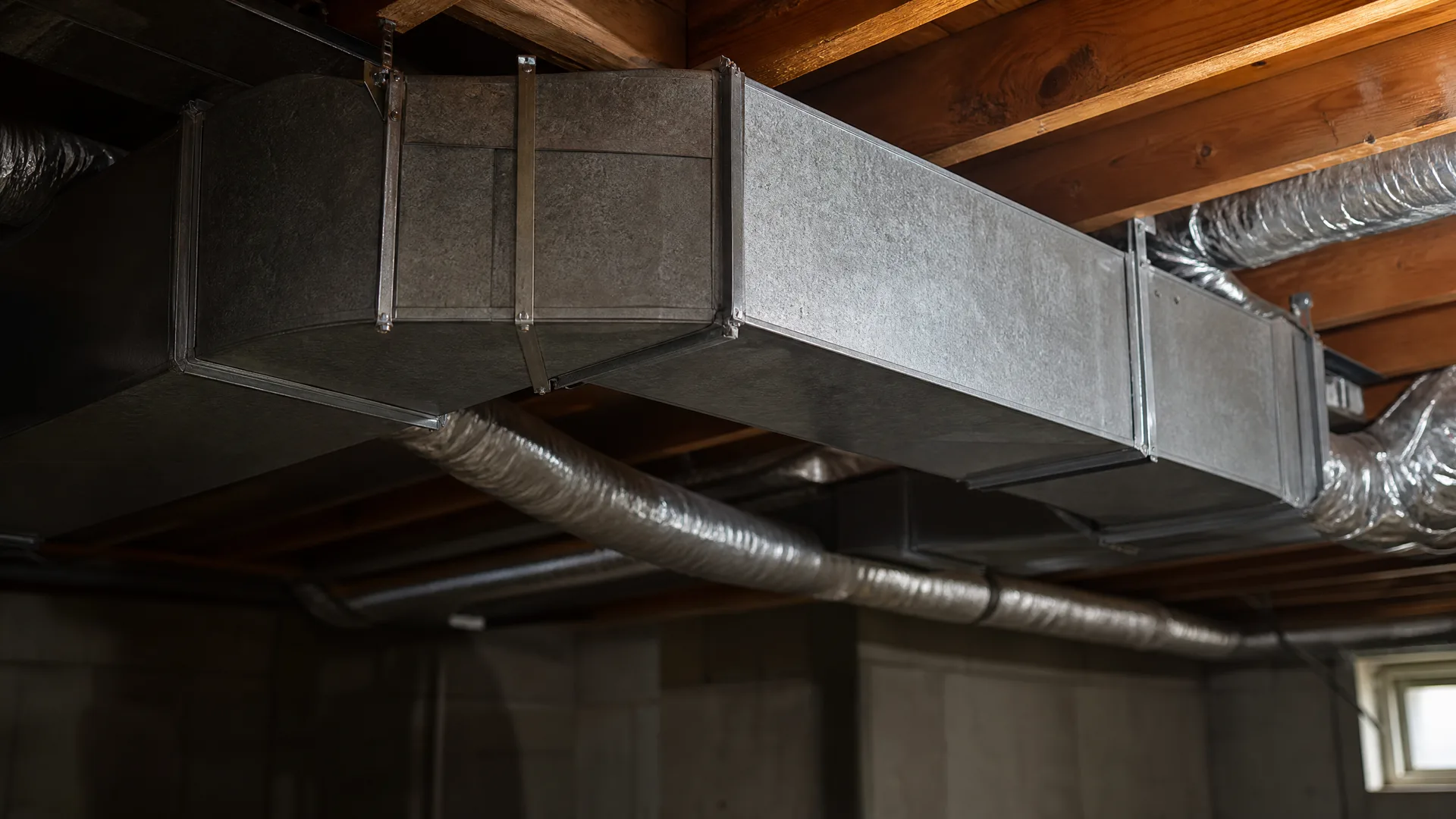
Rectangular sheet-metal HVAC trunk ducting and insulated flexible ducts running along wooden floor joists in an unfinished basement ceiling above concrete block walls.

Find a duct system cleaning pro in Essex County

Duct and vent cleaningDucts or ventsEssex County, NJ
Step 1 of 2

What ZIP code is the job in?