Mini Split Installation in Morristown, NJ
A new system here will heat from October through May and cool from June through August every year. Tell us about the house, and a licensed contractor who covers Morris County will get in touch.
Tell us about the job
It takes about a minute.
Morristown asks a mini-split to work most of the year
Winter nights here average 22°F, and homes need heat from October through May, eight months of the year. Summer afternoons average 82°F, with cooling needed June through August. That is 11 months where the system is doing something, so it needs to hold up on both ends, not just handle a mild swing in between.
A mini-split installed now has to meet federal minimums of 14.3 SEER2 for cooling and 7.5 HSPF2 for heating, the same baseline as any split-system heat pump. On a night at 22°F, that heating rating is what stands between the house and the cold.
- 8 months
- October through May, your system heats
- 3 months
- June through August, it cools
- 22°F
- the average winter night it heats against
- 82°F
- the average summer afternoon it cools against
NOAA nClimDiv, 1991–2020 normals
New Jersey requires HVAC contractors to hold a state license.
The Board tests the contractor before granting a license and keeps that contractor on record, and the license covers the company, not the specific job in your home. Because New Jersey handles this at the state level, Morris County and its towns cannot add their own HVAC license on top of it.
In most cities and counties, a mini-split installation needs a permit from the local building office, with an inspection once the work is done. That inspection is what catches a bad connection or a wiring mistake after the fact, separate from whatever the state license already tells you about the contractor.
Sources: New Jersey Legislature · New Jersey Division of Consumer Affairs
- Is a mini split worth it?
- For a lot of homes here, yes. A mini split handles both heating and cooling from the same outdoor unit, which matters when you need heat from October through May and cooling through the summer. Winter nights average 22°F here, and modern heat pump mini splits are built to keep working in cold like that, so you get one system covering nearly all eleven months instead of separate equipment for each season. Whether it makes sense for your house still depends on how it's heated now and what you're trying to fix, so a contractor should walk through your specific setup.
- How many rooms can a mini split cover?
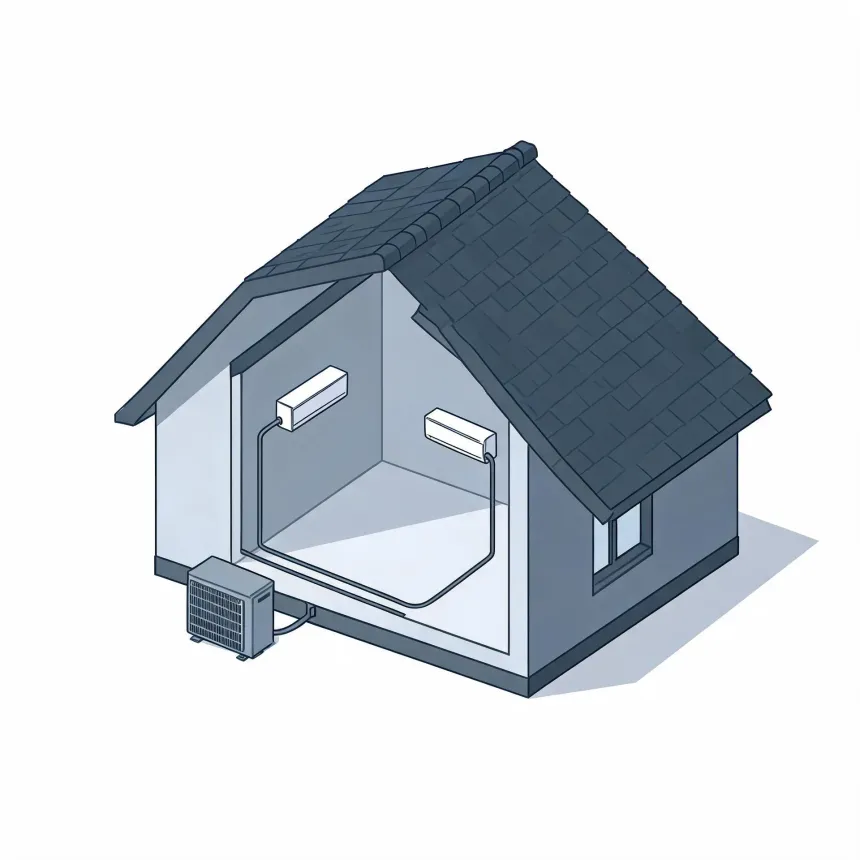
- A single outdoor unit can run anywhere from one indoor head to eight, depending on the system. Each indoor head heats and cools the room it's mounted in, so a one-to-one system covers one room and a multi-zone system covers as many rooms as it has heads. The right number for your house comes down to the size and layout of the rooms you want covered, which is something a contractor needs to see in person to size correctly.
- Can a mini split heat a whole house?
- It can, if enough indoor heads are placed to cover every room. A multi-zone mini split ties several indoor heads to one outdoor unit, so it can heat a whole house the same way a central system does, just room by room instead of through ducts. With winter lows here averaging 22°F, the outdoor unit and each indoor head need to be sized for that cold, not just for a mild day, so this is a job a contractor should design around your actual floor plan.