Mini Split Installation in Newark, NJ
A new system here will heat from October through May and cool from June through August every year. Tell us about the house, and a licensed contractor who covers Essex County will get in touch.
Tell us about the job
It takes about a minute.
What Newark winters and summers ask of a mini-split
Newark homes need heat or cooling 11 months of the year. A mini-split here is almost never idle. Winter nights average 25°F from December through February, and the heat pump side has to keep working through the full stretch from October to May. Summer afternoons average 84°F, milder by comparison, but the system still runs June through August.
Any mini-split installed new has to meet the federal minimum for a split-system heat pump. That floor is 14.3 SEER2 for cooling and 7.5 HSPF2 for heating. There is no separate ductless rating, so the same minimum applies whether the unit replaces an old one or goes into a room that never had one.
- 8 months
- October through May, your system heats
- 3 months
- June through August, it cools
- 25°F
- the average winter night it heats against
- 84°F
- the average summer afternoon it cools against
NOAA nClimDiv, 1991–2020 normals
New Jersey requires HVAC contractors to hold a state license.
That license comes from the State Board of Examiners of HVACR Contractors, and it covers the contractor, not each job. New Jersey tests and records the people it licenses, and because the license belongs to the contractor rather than the town, no city or town in the state can require its own license on top of it.
For a mini-split installation, that state license is what stands behind the person doing the work. The job itself will still need a permit from the local building office in most places, along with an inspection once the installation is finished, and that inspection is what checks the completed work rather than the contractor's credentials.
Sources: New Jersey Legislature · New Jersey Division of Consumer Affairs
- Is a mini split worth it?
- For most homes, yes, especially if you're heating or cooling a room that doesn't have good duct access, like an addition, a converted garage, or a finished attic. Newark winters drop to 25°F on average overnight from December through February, and a mini split with a good heating rating will still keep up on those nights. Summers here only run hot from June through August, so the same unit that heats in winter handles that stretch too. Since homes here need heat or cooling for 11 months of the year, a mini split earns its keep by working most of the year instead of sitting idle.
- How many rooms can a mini split cover?
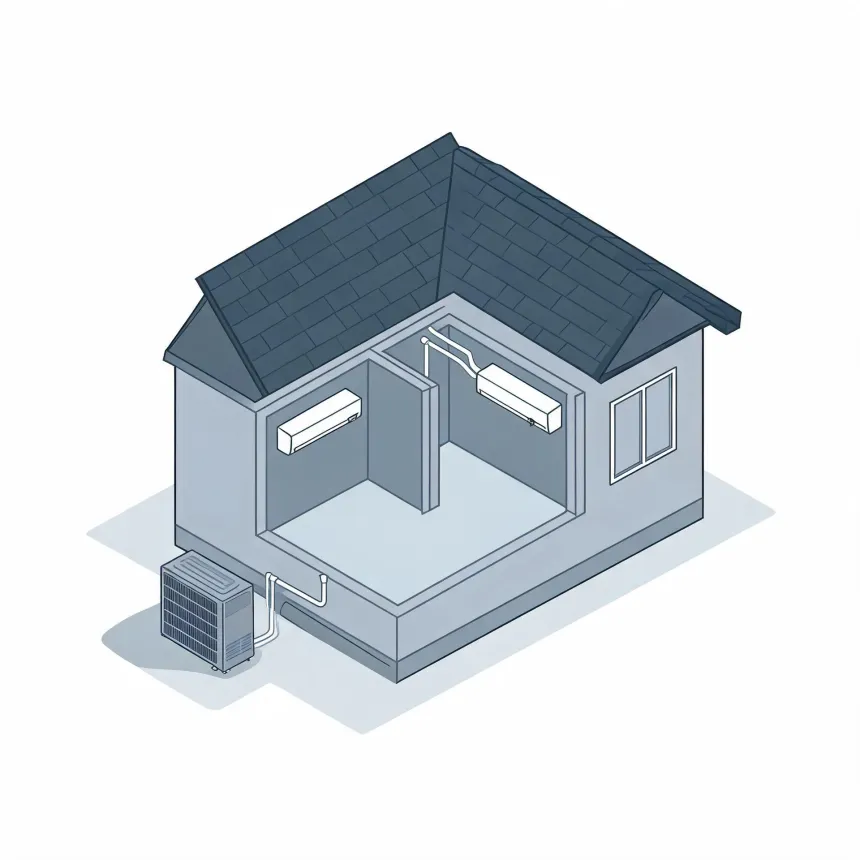
- A single indoor unit is built for one room or one open space. If you need to cover more than that, a multi-zone system lets one outdoor unit run two, three, or more indoor heads, each with its own thermostat for that room. A contractor sizes the system to the square footage and layout of the rooms you want covered, since a unit sized for one bedroom won't do the same job spread across a bedroom and a living room.
- Can a mini split heat a whole house?
- It can, but only if it's designed for that from the start, either as a multi-zone system with an indoor head in each main room or a ducted mini split tied into existing ductwork. A single indoor unit is meant to heat the space it's mounted in, not carry heat through closed doors and hallways to the rest of the house. Newark homes need heat from October through May, so a system meant to carry the whole house needs to be sized for that full stretch, not just the coldest nights. A contractor can tell you whether your house is a good fit for whole-home coverage.