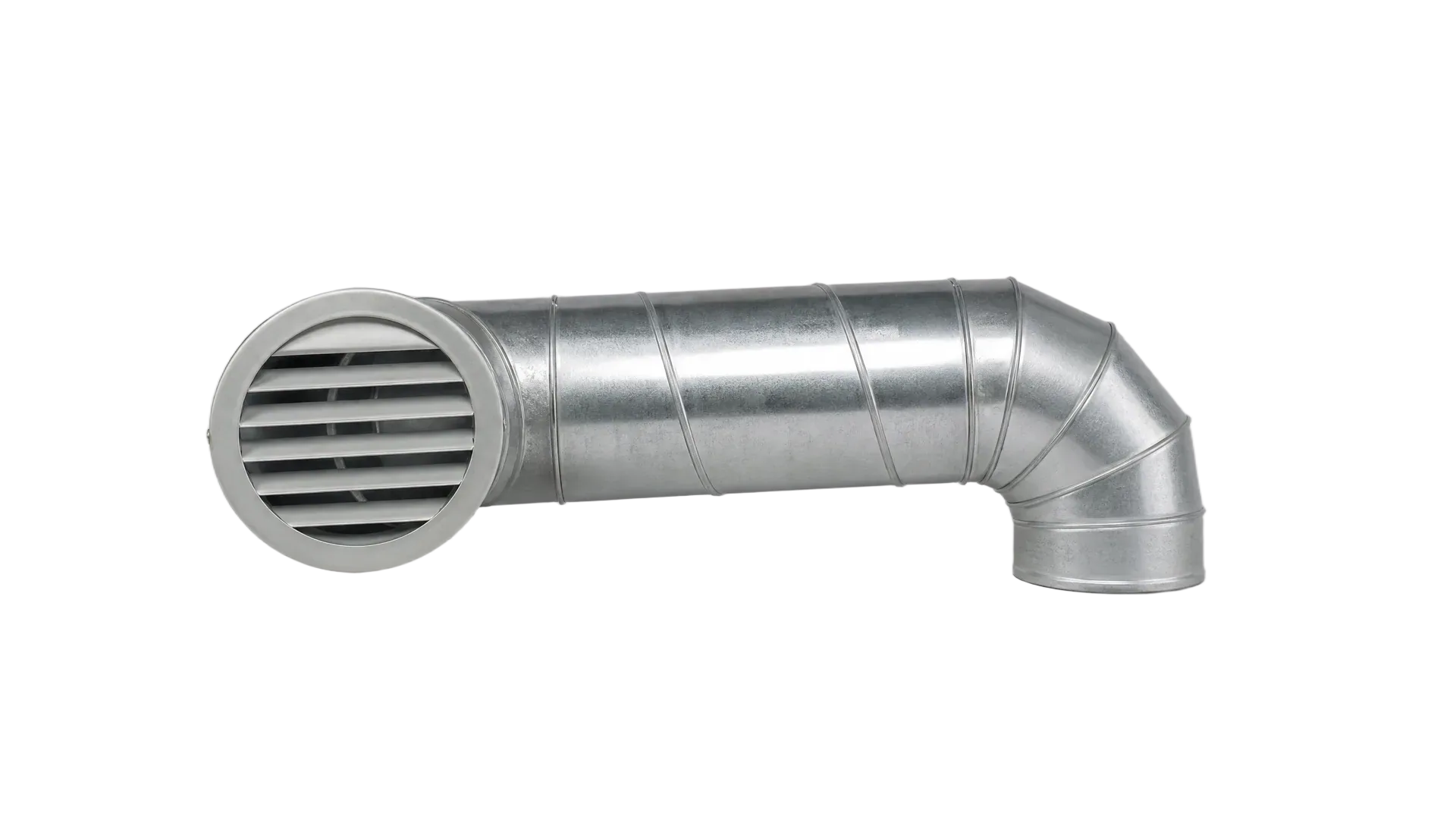
Ducts that are doing their job
Metal runs like these should look dry and tight at every seam, with no dust rimming the joints. Air moves through clean, so registers blow steady and rooms heat and cool evenly, room to room.
You're not sure if the dust in your house is normal or a sign of something worse. Maybe you've noticed more of it settling on surfaces than usual, or someone in the house has been sneezing more, or you just moved into a place and don't know when the ducts were last touched. You want to know what to actually look for before you decide this is worth doing anything about.
If you dust a room and it looks coated again within a day or two, that's air moving dirt around rather than clearing it. Pull a vent cover off and look inside. Gray buildup clinging to the metal or clumps of it near the register means it's been collecting for a while. Turn the system on and smell the air coming out. A musty or stale smell usually means dust and moisture have been sitting in the ducts together. With summers here getting sticky, that moisture has more chances to settle in the ductwork than it would somewhere drier, and it gives dust something to cling to instead of just blowing through.

Metal runs like these should look dry and tight at every seam, with no dust rimming the joints. Air moves through clean, so registers blow steady and rooms heat and cool evenly, room to room.

At a junction like this, dust builds up where the metal bends and branches off. You'll see it caked along the seams, and registers nearby may blow weaker or carry a musty smell once the AC kicks on for summer.

These runs sit dry against the joists, seams tight, insulation intact along the walls. Air moves through without resistance, so a register in the basement and one upstairs put out the same steady flow. Nothing pools in the metal because nothing is getting in to pool.

Bare concrete walls and joists mean condensation has somewhere to collect, and a large rectangular run like this can trap it at the seams. Gaps in sheet metal this size let in basement dust and moisture both, and that load has to go somewhere once the blower kicks on.
Run a finger along a supply register and check what comes back. A thin gray film most weeks is normal. A heavy coat, or dust that reappears within days of cleaning, points somewhere else. Check the return grille too, since that's where lint and pet hair tend to collect first. Turn the AC on after it's been off a while and take a breath near the vent. A musty or stale smell that fades after a few minutes often means something is sitting in the ductwork itself. With summers here as sticky as they get, that system runs for months at a stretch, and whatever's built up inside it gets pushed through the house the whole time.




Once you send the form, finding a pro is off your list.
It costs nothing to send, and you don't have to hire anyone.
Dust and debris lining the inside of a duct narrow the path air has to travel through. The blower has to push harder to move the same amount of air to every room, and that extra work shows up on the electric bill. With power costing what it does in New Jersey, a blower running longer or harder than it should is not a small thing over a summer. If registers near the end of a run feel weak compared to ones close to the furnace, the restriction is likely buildup inside the duct itself.
Most homes here heat with gas, and a gas furnace pulls combustion air separately from the air it circulates through the house. That circulating air picks up whatever sits in the ducts and carries it into every room on the system. A furnace cycling on and off more than it used to, without a change in the weather, can mean it is working against resistance somewhere in the ductwork. Run it for a few minutes and check whether the air coming out carries a stale or musty smell, since clean ducts should not add any smell to the air moving through them.


You decide the dust and the smell are just part of the house, and you live with it through another New Jersey summer, running the AC longer to feel the same cool.
You get the ducts looked at, the air moves the way it did when the system was new, and the registers stop blowing that stale smell into rooms you actually sit in.
At 22.48 cents per kilowatt-hour, every extra minute your blower runs to push air through clogged ducts lands on your bill right away. Clean ducts let the system move air without a fight, so you're not paying New Jersey's rates to make up for a narrowed path.
EIA-861 2025 statewide residential average
The signs come down to a few plain checks. Dust that builds up fast, air that comes out weak at the registers, a musty smell when the AC first kicks on, rooms that never quite match the one next to them. Any one of those points at the ducts, not just the dust in the air. You don't have to live with it through another New Jersey summer or guess at whether it's worth looking into. Once you send the form, you're done with the hard part. A contractor who handles duct cleaning in your area gets your information and reaches out, and the job of tracking someone down is off your plate. You're left with a system that moves air the way it did when it was new, and a bill that reflects it instead of New Jersey's rates working against you every time the blower kicks on.

The right pro for this job




