7 months of heat a year
October through April, your furnace pushes air through those same ducts almost every day. Whatever is sitting in them gets carried into every room that whole stretch.
You typed that search because something pointed you to your ducts. Maybe it's dust settling back on the shelves a day after you wipe them, or a musty smell when the furnace kicks on, or a room that never seems to get the air the others get. You want to know if that's a duct problem before you pay anyone to look. Once you have an answer, the next question is who actually cleans ducts in Middlesex County, and that search usually turns into a string of phone calls, the same description of the problem repeated to each one, and a pile of quotes you have no easy way to compare. This page skips that part. One request connects you to a licensed local contractor who works on duct systems in New Brunswick homes like yours and has seen what usually causes the signs you're noticing. No list of companies to sort through, no retelling the story four times. Fill in what you're seeing and let someone who knows this equipment take it from there.
The signs are usually one of a few things. Dust that comes back fast, a musty smell when the furnace or AC first kicks on, weak airflow in one or two rooms, or more dust around the vents themselves. Dust building back up within a day points to supply registers pushing out what's sitting in the ductwork rather than clean air. A musty smell when the system starts usually means moisture sat somewhere in the ducts long enough for mold or mildew to take hold, which happens easily in a muggy New Brunswick summer when the AC runs for months. Weak airflow in one room while others are fine often means a blockage somewhere in that branch of the duct, not a problem with the furnace or the air conditioner itself. None of these mean the ducts are dangerous. They mean the system is moving less clean air than it should, and working harder to do it.
Half the homes here were built by 1974
Half the homes in Middlesex County were built in 1974 or earlier, so the ductwork behind your walls may never have been cleaned once.
Heat runs October through April
Heat runs October through April here, about seven months pushing air through the same ducts before they get much of a break.
Cooling runs June through September
Cooling runs June through September, so for most of the year one system or the other is moving whatever is sitting in those ducts.
ACS 2020-2024 · NOAA nClimDiv 1991-2020
You can wipe the shelves down and figure it bought you a few days. By the next afternoon the dust is back, and you start to wonder if the vents are the reason.
If the dust is back within a day, that's air moving through dirty ductwork, not a dirtier house. A contractor who checks the supply registers first will usually find the source fast.




October through April, your furnace pushes air through those same ducts almost every day. Whatever is sitting in them gets carried into every room that whole stretch.
Ductwork that old has likely never been cleaned. Decades of dust and debris can sit in there even if the house itself looks fine.
A musty smell for the first minute or two after the furnace or AC kicks on is air moving past dust and debris that has been sitting in the ducts. Some households notice it more in one room than the rest of the house, usually the room with the weakest airflow. Others see it on the register covers themselves, a ring of dust that builds back up within a day or two of wiping it off. If anyone in the house has allergies or asthma, this is the part that matters most, since whatever is in the ducts gets pushed into the air they breathe every time the system runs.
Dust and debris settle inside the duct runs over time.
Every furnace or AC cycle stirs that buildup loose.
Moving air carries it through the supply registers.
It lands back on your floors, shelves and furniture.
You keep the house clean and the dust still shows up. You vacuum, you wipe the blinds, you run an air purifier, and none of it seems to make a lasting difference. At some point you start to wonder if the problem isn't how clean you keep things, but what's moving through the vents every time the furnace or AC runs.
A dusty house on its own doesn't tell you much. But if the dust settles fastest near the vents, or the musty smell only shows up when the system kicks on, that's air moving through the ductwork and carrying something with it. Try shutting the system off for a stretch and see if the dust slows down. If it does, the air moving through the ducts is doing the work, not the house itself. Cleaning habits don't explain a smell that appears and disappears with the furnace. A technician can inspect the duct runs directly and tell you whether what's built up inside them is enough to account for what you're noticing.




Finding someone to look at this usually means searching, calling a few places, explaining the dust and the smell and the one room that never gets warm, then waiting on quotes to compare. This request goes to one licensed contractor who works in New Brunswick and the rest of Middlesex County, someone who deals with ductwork in homes built decades apart and knows what seven months of furnace cycles a year does inside them, and what it doesn't. You won't field calls from five different companies trying to win the job. If your ducts haven't been cleaned since the house was built, or you can't remember the last time, that's reason enough to have someone look before another winter of heat pushes through them. The dust coming back fast, the smell when the furnace kicks on, the room that stays stuffy, those are the things worth having someone check while you're already thinking about it.
You can keep doing what you're doing. Wipe the shelves, run the air purifier, close the vent in the room that never heats right and work around it. Plenty of people do, for years, and nothing breaks because of it. The cost is the one you already know: dust back within a day, a musty minute every time the furnace kicks on, a bedroom that stays colder than the rest of the house all winter. None of that goes away on its own, and none of it tells you anything new the tenth time you notice it.
A technician can look inside the runs and tell you what's actually in there, not just guess from the symptoms. If it's dust and debris built up from years of furnace and AC cycles, cleaning clears it out. If the weak airflow in that one room is a crushed or disconnected duct instead, cleaning won't fix that, and you'd want to know which one you're dealing with before paying for either. Either way you stop guessing. You get a straight answer on why the dust keeps coming back, instead of wiping the same shelf next week.



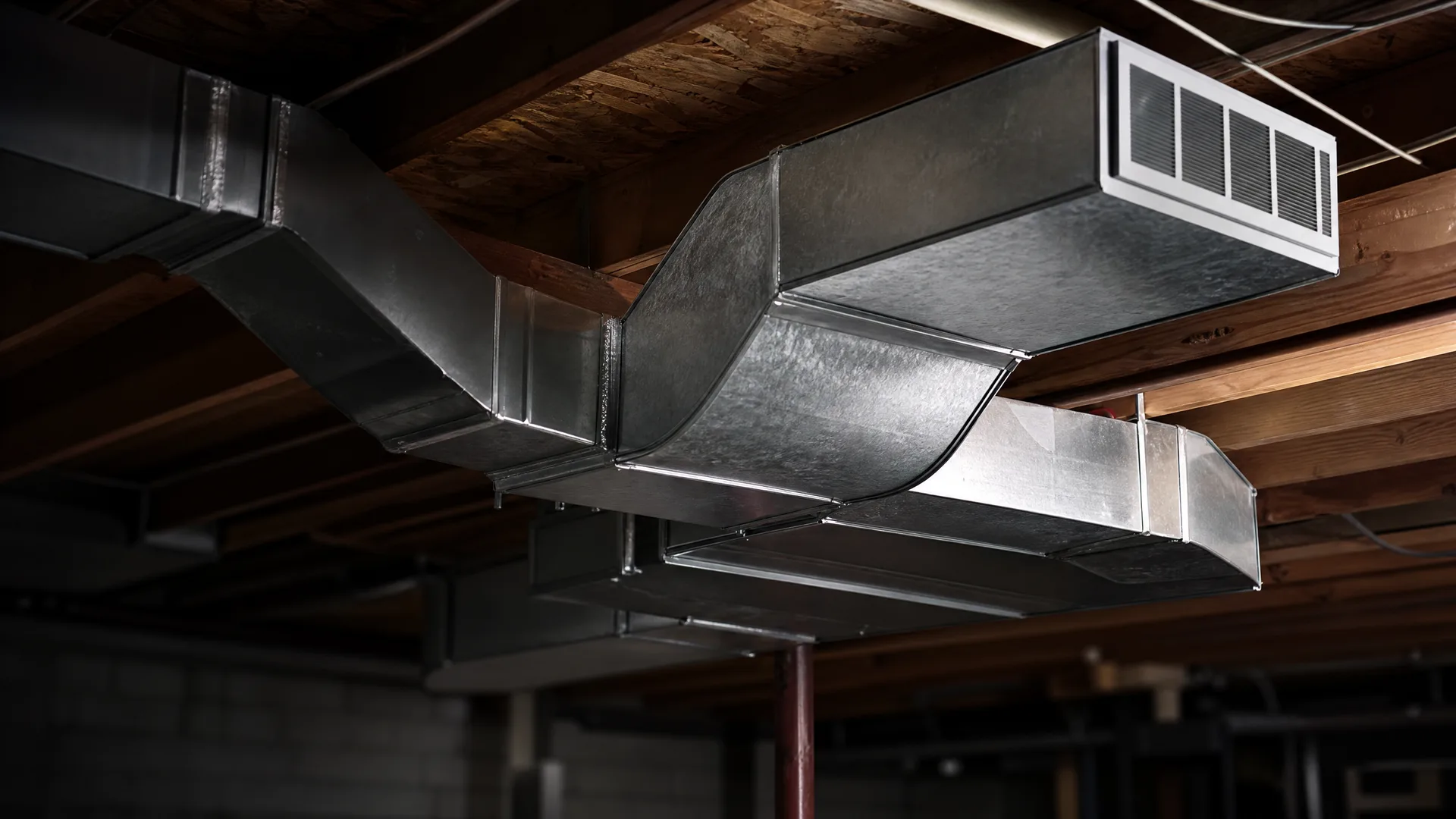
This is what airflow looks like when the runs are clear. Air moves from the furnace through each branch and out the registers without picking up anything along the way. No film on the grilles, no musty pull of air when the system kicks on, every room getting its share.

Same kind of basement, same metal runs overhead, but years of settled dust are moving with the air now. Every cycle stirs it loose and sends it out through the registers. It shows up as dust back on your shelves by the next day and weak airflow in the rooms furthest from the furnace.
At 23.82 cents per kilowatt-hour, pushing air through ducts that are restricted or coated with debris costs you more than it should, since the blower works harder to move the same amount of air. A cleaning lets that motor do less work to heat or cool the same rooms.
EIA-861 2025

Dust that returns within a day, a musty smell when the system starts, a room that never quite gets warm or cool, buildup around the vent covers. Any one of those points back to the ductwork behind your walls, not your housekeeping. If your system came with the house and the ducts have never been cleaned, seven months of furnace cycles a year have had a long time to build that up.
Finding someone to deal with it is its own chore. You'd be looking up contractors, calling around, describing the smell and the dusty room more than once, then sitting on quotes to see which one makes sense. This page sends your request to one licensed contractor who works on ductwork in New Brunswick and the rest of Middlesex County, someone who sees what seven months of heat does to ducts like yours every year. No pile of callbacks to sort through, just the one who knows this.

Describe it once