What to do when the heat goes out in New Jersey
What do I do when my furnace stops heating in New Jersey?
A furnace that won't fire up on a cold night isn't something to wait out, especially with gas furnaces common in New Jersey homes and electric heat costing more to run as a backup. You want to know what's actually wrong and whether it's something you can check yourself before calling anyone.
Check the thermostat and power first, then call for repair
Start with the thermostat. Make sure it's set to heat and the temperature is set above room temperature. Check your breaker panel too, since furnaces run on electricity even though most in New Jersey burn gas for heat. If the furnace has a switch nearby that looks like a light switch, make sure it's on. Look at the filter while you're there. A filter clogged with dust can choke the airflow enough to shut the whole system down. If none of that gets it running, the problem is likely the igniter, the flame sensor, or the pressure switch, and those call for a repair technician. With gas furnaces and the wiring involved, this isn't a job to guess your way through.

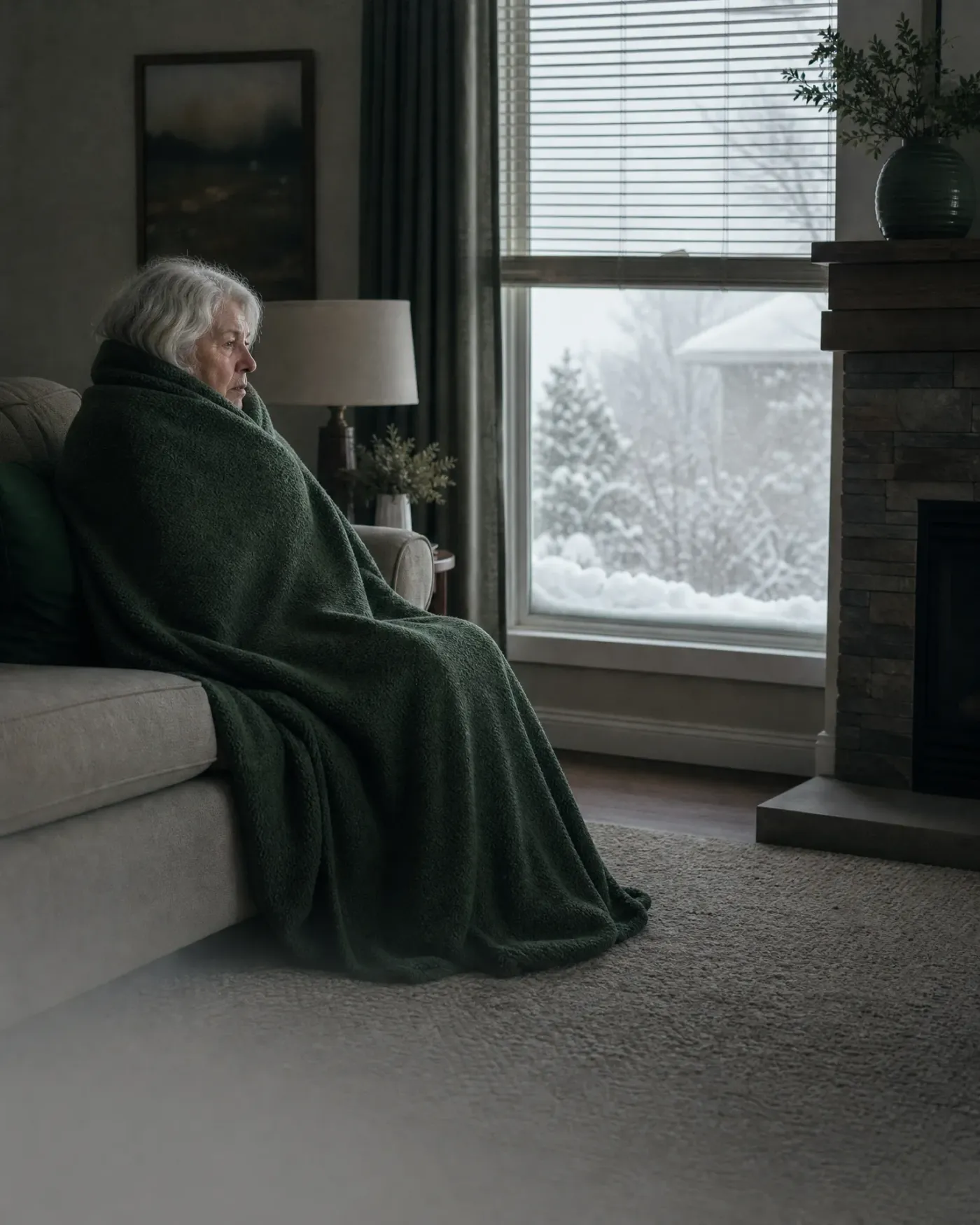
You wake up a little after 2 and the house feels wrong before you even know why. The vents are quiet. No hum from downstairs. You stand in the hallway and the window is edged in frost, and the glass feels colder than the air around it. Your feet tell you first, the floor through your socks. Outside it's a January night in New Jersey, the kind where the temperature keeps dropping past midnight. Somewhere down the hall a door is cracked open to a kid's room. You pull your robe tighter and go check the thermostat, already knowing what it's going to say.


Gas furnaces follow a strict startup sequence, and almost every no-heat call traces back to one step in that sequence failing. First the inducer motor spins up to clear the exhaust path. A pressure switch has to confirm that's happening before the igniter is even allowed to get power, which means a stuck or faulty switch can stop the whole process before there's any gas or spark at all. Once the inducer checks out, the igniter glows or clicks, the gas valve opens, and a flame sensor has a few seconds to confirm a flame is actually burning. If that sensor is coated with residue, which happens over time, it can misread a real flame as too weak and shut the gas valve right back down. That's why a furnace will sometimes light, then quit seconds later, over and over. Short cycling works the same way. It's rarely random. Usually a safety switch somewhere in that chain is doing its job, cutting things off because something downstream, sometimes a cracked heat exchanger, isn't safe to keep running.
How a Furnace Actually Lights
- Most gas furnaces fire in a set order: the inducer motor starts, the igniter glows or clicks, gas opens, and a flame sensor confirms the flame within seconds.
- If the flame sensor doesn't detect a flame, the control board shuts the gas valve again, even if the igniter worked fine.
- A dirty flame sensor is a common reason a furnace lights for a second and then quits, because it reads the flame as too weak to trust.
- The inducer motor has to prove it's pulling exhaust before the igniter even gets power, so a bad pressure switch can stop ignition before you ever smell gas or see a spark.
- Furnaces that short cycle, turning on and off every few minutes, are often shutting themselves down on purpose because a safety switch is tripping.
- A cracked heat exchanger forces the furnace to shut off as a safety measure, since it can let combustion fumes mix into the air moving through your ducts.



A local pro for your furnace repair
Describe what your furnace is doing once, in one form.
A local pro who knows furnaces gets your details and gets in touch.
Asking costs nothing, and the choice to hire stays yours.
Call for Help or Check It Yourself
Call Now
- If the furnace won't respond at all, a stuck gas valve or dead control board usually needs a technician on site, not a part you can swap yourself.
- A burning smell, soot around the burner, or a flue that looks cracked or rusted means the furnace should stay off until someone inspects it.
- Water pooling near the furnace or a carbon monoxide alarm going off are not wait-and-see problems, especially overnight with kids or older adults in the house.
- If the house is already below 55 and dropping, pipes can freeze before morning, so the repair can't wait for a weekday appointment.
- A furnace that's tripped the breaker more than once in a night usually has an electrical fault that gets worse, not better, if it's run again.
Try This First
- Check that the thermostat is set to heat and the set temperature is a few degrees above the room, since a bumped setting is an easy miss.
- Look at the furnace switch, which resembles a light switch near the unit, and make sure it hasn't been turned off.
- Check the breaker panel, since a tripped furnace breaker will stop the igniter and blower without any other warning sign.
- If the furnace has a standing pilot, see whether it's lit; if it uses electronic ignition instead, a power blip can leave it needing a reset.
- Swap the air filter if it's visibly clogged, since restricted airflow can cause the furnace to shut itself off as a safety measure.




What's happening in your house right now
Walk through and pay attention to what you're noticing. A room that won't hold heat no matter where you set the thermostat. A furnace that clicks and tries, then goes quiet without ever catching. Air coming through the vents that's barely warm, or not moving at all. Maybe a smell, faint and a little like rotten eggs, or a burning smell when it does run. Upstairs rooms colder than the rest of the house. If it's gone on more than a day, check on anyone in the house who's very young, older, or sick. A house that can't hold heat through a cold New Jersey night isn't just uncomfortable, it's a furnace telling you something is wrong before it quits for good.
Statewide, winter nights average 26°F, according to NOAA climate data. That's the kind of cold where a furnace isn't cycling on and off a few times a night, it's running long stretches to keep up, especially toward morning when outdoor temperatures bottom out. A furnace that's been getting by on shorter, milder runs can show its weak points once nights settle into the 20s: a flame that won't hold, a blower that keeps going after the house is already warm, or heat that falls off in the rooms farthest from the furnace. If yours is quiet at 2 a.m. when it should be running, this is the temperature it's failing to keep up with.
NOAA nClimDiv 1991-2020 county normals weighted by homes

What a dead furnace does to your house overnight
A New Jersey house loses heat fast once the furnace quits. By morning the thermostat might read ten or fifteen degrees under where you left it, and anyone sleeping near a drafty window feels it before anyone else does. If you've got kids or older parents in the house, that's the room to check first. Pipes along outside walls or in the basement are the other risk. A furnace down for one night in a January cold snap is usually fine. Down for two or three days while you're trying to find someone who can come out is how a line freezes and splits.
That's the part that eats the time: not the repair, but getting a tech on site before it gets to that point. Calling around to see who answers on a weekend, explaining the furnace's age and symptoms to three different shops, waiting on callbacks that don't come. Once you're matched with a contractor who works on your system, that goes away. You explain it once, to someone who's already headed your way.

Winter nights average 26°F statewide
At 26°F, a furnace that's slow to recover or keeps shutting off overnight isn't a small thing. It's the difference between a house that holds steady till morning and one that doesn't.
NOAA nClimDiv 1991-2020 county normals weighted by homes
A furnace that won't fire is a reason to act, not wait and see if it sorts itself out by morning. You've already looked at what it's doing, listened for what it isn't doing, and you know by now whether this is a quick reset or something a technician needs to put hands on. Either way, the house won't hold heat on its own at 26 degrees outside, and nobody sleeping near a cold window needs to find that out twice. What's left isn't figuring out the furnace, it's finding someone who can get to it. That usually means searching around, calling a few places, describing the same clicking and no-start over and over, then waiting to hear back and sorting through who can actually come out soon. You can skip that part. Say what's going on once, and a contractor who works on furnaces in New Jersey homes reaches out to you directly.





Get the right pro for your furnace
Answer a few questions instead of calling shop after shop.
No fee to send it, and nothing to sign.