



Why your furnace rattles in New Jersey

Tell a local repair pro what your furnace is doing.

Match me with a pro

A rattle usually means something inside the furnace has come loose, not that the whole unit is failing. Loose panel screws are the most common cause, and the thin metal cabinet buzzes against the frame every time the blower kicks on. It can also be a worn blower wheel, a loose duct connection where it meets the furnace, or a cracked heat exchanger, which is the one that matters most because it can let combustion gas into the air moving through your house. Gas furnaces run hard through a New Jersey winter, often from October through March, and that steady cycling works screws loose and wears parts that were fine in spring. A rattle that showed up this season and keeps getting louder is worth checking before the coldest weeks hit, since a part that's loose now can fail outright once the furnace is running for hours at a time.

A beige residential gas furnace with white PVC vent pipes, copper and yellow gas lines, and adjacent sheet-metal ductwork stands on a concrete floor beside a plain white wall.

What the sound tells a tech

A loose panel rattles in a steady buzz that starts and stops with the blower. A worn blower wheel or motor mount tends to clatter or knock, especially right at startup. A cracked heat exchanger can tick as it expands. Where the sound happens, and when it happens in the cycle, points a tech toward the part before the panels ever come off.

A gray high-efficiency furnace with white PVC vent pipes and metal ductwork stands on a concrete floor beside a plain off-white wall in a basement.

Why it's worth checking now

A rattle from a loose screw or panel does no harm on its own, but a loose part vibrates against others nearby, and that wears them faster. A furnace running flat out through a New Jersey winter puts hours on every part each day. Left alone, a small rattle can turn into a bigger repair, and gas furnaces don't give much other warning before a part fails outright.

Fix the Rattle or Wait It Out

Fix it now

  • Tightening a panel or swapping a blower mount costs far less than what a cracked heat exchanger turns into if it's ignored.
  • A rattle you catch early is usually a loose part, not a failed one, and loose parts are cheap and quick to put right.
  • Gas furnaces in New Jersey run from October through the cold months, so a small fix now means no breakdown on the night you need heat most.
  • A tech can check the sound against the furnace while it's still running the way it normally does, which makes the cause easier to pin down.
  • Waiting lets a loose blower wheel keep hitting the cabinet or housing, which turns a minor repair into a motor replacement.

Let it ride

  • A furnace that still heats the house and cycles normally can keep running for a while even with a rattle present.
  • If the noise is faint and only shows up once in a while, it may not be worth a service call right away.
  • Some rattles come from ductwork expanding as it heats up, not from the furnace itself, and that kind doesn't get worse on its own.
  • Electricity in New Jersey is expensive, and a furnace running rough can pull more power to do the same job, so the bill creeps up while you wait.
  • A cracked heat exchanger left alone can leak combustion gas into the house, which is a risk no amount of waiting makes smaller.
A gray high-efficiency furnace in a basement with sheet-metal ductwork, white PVC vent pipes, metal plumbing lines, a condensate pump on the floor, and a window showing green trees outside.

Running quiet

This is what a furnace sounds like when nothing's loose. Panels sit flush, the blower spins without hitting anything, and the cabinet stays still while it cycles on and off. Gas lines and flue pipes are secure, and nothing shifts when the system starts up on a cold morning.


An older metal furnace with PVC and metal pipes stands on a concrete basement floor beside galvanized ductwork, with wooden stairs and a water tank in the background.

Something's loose

Dust buildup and a worn cabinet point to a furnace that's been rattling for a while. Screws back out over time, mounts wear down, and the sheet metal starts buzzing against the frame it used to sit flush in. The sound gets louder the longer it waits.

Is it safe to run my furnace while it's rattling?

You don't want to shut off the only heat in the house over a noise, but you also don't want to find out the hard way that it was more than a loose panel. Most rattles are harmless, but a furnace isn't something you want to guess wrong about, especially with how much it costs to run gas heat in New Jersey all winter.

Usually, but not if the rattle comes with a burning smell or shuts off on its own

A loose panel or a worn blower mount won't hurt you. The furnace will keep heating the house while it rattles, and nothing about that noise alone puts you at risk. What changes things is what comes with the rattle. If you smell anything burning, if the furnace shuts off and won't restart, or if the rattle is new and getting louder by the day, that's different from a panel that's buzzed the same way for weeks. A cracked heat exchanger is the one cause worth taking seriously, since it can let combustion gas mix with the air moving through your ducts. Short of those signs, it's safe to keep running while you get it looked at.

A basement utility area with a gray furnace, sheet-metal ductwork, pipes, plastic-covered walls, a concrete floor, and a black shelving unit holding storage bins.

Quiet and running right

The cabinet sits flush against the frame, panels screwed down tight. Ductwork and gas lines run straight to the unit with no slack to vibrate against the floor or joists. A furnace like this cycles on and off without anyone upstairs noticing.

A gray metal furnace with louvered vent panels stands on a concrete basement floor beside galvanized ductwork, gas and plastic pipes, and foil-faced insulation along the ceiling and wall.

Old, rusted, and loose

Surface rust has worked into the cabinet seams, and years of expanding and cooling have loosened what once held tight. A furnace this old has had more time for a screw to back out or a mount to wear down, and more reason for a tick or rattle to mean something.

A woman in a gray turtleneck sweater stands by a window looking outside at snowy ground, with a dimly lit living room containing a sofa, shelves, lamp and a lit candle behind her.
A woman in a cream cable-knit turtleneck sweater stands in a warmly lit living room with a fireplace and shelves behind her, looking out a window toward snow-covered trees and a railed deck.
A woman in a cream knit turtleneck sweater stands by a window looking out at snow, with a lit fireplace, sofa and lamp in the room behind her.
A woman in a gray knit sweater sits by a window looking out at falling snow, with a dimly lit living room containing a sectional sofa, pillows, a lamp and houseplants behind her.

A pro who works on furnaces

A rattle that's been going on for a few weeks isn't going to fix itself, and with gas furnaces running pretty much nonstop once the cold settles in across New Jersey, a loose part has that much longer to wear against whatever it's hitting. Most of the time a tech can tell what's wrong just from how it sounds and have it tightened or swapped before it turns into a bigger repair. Electric heat strips and backup systems cost more to run here than almost anywhere in the country, so a furnace that's cycling longer than it should because something's off inside it is worth sorting out before the bill shows it. Send the request and a contractor who works on furnaces in your area takes it from there. You stop chasing the noise down yourself and stop wondering if it's nothing or something.

What that rattle costs you

  • A rattle that goes ignored for a winter can turn a loose screw into a cracked blower housing by spring.
  • New Jersey gas furnaces run close to nonstop once the cold sets in, so a loose part gets worked on for months straight.
  • A furnace working harder than it should to cover that rattle shows up on a power bill that's already among the highest in the country.
  • Catching it now usually means a tech tightens a panel or swaps a mount instead of replacing a blower motor outright.
  • If the noise is coming from a cracked heat exchanger, that's a safety problem, not just an annoying sound upstairs.
  • A furnace left to rattle through the winter doesn't get quieter on its own, it gets looked at in the middle of a cold snap instead of now.

A rattle is cheap to fix today and more expensive the longer it waits. The screw or mount that's loose in November is still loose in February, except by then the furnace has run against it for months straight instead of weeks, and gas furnaces in New Jersey don't get much of a break once the cold sets in. Every cycle is wear on whatever's already shifted, and a blower wheel knocking against its housing in December can be a blower housing that needs replacing by the time spring comes around. That difference shows up twice. Once in the repair itself, a tightened panel or a swapped mount instead of a new motor, and once on the power bill, since a furnace fighting a loose part isn't running as efficiently as one that isn't, and New Jersey already pays some of the highest electric rates in the country. There's also the noise itself to think about. Most rattles are nothing more than a panel or a mount, but a tick that's coming from the heat exchanger isn't a noise problem, it's a safety one, and that's worth knowing the difference on. None of this gets better by waiting. A furnace that rattles in October rattles worse in January, and the usual outcome isn't that it quiets down, it's that someone ends up looking at it in the middle of a cold snap instead of on a day they picked themselves.

A bearded man in a plaid flannel shirt stands in a kitchen looking out a window toward snow-covered shrubs, with a steaming mug on the windowsill and potted plants on a shelf behind him.
A smiling man with dark curly hair in a navy t-shirt sits on a gray couch indoors, with a large-leafed plant and a window in the background.

Handle it yourself

If you can get to the panel screws and tighten them, that alone fixes a lot of rattles. It costs nothing and takes a few minutes, but it won't help if the noise is coming from inside the blower.

Get a furnace pro

Get a tech to check it

A technician can tell a loose panel from a worn blower mount or a cracked heat exchanger by sound and a look inside. Send in your information and a contractor will reach out.

Get a furnace pro
A beige furnace with two access panels stands against a concrete basement wall, with galvanized sheet-metal ductwork, a white PVC pipe, flexible conduit and insulated ducting around it.
Before you get your furnace repair
A gray furnace with white PVC vent pipes stands beside sheet-metal ductwork in a basement with a smooth concrete floor, exposed wood framing, and plastic sheeting on the walls.
After you get your furnace repair
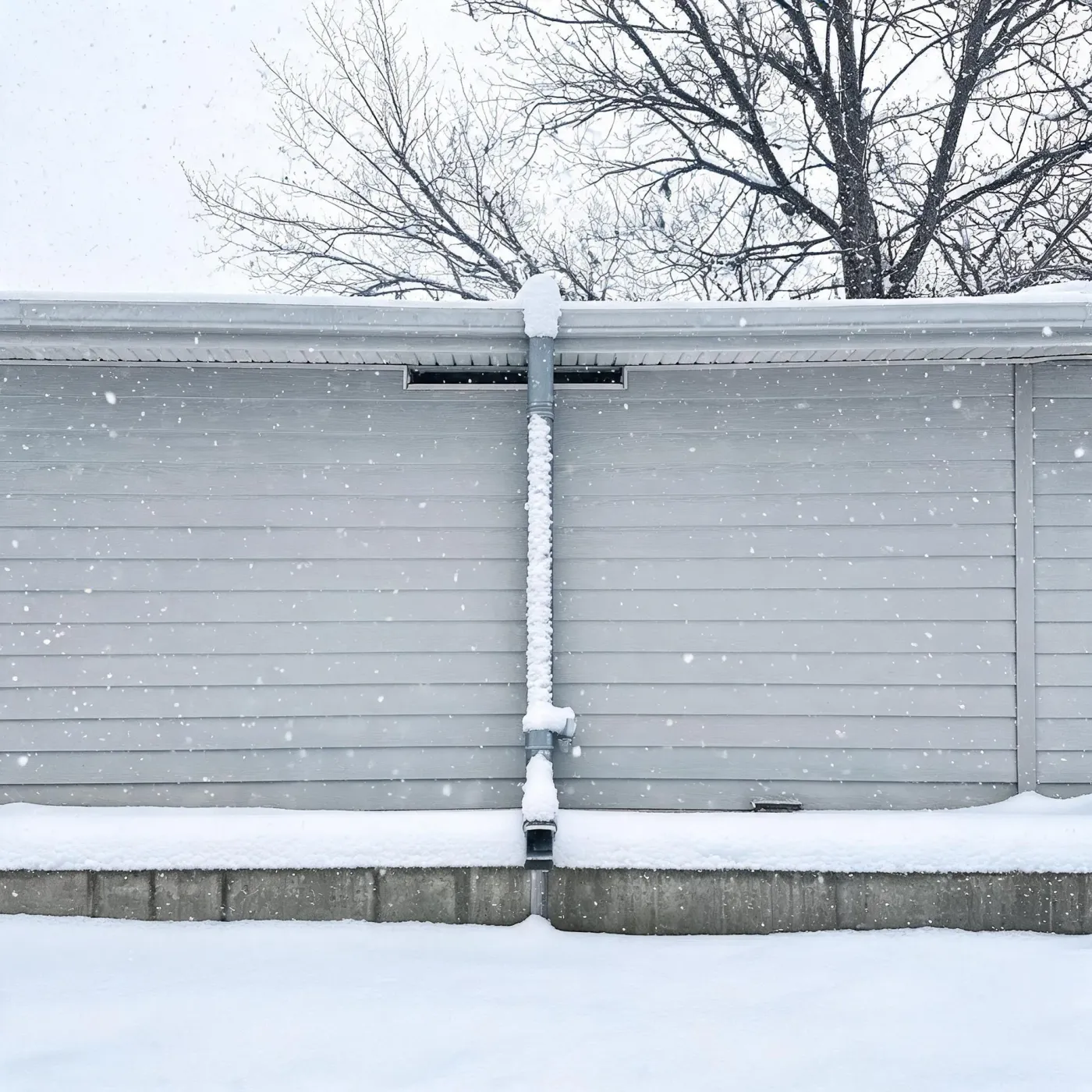
Exterior wall of a building with light gray horizontal siding and a snow-covered downspout running down its center, with bare trees behind the roofline and falling snow over deep snow on the ground.

Winter nights average 26°F statewide, according to NOAA climate data, and that's the temperature your furnace is working against every time it cycles on. A furnace running that often has more chances for a loose panel or a worn mount to keep knocking against the cabinet, since it's not running for a few minutes here and there, it's running most of the night. If a rattle started up once the cold set in, that's not a coincidence. The same part that buzzed a little in October can knock harder once the furnace is running long stretches to keep up with nights in the 20s.

NOAA nClimDiv 1991-2020 county normals weighted by homes

A dark high-efficiency furnace on a concrete pad in a basement, connected to galvanized ductwork, white PVC vent pipes, and copper and black gas piping, with concrete walls and wood framing nearby.
A furnace like this cycles on and off without adding anything to the gas bill beyond what the heat itself costs.
A gas furnace with a louvered upper panel stands on a concrete pad in a basement, flanked by sheet-metal ductwork, white PVC and metal pipes, and insulated columns.
A furnace left alone like this is running on borrowed time, and that flex conduit is one more place to check.

Winter nights average 26°F statewide

At 26°F, your furnace is firing for long stretches most winter nights just to hold the house steady. A loose panel or worn mount gets jostled that whole time, and a rattle that started as a tick has months of cold nights to turn into something worse.

NOAA nClimDiv 1991-2020 county normals weighted by homes

  1. Thermostat calls for heat and the control board starts the cycle

  2. Inducer motor spins up and purges the heat exchanger before ignition

  3. Igniter glows and the gas valve opens to light the burners

  4. Flame sensor confirms ignition and keeps the gas valve open

A woman in a cream cardigan and jeans stands with one hand raised facing an open front door of a gray horizontal-siding house, with a black lantern wall light, a potted shrub with yellow flowers, and a stone-faced porch column.

A rattle is information, not an emergency

A rattle is the furnace telling you something came loose before it tells you something broke. Most of the time that's a panel screw or a worn mount, and either one is a straightforward fix. Left alone through a New Jersey winter, with the furnace firing night after night at 26°F, that loose part has months to wear against whatever it's knocking on.

You don't have to figure out which part it is or whether it can wait. Once you send the request, a contractor who handles this kind of repair gets your information and reaches out to you directly. Finding the right person for the job stops being something you have to sort out on your own.

Interior corner of a room with a window and sheer curtain at left, a gray upholstered sofa with a cushion at right, and a round wooden table holding stacked books and a round vase with an olive branch.
A gray high-efficiency furnace with two access panels stands on a concrete basement floor, connected to sheet-metal ductwork and white PVC vent pipes, with wood framing and a gas line nearby.

The right pro for this job

RepairFurnace or heatingNew Jersey
Step 1 of 2

What ZIP code is the job in?