


Clean Coil, Clean Air
Air passes through the coil and fins before it ever reaches your ductwork. When the coil is clear, the filter is doing the only filtering, and the air moving through the house stays as clean as what came in through the return.
That fine dust coming out of your vents is usually the filter, not the air conditioner itself. A clogged or badly fitted filter lets air slip around its edges instead of through it, and that air picks up dust sitting in the ductwork on its way to the room. The same thing happens if the filter is the wrong size, or if it was never changed often enough to keep up. With summers here as sticky as they are, your AC runs long hours from June through September, and all that runtime pulls dust through the system faster than a filter that only gets swapped once in a while can handle. Leaky ducts add to it, pulling in dust from the attic or crawl space and pushing it straight into your rooms. A dirty blower wheel can do it too, flinging dust back into the airflow instead of letting it settle. None of this means the unit is failing, but it does mean something in the airflow path needs a look.
Air passes through the coil and fins before it ever reaches your ductwork. When the coil is clear, the filter is doing the only filtering, and the air moving through the house stays as clean as what came in through the return.

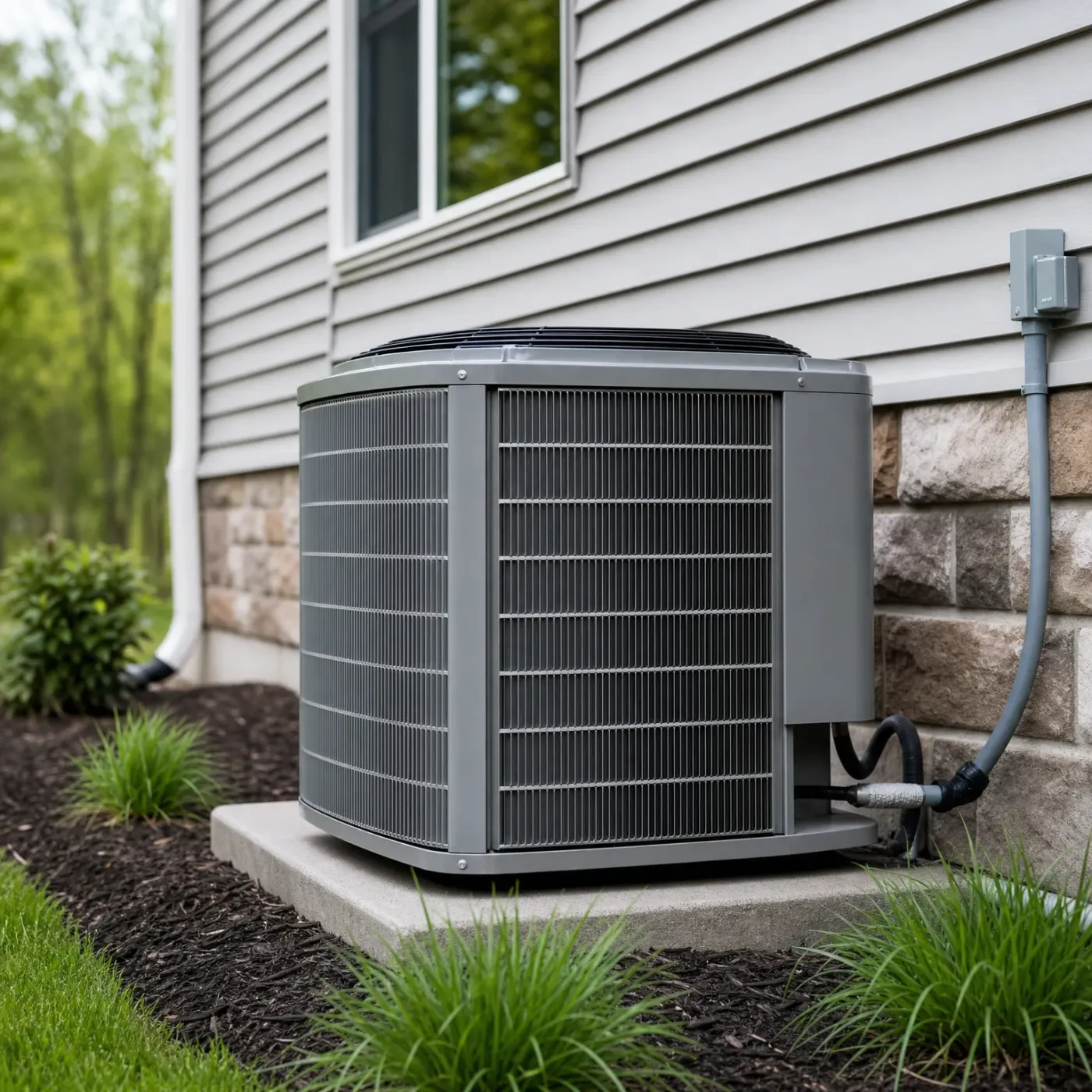
Coil guards packed with dust and yard debris force air through a narrower path, and some of what's caked on breaks loose into the airstream. That dust rides the ductwork into your rooms no matter how new the filter is.




A filter that does not seat flush lets air curl around its edges instead of pushing through the material. That gap is small, but it is enough for dust sitting in the ductwork to get pulled into the airstream and pushed out into the room. You can check this yourself. Pull the filter and look at the frame it sits in. If light shows around the edges when you hold it up to the slot, air has been passing around it for a while, not through it. A filter that fits tight against the frame on all four sides is doing the job it is there for.
A maintenance visit on central air includes pulling the blower access panel and looking at the squirrel cage fan itself, since dust builds up on the fins over time and a dirty blower wheel pushes that dust straight into your supply ducts no matter how clean the filter is. It also means checking that the return side is sealed where it meets the air handler, since a gap there pulls dust from the basement or attic into the system before the filter ever sees it. These are not things you can check from the vent in your living room.


Skip searching for an air conditioner pro and answer a few questions instead.
Describe your air conditioner job, and a local pro who handles it gets in touch.
There's no charge for the request.
You run a cloth over the end tables Tuesday and by Friday there's a film on them again. It settles on the TV screen, it's in the air you can see when sunlight cuts across the living room, and your filter looks gray within a few weeks of going in new. In a New Jersey summer, the system is running most of the day to keep up with the humidity, so that air is moving through your ducts constantly, and whatever is loose in there keeps getting pushed back into the rooms you're trying to keep clean. Left alone, it's not just more dusting. A system working to push air through a dirty filter and a dirty coil runs longer to do the same job, and on New Jersey power rates that shows up on the bill.

If your ducts run through the attic or crawlspace, as a lot of them do in older New Jersey homes, a loose joint pulls in dust from that space every time the system runs. That dust rides the airflow straight into your rooms. No amount of filter changing fixes a duct that is pulling air from a dusty attic instead of your living space. A technician can check the joints and seal what is open.

Some systems have a return vent that cannot pull in enough air for the equipment attached to it. When that happens, the blower pulls harder than the return can supply, dragging air in around door frames, outlets and any gap it can find, and whatever dust sits in those spaces comes with it. A properly sized return stops that pull. It is worth asking a technician to check the static pressure on your system during a maintenance visit.
At 22.48 cents per kilowatt-hour, running your air conditioner clogged with dust costs you more than a cleaning would. A dirty filter or coil makes the system push harder to move the same air, and that extra strain shows up on your bill all summer.
EIA-861 2025 statewide residential average
The dust in your vents has a source, and it's one of three things: the filter, the coil, or a loose duct joint. A filter that doesn't sit flush lets air slide past it instead of through it, and that air carries whatever dust has settled in the ductwork into your living room. A coil caked with dust makes the blower work harder to push the same volume of air, and that strain doesn't just show up on your power bill, it pushes dust back out through the supply vents along with the air. If your ducts run through an attic or crawlspace, a seam that was never sealed tight pulls dust in from that space every time the system cycles on. None of these are failures of the air conditioner itself. The unit is doing what it's built to do. It's moving air through a path that has a gap in it somewhere, and that gap is what's letting dust in.
Finding which one it is usually means someone looking at the filter fit, pulling the panel to check the coil, and tracing the duct runs where they're reachable. That's not something you can see from the thermostat. Rather than calling a handful of companies, describing the dusty vents to each one, and sorting through different quotes for a problem you can't name yet, you get matched with a contractor who can look at the filter, the coil, and the ducts directly and tell you which one is doing it.





One form replaces the calls you'd make to find an air conditioner pro.
You only hire the pro if you want to.