



Why your house is so dusty in New Brunswick, NJ

Hand off the search

Dust that comes back a week after you wipe it down usually means the duct system is feeding it right back into the air. In a lot of New Brunswick homes, that air moves through the same ducts all year, humid in summer, dry and dusty once the furnace kicks on for the winter. You've probably already tried the obvious things: a better filter, dusting more often, maybe a new vacuum. If the dust keeps coming back, the ducts themselves are worth ruling out. Finding someone who actually cleans ducts, not just carpets, means sorting through listings, calling around, and explaining the same thing more than once. Send the form on this page instead. It puts your situation in front of a contractor who does this work, so you're not the one hunting for a name or chasing a callback. The legwork of finding help stops being something you have to do.

Why is my house so dusty all of a sudden?

You dust the shelves, and a few days later there's a film on them again. Nothing in the house changed that you can point to, so it feels like it's coming from nowhere. The timing usually isn't random. In homes around New Brunswick, it tends to line up with the furnace turning on for the season or with a duct or filter problem that's been building for a while.

It's the duct system recirculating dust, not more dust being created

A house doesn't suddenly produce more dust. What changes is how much of it gets caught before it lands back on your furniture. Once gas heat starts running for the winter, the furnace pushes air through the same ducts for hours a day, and a dirty filter or loose duct joint lets dust pass through instead of catching it. Dry winter air also lifts dust more easily off floors and surfaces, so the same amount of it shows up faster. If the filter is old, undersized, or the ducts have a leak pulling in air from an attic or crawl space, the system keeps feeding dust back into every room instead of removing it.

A smiling man in a dark green sweater sits at a wooden table with a light gray mug in a kitchen with white tile backsplash, pendant lights, and an adjoining living room visible.
A smiling man in a dark gray sweater stands indoors looking to the side, with a kitchen counter holding a ceramic mug and open wooden shelves behind him and a living area in the background.
A smiling man in a dark blue button-up shirt stands at a white kitchen island, with open shelving, a gas range, a potted plant and a window in the background.
A smiling man with dark wavy hair and a beard, wearing a dark green knit sweater, sits in an open-plan living room and kitchen with a brown sofa, large windows, and a counter holding a mug and a wooden bowl.
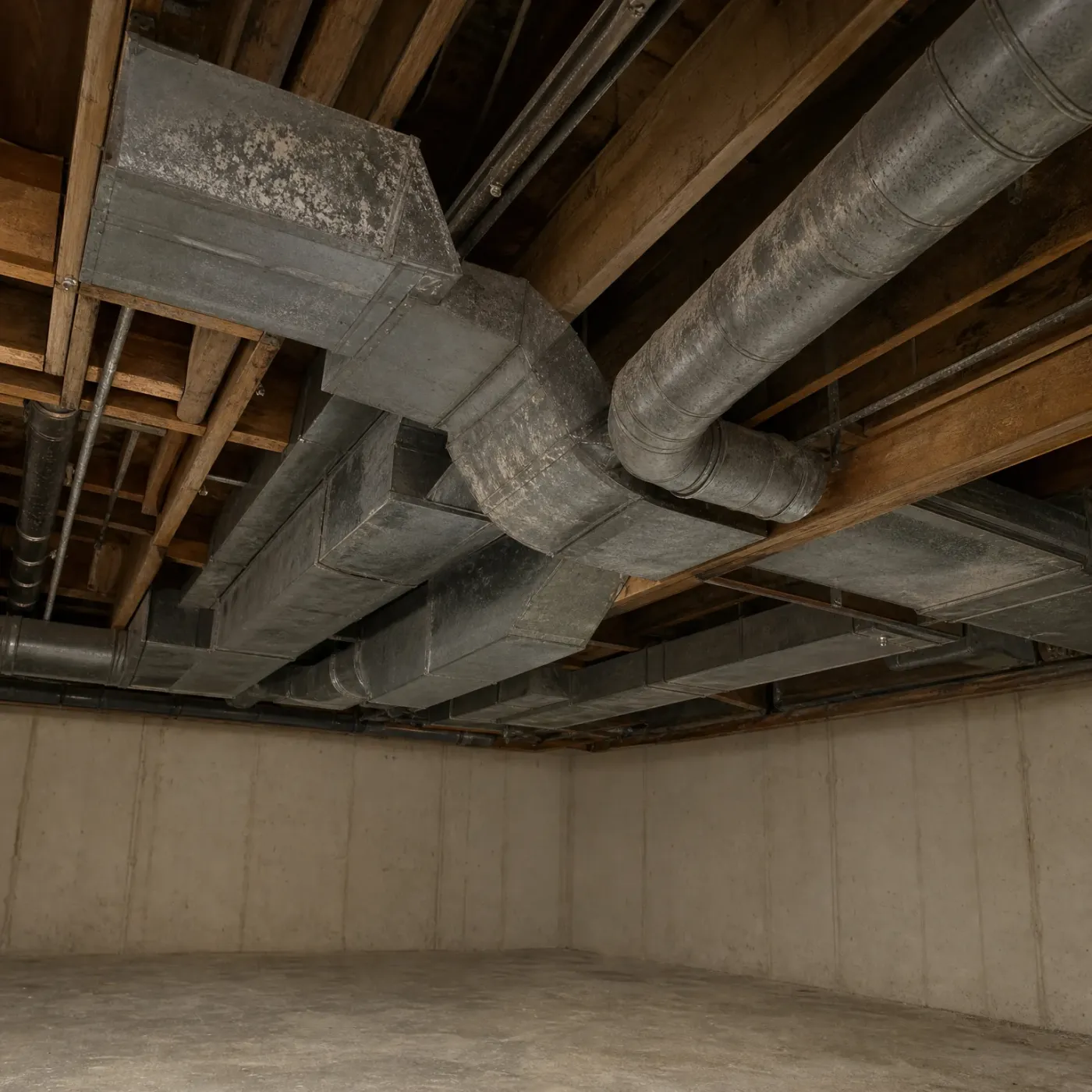
Unfinished basement with concrete floor and walls, exposed wood joists, galvanized sheet-metal ductwork, a furnace unit, a steel support column, and a small window.
Ductwork like this moves air the way it's supposed to, with no leaks feeding dust into every room it reaches.
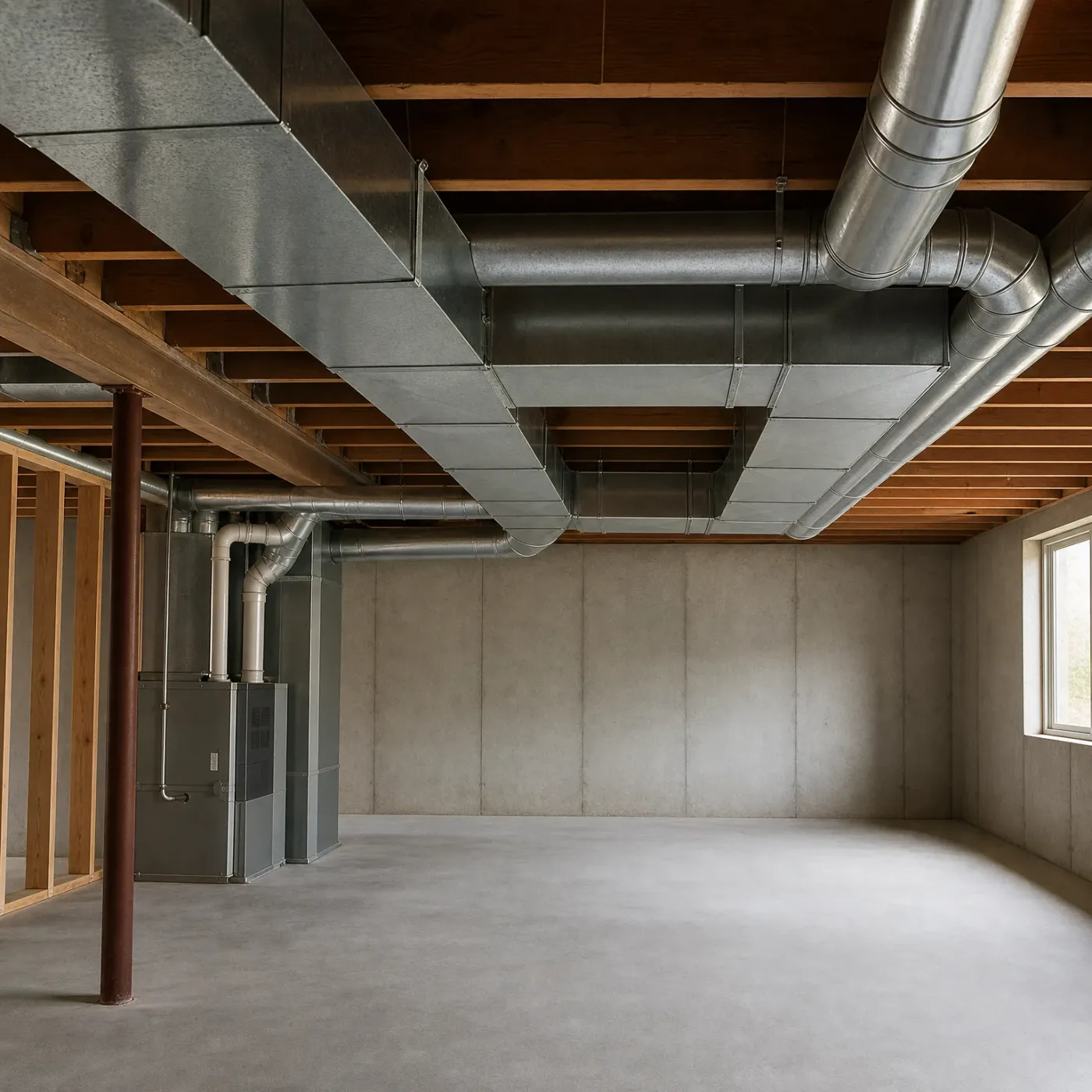
Empty unfinished basement with bare concrete walls and floor, showing exposed wooden joists, galvanized sheet-metal ductwork, pipes, and a white vent grille overhead.
Loose joints and bare duct runs like these pull in basement dust and spread it through the vents upstairs.

What's behind the dust in a New Brunswick house?

  • Half the homes here were built by 1974

    Half the homes in Middlesex County were built in 1974 or earlier, and ductwork that old has had decades to work loose at the joints.

  • Heat runs October through April

    Heat runs October through April here, about seven months, and that's seven months of air pushing through ducts and stirring up whatever sits in them.

  • Cooling runs June through September

    Cooling runs June through September, so for four more months the same ducts are moving air again, with barely a break in between.

ACS 2020-2024 · NOAA nClimDiv 1991-2020

Why sealed ducts cut dust fastest

Air headed back to the furnace travels through return ducts that run near the floor, through closets, basements, sometimes a crawlspace. Any open seam along that path pulls in whatever is sitting nearby instead of just the air from your rooms. That's how basement dust and insulation fibers end up in a bedroom vent two floors up. Sealing those joints stops the pull at the source rather than catching dust after it's already circulating. It's also why a filter upgrade alone doesn't solve this. A better filter catches more of what passes through it, but it can't do anything about dust entering the system downstream, past the filter, straight into the supply runs that feed every room.

What a cleaning actually removes

Ductwork builds up a packed layer along the inside of the metal over years of use, not loose dust but a coating stuck to the surface from humidity and static. Every time air moves through, that layer sheds a little more into the stream. A cleaning scrubs the inside of the trunk lines and branch runs, not just the registers you can see from the room. It also reaches the return side, where dust pulled in through gaps tends to collect before it ever reaches the blower. Combined with sealing the leaks, it addresses both the source and the supply, which is why the two jobs are usually done together rather than one instead of the other.

Power here costs 23.82 cents per kilowatt-hour

At 23.82 cents per kilowatt-hour, running the blower longer than it needs to run costs you more here than almost anywhere else. A duct system full of leaks makes the furnace and AC cycle longer to keep up, so the same dust problem is also padding your electric bill every month.

EIA-861 2025

What you keep wiping down

The shelves, the TV stand, the windowsills, same spots every few days. You run the vacuum, dust the furniture, maybe wipe the blades on the ceiling fan, and it's back before the week is out. That's not bad luck or a dirty street outside. If the ducts are pulling air from a basement or crawlspace through a loose joint, every cycle of the furnace or the AC is putting more of that dust back into the rooms you just cleaned. You can keep wiping, but the source is in the duct run, not on your shelf.
What it does to the air you breathe

Dust in the house isn't just grit on a shelf. It's what gets pulled into the return and blown back out through every vent, which means it's in the air in the bedrooms, the kitchen, wherever the ducts reach. Anyone in the house with allergies or asthma notices it first, more than anyone else does. The filter catches some of it, but a filter can only clean air that passes through it, not air that's leaking in past the ducts and skipping the filter box entirely.

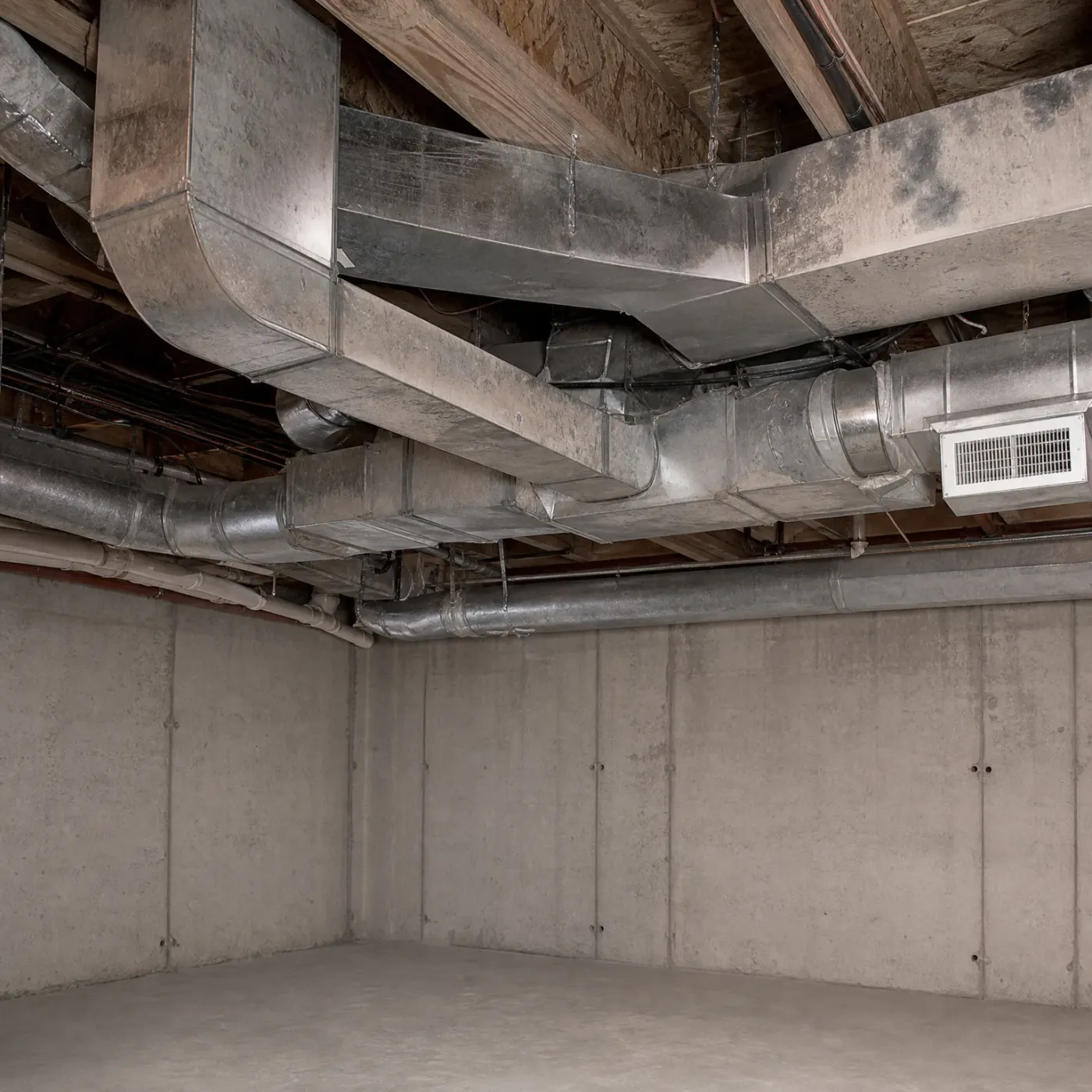
Empty concrete-walled basement with bare floor, showing large galvanized sheet-metal HVAC ducts, insulated pipes, wiring and wooden floor joists overhead.
Before you get your ductwork cleaning
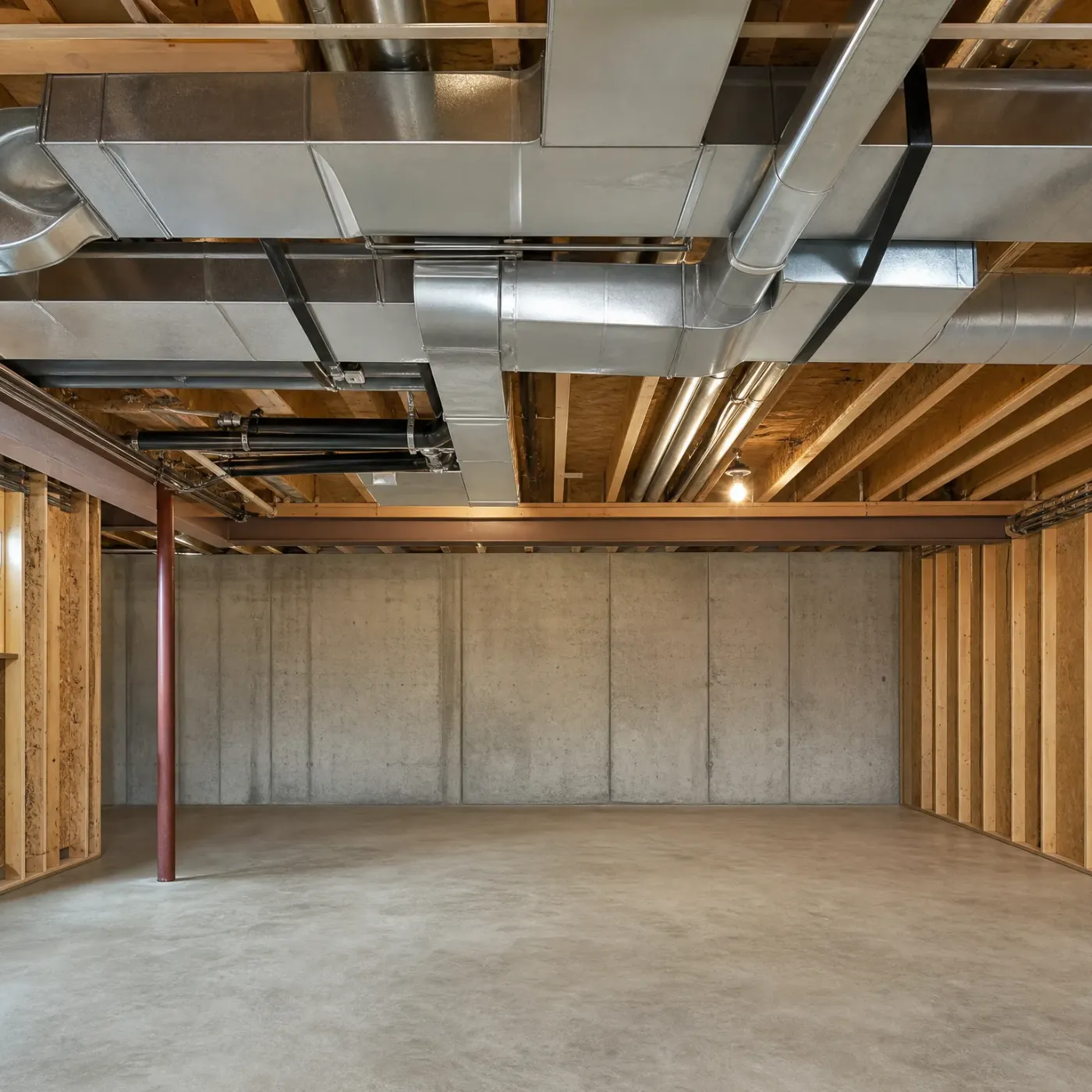
Empty unfinished basement with bare concrete floor and wall, wood-framed stud walls, exposed joists, galvanized HVAC ducts and pipes overhead, a steel beam and red support column, and a single bare bulb light.
After you get your ductwork cleaning

Send one request and you're done looking

Skip searching for someone who cleans ducts in Middlesex County.

It costs nothing to send, and you don't have to hire anyone.

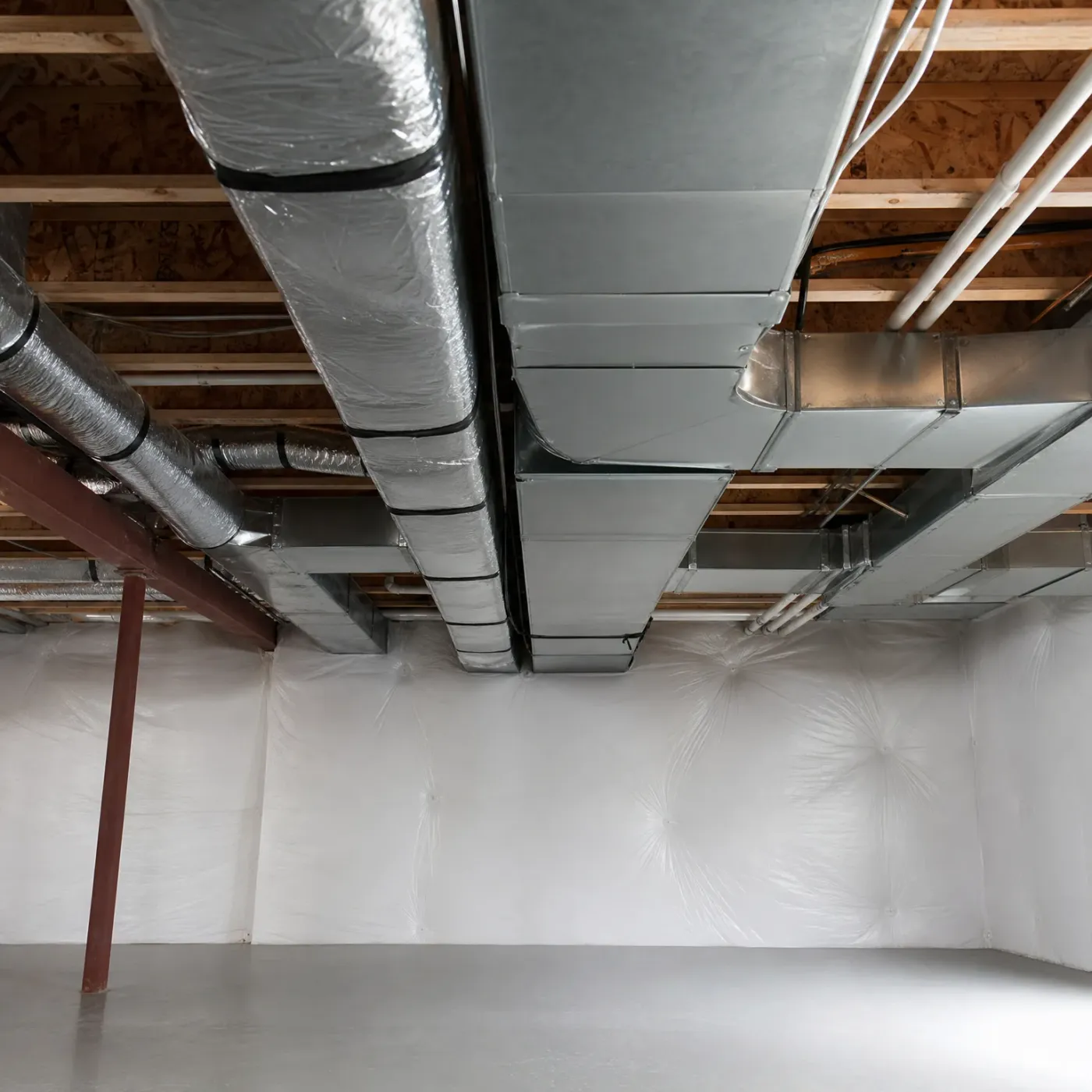
Unfinished basement with exposed wood joists, sheet metal and insulated flexible ductwork, white pipes, a steel support post, plastic-covered walls, and a bare concrete floor.

Ductwork sealed and running clean

These runs are wrapped tight and joined at every seam, so the only air moving through them is air pulled from inside the house. Nothing from the basement itself gets drawn in and pushed up through the vents.

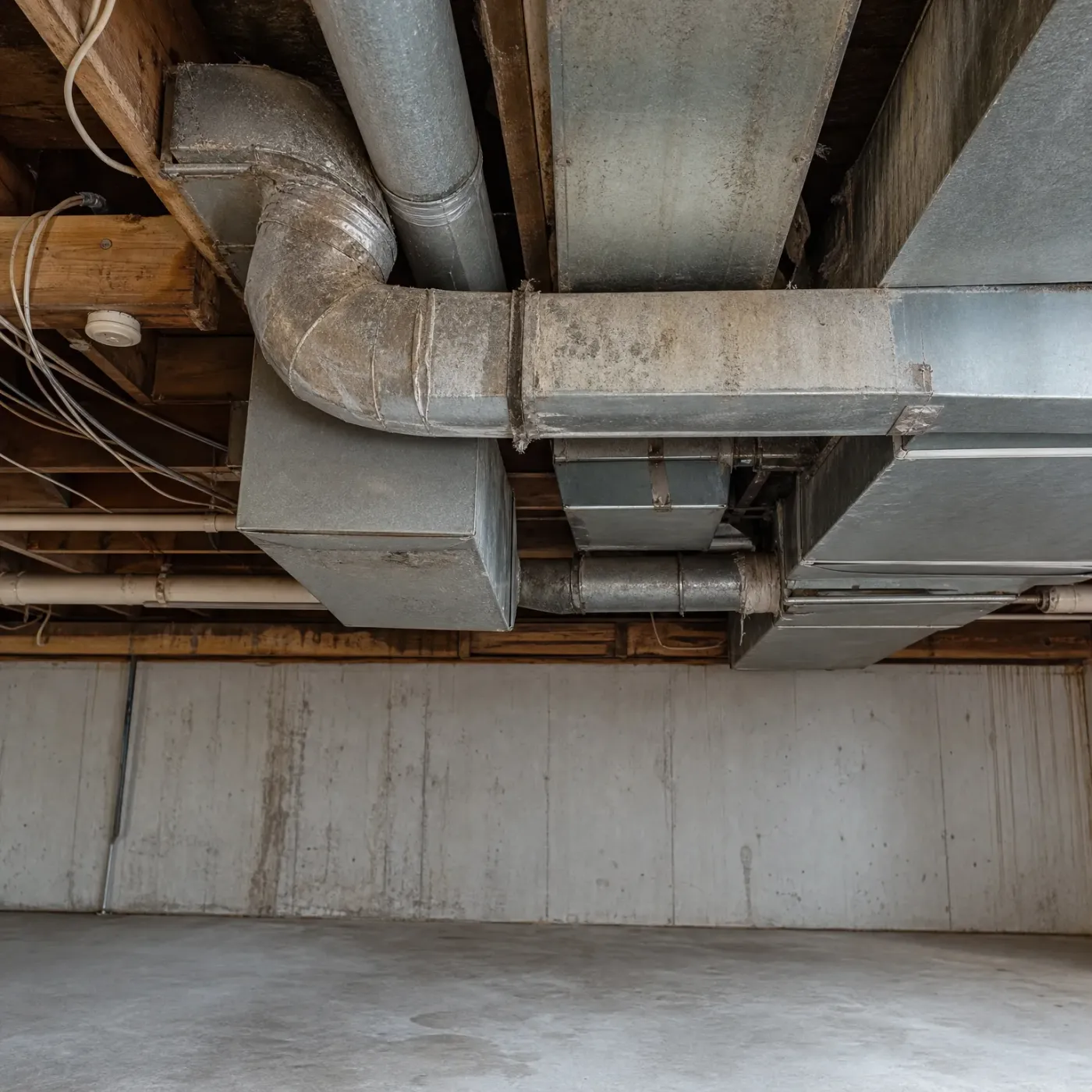
Galvanized sheet-metal ductwork and round pipes run beneath wooden floor joists in a basement with concrete walls and floor.

Ductwork pulling in basement air

Bare metal trunk lines and a loose flex connector like this leave gaps right where the return path runs past the joists. Basement dust gets drawn in at those gaps and carried straight to the rooms above.

A closed silver laptop and a white cup of coffee on a saucer sit on a wooden table in front of a wooden chair, a plain beige wall, a potted leafy plant and a window with greenery outside.

What a cleaning crew actually does in your ducts

A duct cleaning job starts with the supply and return sides disconnected from the furnace so a vacuum can put the whole system under negative pressure. Brushes or whips go through each run to knock loose what's stuck to the walls of the duct, and the vacuum pulls it out before it can settle back down somewhere else. The registers in every room come off and get cleaned too, since dust collects right at that edge where the vent meets the floor or ceiling.

Finding someone who does this correctly, with the ducts actually sealed shut during the process so dust doesn't just blow into the house, is the part that takes the calling around. You'd normally be checking licenses, asking what equipment they run, and getting a few quotes before you know who's worth hiring. Send the form once and that search is off your plate.

A shallow dark wooden bowl and a stack of books rest on a wooden table in front of a beige sofa with linen and green cushions, with a tall ceramic vase of thin branches beside a window in the background.
  1. Every supply and return vent gets sealed off except one access point

  2. A vacuum collector attaches there and pulls the whole system to negative pressure

  3. Brushes or air whips knock dust loose from the walls of each run

  4. Loosened dust and debris pull out through the vacuum line, not into your rooms

What's that dust doing to the air you're breathing?

Check the return vent nearest the furnace. If there's a gray film building up on the grille itself, that same dust is passing through and going back into every room the duct serves. You might notice it most as a dry, scratchy feeling in your throat once the furnace has been running a while, or more sneezing in the house than outside it. Anyone with allergies or asthma in the house usually feels this before anyone else does. It's not just surface dust at that point. It's whatever the ducts are pulling in getting circulated and re-breathed, day after day, for as long as the system runs.

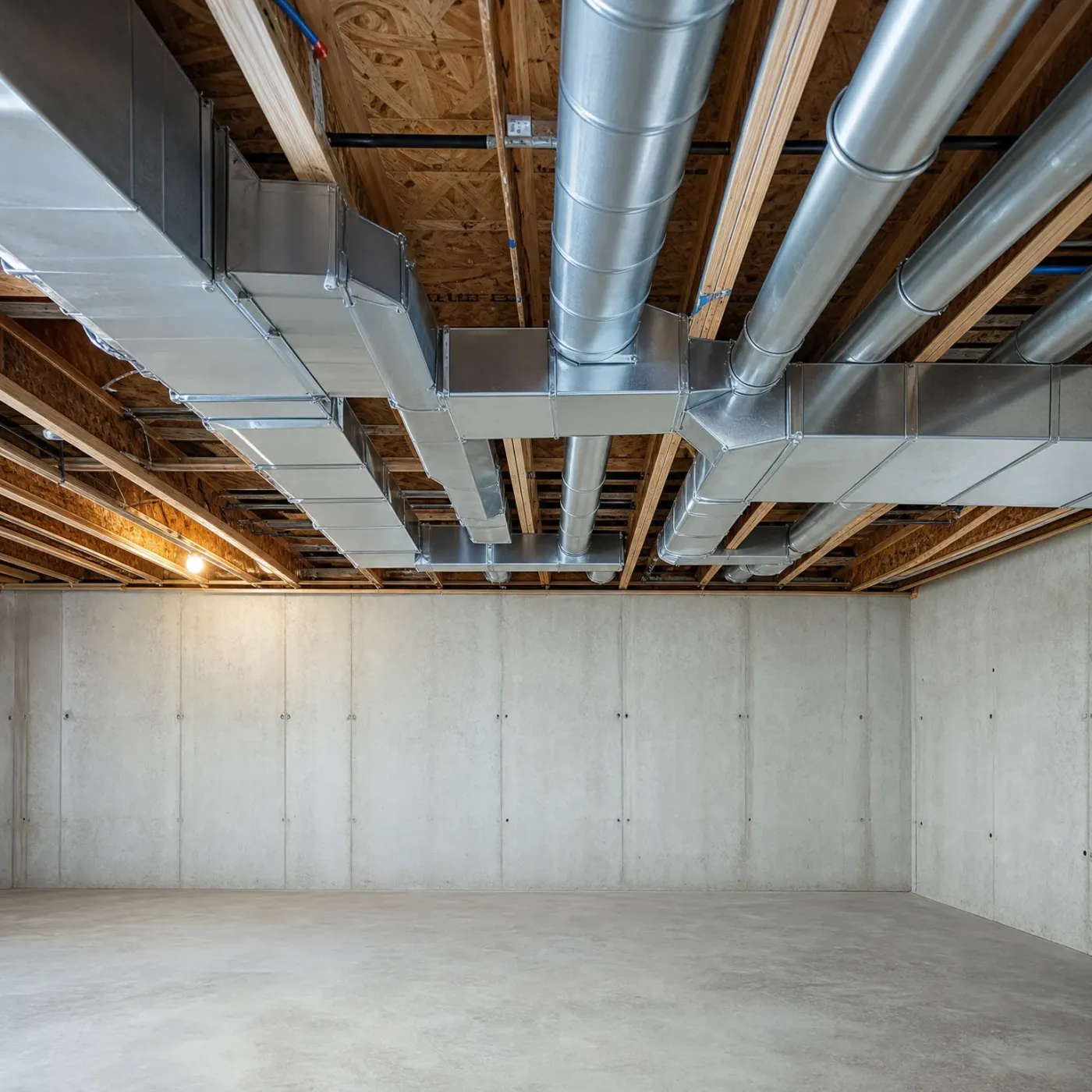
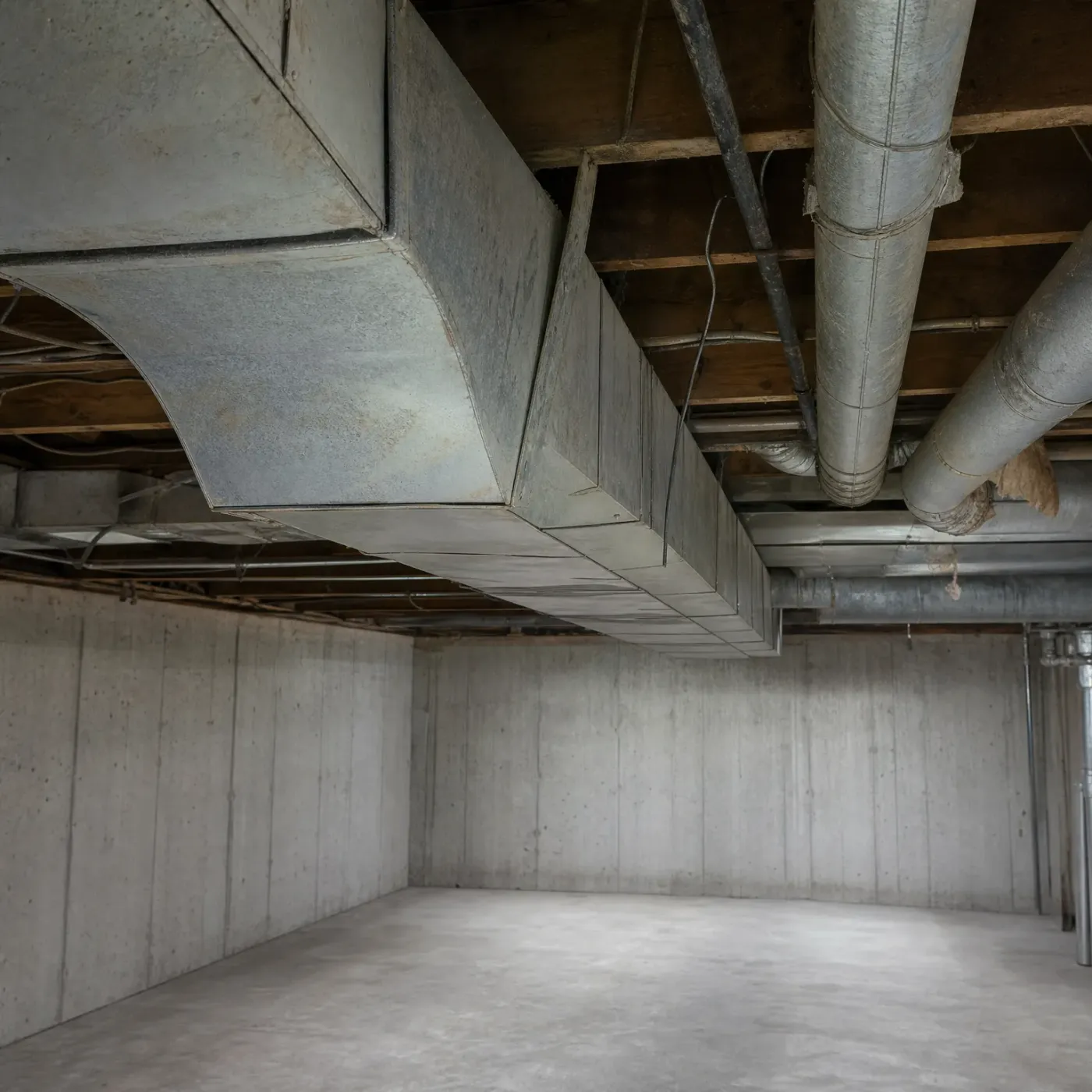
Empty concrete-walled basement room with bare floor and an exposed wood-joist ceiling carrying galvanized rectangular and round sheet-metal ducts, black pipes, and wiring.

Ductwork sealed at every joint

Trunk and branch lines like these are wrapped and joined tight, so the only dust moving through them is whatever is already in the room air. The basement underneath stays in the basement.

Empty concrete-walled basement room with exposed wooden joists and galvanized rectangular and round ductwork plus pipes running across the ceiling.

Ductwork open at the seams

Oxidized seams like these have had years to work loose. Every gap along the run is a place for the blower to pull basement dust in and push it straight out the vents upstairs.

The dust that keeps showing up on the same shelves usually traces back to the ducts, not the housekeeping. Loose joints, a long heating season, and a blower that runs more than it should all point the same direction. Sealing and cleaning the system addresses the cause instead of the symptom you keep wiping away. You don't have to figure out on your own which part of that system is the problem, or spend an evening calling around Middlesex County asking who does this kind of work and when they can get to it. You won't need to explain the gray film on the return vent to three different companies just to get three different quotes to compare. Send the form once, and the search for someone qualified is no longer on your list. What's left is the actual job, the vents sealed, the runs cleared, and the air in your house finally carrying less of itself back into every room.

A dark-clad house with large windows beside a gravel driveway lined with in-ground path lights, ornamental grasses and hydrangeas, with distant hills and an orange sunset sky.

Ductwork Cleaning

Finding a pro stops being your job

Duct and vent cleaningDucts or ventsMiddlesex County, NJ
Step 1 of 2

What ZIP code is the job in?

  • A gray upholstered sofa arm with a cream knit fringed throw sits beside a wooden side table holding a stack of books, a shallow wooden bowl, and a ceramic vase of leafy branches, on a wood floor near a window.
    • Get matched with someone who does this kind of work in Middlesex County.
    • Get matched with a Middlesex County pro who cleans ducts.
  • A living room corner with a cream upholstered sofa and cushion beside a wooden side table holding a ceramic vase of olive branches and a small dark bowl, with a framed landscape painting on the gray wall and a linen curtain at the window.
    • One request and the duct cleaning stops waiting on you.
    • Once you send the form, finding a pro is off your list.
  • A wood-framed armchair with a beige cushion and knitted throw sits beside a round wooden side table holding a ceramic mug, with a potted green plant near a window in the corner and a framed picture on the wall.
    • Fill out one short form instead of calling around.
    • Explain the job once and skip repeating it on every call.
  • Interior corner with beadboard wainscoting, a gray cabinet with wood countertop holding a vase of greenery below a window, and a potted leafy plant in a woven basket on a wood floor with a fringed jute rug.
    • The pro who gets in touch is licensed in New Jersey and works in Middlesex County.
    • A licensed pro who works in Middlesex County gets your request.