After you send the request, you're done searching.
Yes. Lint is the fuel. A clogged vent traps hot, damp air and lint inside the duct, and that lint ignites easily once heat builds up with nowhere to go. It's one of the more common causes of house fires, and the dryer is usually running unattended when it happens, in a laundry room or basement with nobody watching.
You might already have signs of it. Clothes that take two cycles to dry. A dryer that runs hot to the touch, or a laundry room that feels warmer and more humid than it should. A burning smell when it runs. Lint collecting around the outside vent hood instead of blowing clear. Any one of these means air isn't moving through that duct the way it's supposed to.
In Essex County, that risk doesn't let up. Summers here get sticky, so the dryer works harder and runs longer to push moisture out through a vent that's already restricted. Winters are cold, and a closed-up house means more laundry, more loads, more hours the dryer runs. The vent gets used hard most of the year.
A clogged vent isn't something to watch and wait on. Once you send the request, you're done chasing it down. A local contractor who clears these vents all year, in homes with the same setup as yours, takes it from there. You're not stuck calling around Newark or waiting on a handful of companies to get back to you. One contractor, local, licensed, gets the request and gets in touch.
From there it's a straightforward job: clear the duct, check the vent hood outside, make sure air is moving the way it should. You get your dryer back to drying in one cycle, and the risk that's been sitting in your wall goes with it.
Yes, a clogged dryer vent is a real fire risk, and in Newark it has less room to vent than you'd think. A lot of homes here run their dryer duct through a tight basement or laundry closet with a long run to the outside wall, and every foot of that duct is a place lint can settle. Once the vent is blocked, the dryer still heats, but the hot air has nowhere to go, so it backs up into the duct and over the lint sitting there. That lint is dry and fine, and it catches easily. You'll usually notice the warning signs first: clothes taking two or three cycles to dry, the top of the dryer feeling hot to the touch, or a burnt smell when it runs. Those are signs the vent is restricted, not that the dryer itself is failing, and they're worth acting on before the next load goes in.
Why does lint build up so fast in an Essex County home?
2.63 people per household on average
With 2.63 people in the average household here, that dryer is running loads most days of the week, and every load leaves lint behind in the duct.
Half the homes here were built by 1958
Half the homes in Essex County were built in 1958 or earlier, and a duct run that old has more joints and bends for lint to catch on than a straight new one.
Power here costs 24.38 cents per kilowatt-hour
Power here runs 24.38 cents per kilowatt-hour, and a dryer fighting a clogged vent pulls more of it, every load, just to push the same air through.
ACS 2020-2024 · EIA-861 2025
A vent that's doing its job
Warm air comes out the hood outside in a strong, steady push. You can feel it with your hand a few inches away. A load of towels dries in one cycle, not two. The laundry room doesn't turn warm or smell like hot dust while the dryer runs. Lint shows up in the trap after every load because that's where it's supposed to collect, not further down the duct where you can't see it.
A vent that's choked up
Clothes come out hot to the touch but still damp, so you run the cycle again. The outside hood barely moves air, or the flap won't lift all the way. The dryer itself runs hotter than it used to, and in a basement setup with a long duct run to the wall, that heat has more lint-packed length to sit in before it ever reaches outside. That's the setup that lets a small ignition point turn into a real fire.
Is your dryer showing any of these signs right now
Go feel the outside hood while a load is running. If the air coming out is weak or barely warm, the vent is restricted somewhere along the run. Inside, a load that used to take one cycle now needs two, and the top of the dryer or the door feels hot to the touch partway through. The laundry room picks up a warm, dusty smell, and you might notice lint sitting around the lint trap housing or at the outside hood itself. Any one of these on its own is worth checking. Together, they mean hot air and trapped lint are building up inside the duct with nowhere to go, and that's the condition under which a dryer fire starts.
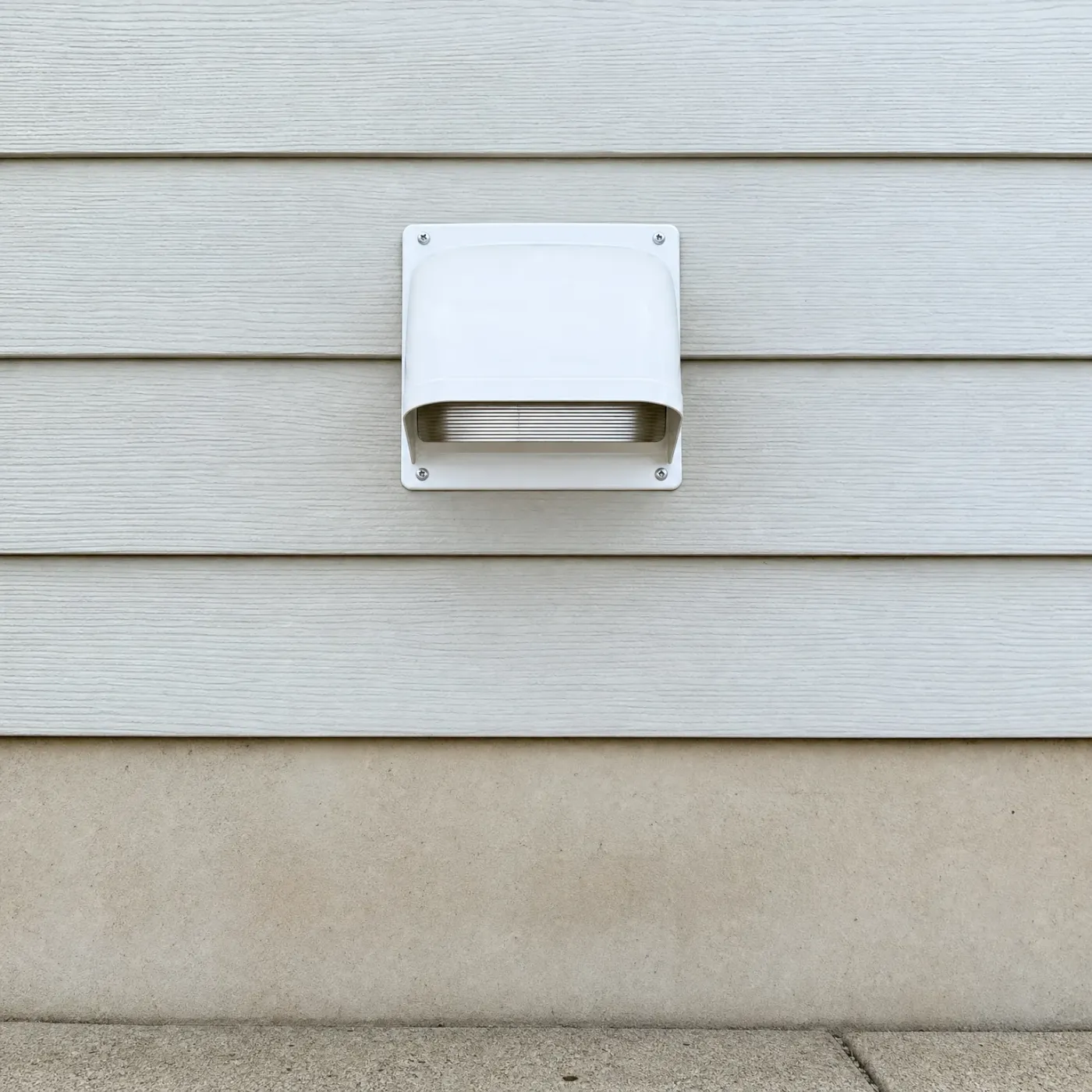
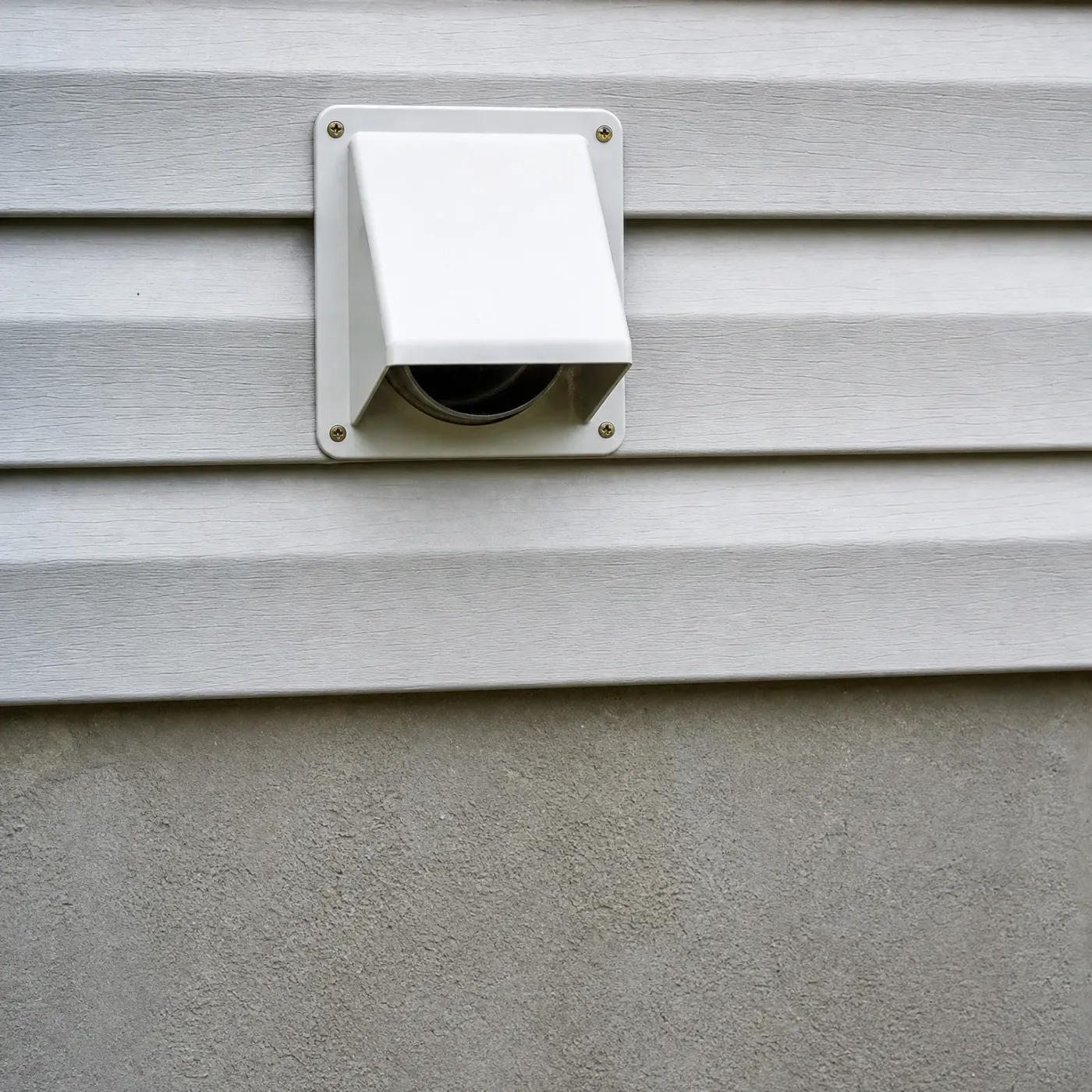
Clear and venting right
Outside, the hood sits flush on the siding with its louvers hanging open and loose. Air pushes them out when the dryer runs and they fall shut after. Nothing blocks the opening, so heat and moisture leave the duct as fast as the dryer makes them.
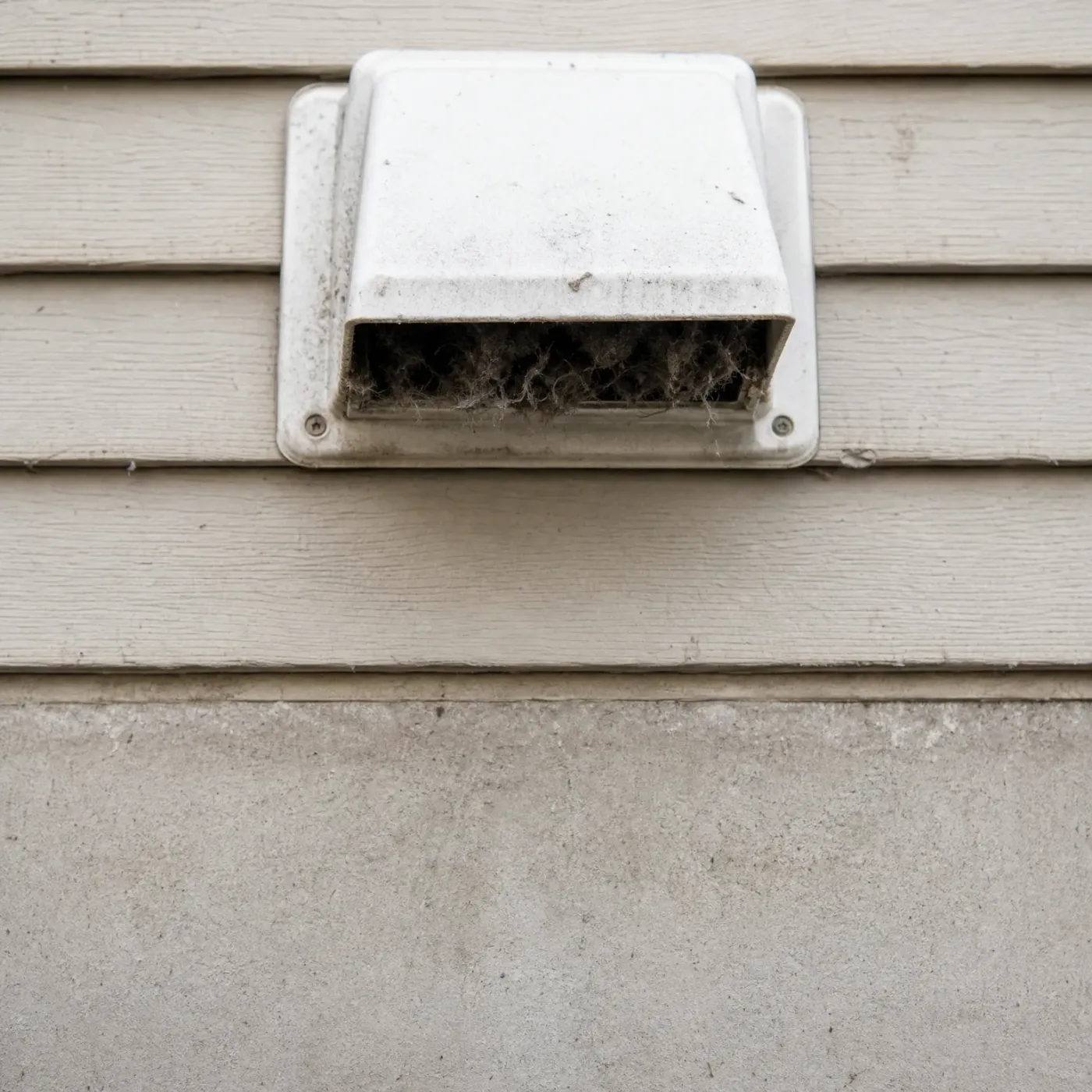
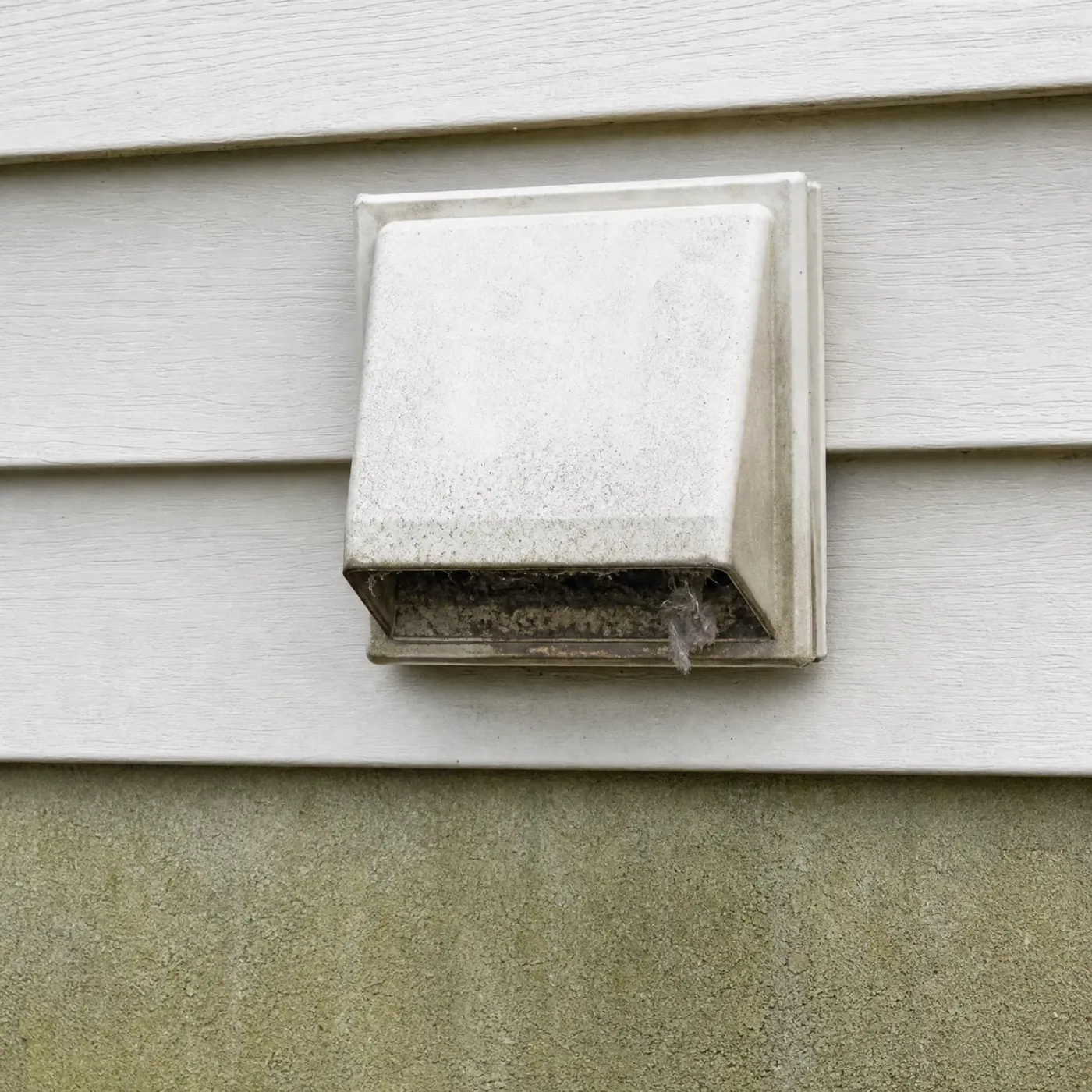
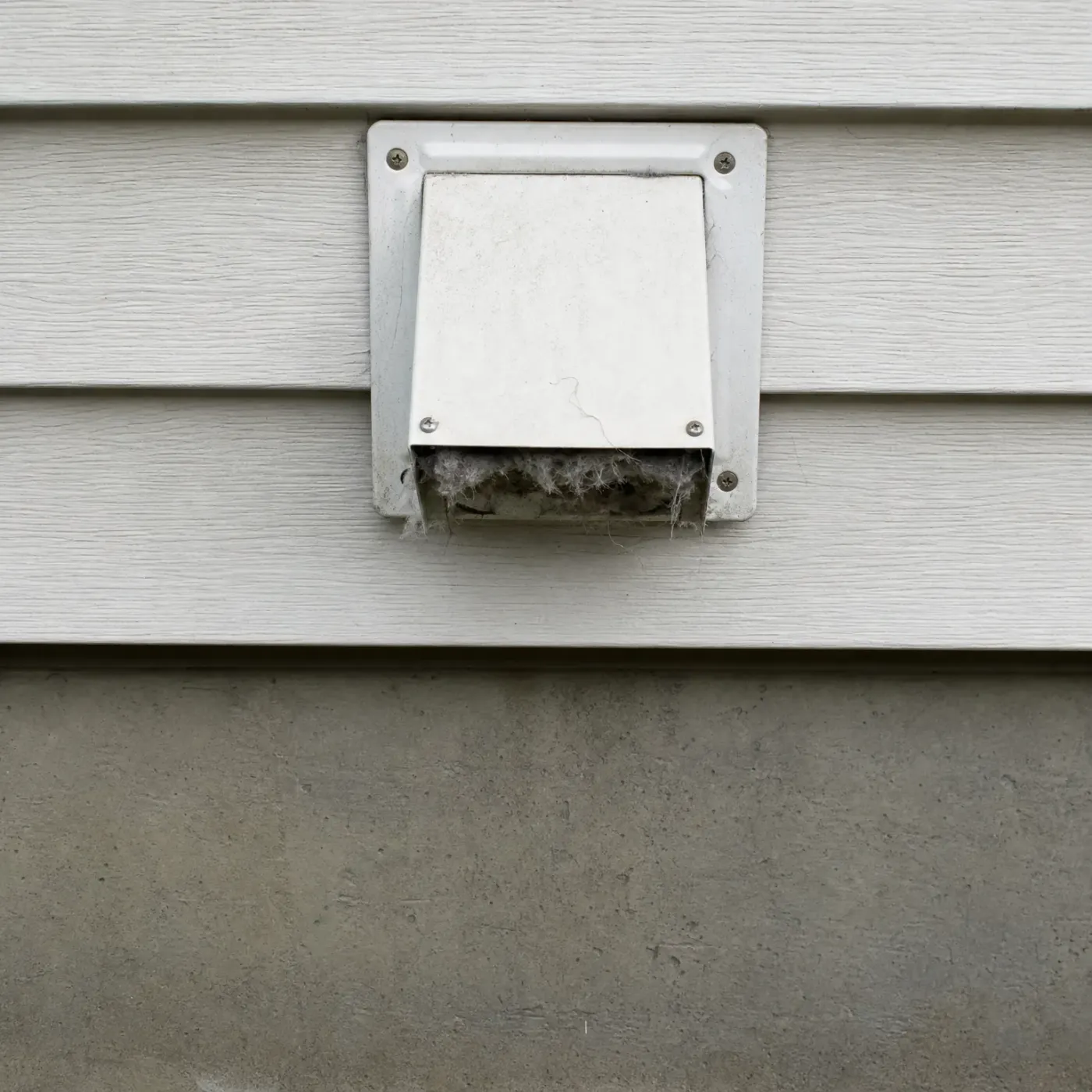
Clogged and holding heat
This hood is packed with gray lint across the whole opening. Air can't push past it, so the heat the dryer makes stays in the duct instead of going outside. That trapped lint is what a dryer fire needs to start.
Let someone else find the pro
The pro who gets in touch is licensed in New Jersey and works in Essex County.
Send the form and the dryer vent cleaning stops sitting on your list.
Air pushes the hood's louvers open and they swing shut again once the dryer stops, nothing holding them back.
Lint has packed the opening so the flap can't close, and air has to fight its way through what's left.
1
Lint sheds off every load and rides the air into the duct.
2
Hot, moist air slows down wherever the duct is crimped or long.
3
Lint drops out of that slower airflow and builds up on the duct wall.
4
The buildup narrows the path until hot air can barely escape outside.
Vent Cleaned vs. Vent Clogged
Vent cleaned
Hot air has a clear path out, so it carries moisture and heat away instead of letting them sit in the duct.
A load finishes in one cycle, which means less time the heating element and motor run per load.
The hood louvers swing open fully when the dryer runs and close again once it stops.
Lint has nowhere to collect and build toward the ignition point inside the duct.
The laundry area stays at room temperature while the dryer runs instead of turning warm and humid.
Vent clogged
Heat builds up inside the duct with no way to escape, and that heat is what lint needs to catch.
The dryer runs longer per load, which keeps the heating element working harder for more of each cycle.
A restricted vent can trip the dryer's thermal cutoff repeatedly, and some owners just keep restarting the cycle.
Lint sitting against a hot duct wall for a long Essex County winter has more time to dry out and pack tight.
Moisture that can't escape through the duct ends up condensing back into the dryer and the surrounding wall cavity.
The fire starts inside the duct, often behind a wall or in a basement, where nobody sees it until it's through the wall.
Before you get your dryer vent cleaningAfter you get your dryer vent cleaning
A dryer's thermal fuse is built to cut power once duct temperatures climb past a safe point, but it only catches heat building at the dryer itself. The lint sitting deeper in the duct can still be hot enough to catch.
That's why a clogged vent stays a risk even on a dryer that seems to be working fine. By the time you notice longer dry times or a hot laundry room, lint has usually been collecting for a while.
2.63 people per household on average
At 2.63 people, most households here are doing laundry nearly every day, not once a week. That steady pace means lint reaches the danger point in the duct faster than it would in a house running the dryer once in a while.
ACS 2020-2024
The Answer, Plain
A clogged dryer vent is a real fire risk, not a worst-case scenario reserved for someone else's house.
Lint is the fuel, and a restricted duct lets heat build up with nowhere to go.
The thermal fuse protects the dryer itself, but it can't reach lint smoldering deeper in the duct.
Long duct runs through basements and laundry closets, common in homes here, give lint more surface to collect on before it ever reaches outside.
Weak airflow at the outside hood, longer dry times and a warm laundry room are the signs the vent is already restricted.
Doing laundry nearly every day means the duct reaches that danger point faster than in a house that runs the dryer once a week.
A clogged dryer vent can start a fire. That's the straight answer, and nothing in how a dryer works changes it. Lint is dry, it catches easily, and a restricted duct gives it a place to sit and heat build up around it instead of moving outside with the exhaust air. The dryer's thermal fuse is built to protect the machine when things get too hot near the drum, but it has no way to reach lint packed further down the duct, so that part of the risk goes unwatched by the appliance itself. Homes in Newark and around Essex County often route the duct a long way, through a basement or a tight laundry closet, before it ever reaches the outside wall, and every extra foot is more surface for lint to catch on along the way. None of this takes a bad dryer or careless laundry habits. It takes a vent that has gone too long without being cleared, and a household running loads often enough to fill it back up fast. The signs show up before anything catches: weak air at the hood outside, a load that needs two cycles instead of one, a laundry room that runs warmer than it should while the dryer is going. Catching those signs early is the difference between a vent that needs clearing and one that's already a hazard. The risk is real, and it's also one you can see coming if you know where to look.
Dryer Vent Cleaning
One request and it's handed off
A licensed pro who works in Essex County gets your request.