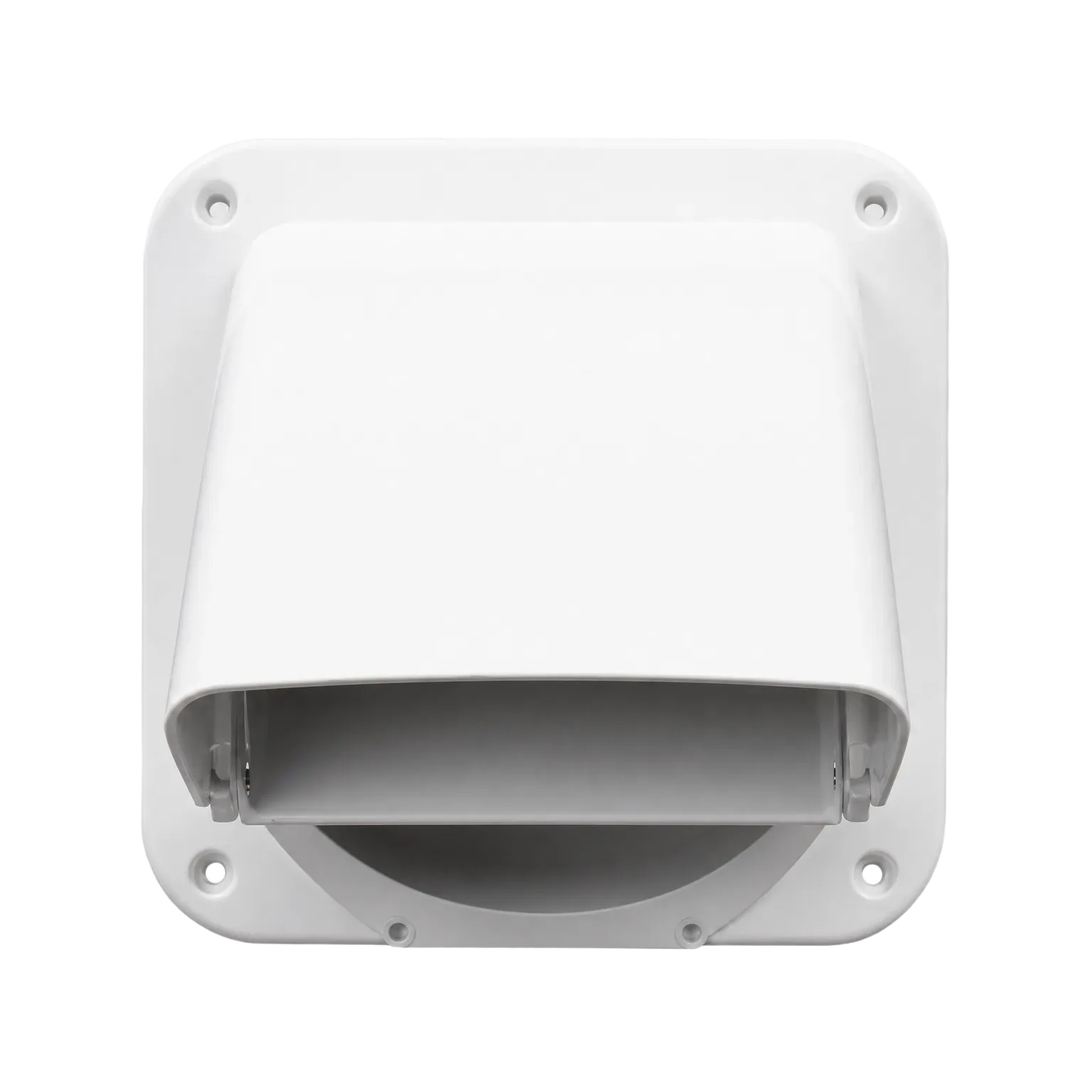

Vent flap moves freely
Outside, the cap sits flush against the siding and the flap swings open when the dryer runs. Air pushes out strong enough to hold it open, then it falls shut once the cycle ends. Lint isn't building up behind it.
Your dryer has been acting up. Maybe clothes come out hot but still damp, maybe the load takes two or three runs now when one used to do it, or you've noticed the laundry room feels warmer than it should. You want to know if this is a vent problem before it becomes something worse, and what exactly to look for so you're not just guessing.
A clogged vent can't carry the moist air out fast enough, so the dryer keeps running past one cycle trying to finish the load. Go outside and check the vent hood while the dryer runs. Weak airflow or almost none means lint has built up somewhere in the line. You'll also notice the dryer itself running hotter than normal, the top of the machine warm to the touch, or a burnt smell when a cycle ends. Lint collecting around the lint trap slot or behind the machine is another sign the vent isn't pulling air the way it should. Any one of these on its own is worth a look. A few together mean the vent needs to be cleared before it causes bigger problems.
Outside, the cap sits flush against the siding and the flap swings open when the dryer runs. Air pushes out strong enough to hold it open, then it falls shut once the cycle ends. Lint isn't building up behind it.

The flap barely lifts off the hood, or it doesn't move at all. Lint has built up inside the opening until there's almost nowhere for air to escape. That's the exhaust your dryer needs getting pushed back at it every time you run a load.
2.68 people per household on average
With 2.68 people in the average Bergen County household, laundry runs often. A blocked vent means more of those loads come out damp and need a second run.
Half the homes here were built by 1960
Half the homes in Bergen County were built in 1960 or earlier, and vent runs in older houses tend to be longer or bent to fit the layout, giving lint more places to pile up.
Power here costs 24.67 cents per kilowatt-hour
Power here runs 24.67 cents per kilowatt-hour. A dryer forcing air through a clogged vent pulls more of that expensive power every time it runs long.
ACS 2020-2024 · EIA-861 2025
A clogged vent shows up in places you'd expect, and some you wouldn't. The electric bill climbs because the dryer is running longer to do the same job. The laundry room gets more humid, and in a cold snap that moisture can show up as condensation on the window or a musty smell that wasn't there before. Lint has to go somewhere when it can't push out through the vent, and some of it stays in the drum and the duct, which is a fire risk, not just an inconvenience. If your dryer vents into an attic or a cramped crawlspace, which still turns up in some older Hackensack houses, trapped heat and moisture sit against the wood framing every time you run a load. You'll also notice the dryer itself working harder, the drum staying hot well after the cycle ends, or the exterior cap barely moving when the cycle should be pushing air hard against it. None of this fixes itself by running another cycle.


Most of the moisture in a load leaves through the vent, not the lint trap. That trap only catches what's in the dryer's reach, and the rest has to travel the length of the duct and out the hood. In a straight, rigid run that air moves fast enough to carry light lint along with it. Where the duct gets crushed behind the dryer or takes a sharp turn, airflow slows down right there, and that's where lint starts to catch instead of passing through. Once a little builds up, more collects behind it, and the opening narrows further with every load. The dryer's heat sensor doesn't know the duct is blocked. It just reads the drum as too hot and cycles the burner or element off, then back on when it cools, which is why a load that used to finish in one run now needs two. The exhaust fan keeps pulling against whatever opening is left, working harder than it should, and that extra strain shows up on the electric bill before it shows up anywhere else.


Skip searching for someone who cleans dryer vents in Bergen County.
Send the form and finding a dryer vent cleaner is handled.
No charge to send it. You decide if you hire them.

The vent cap sits flat against the siding and the flap opens wide when the dryer runs. Air pushes it open with force, then it drops shut on its own once the cycle ends. Nothing is holding it back.

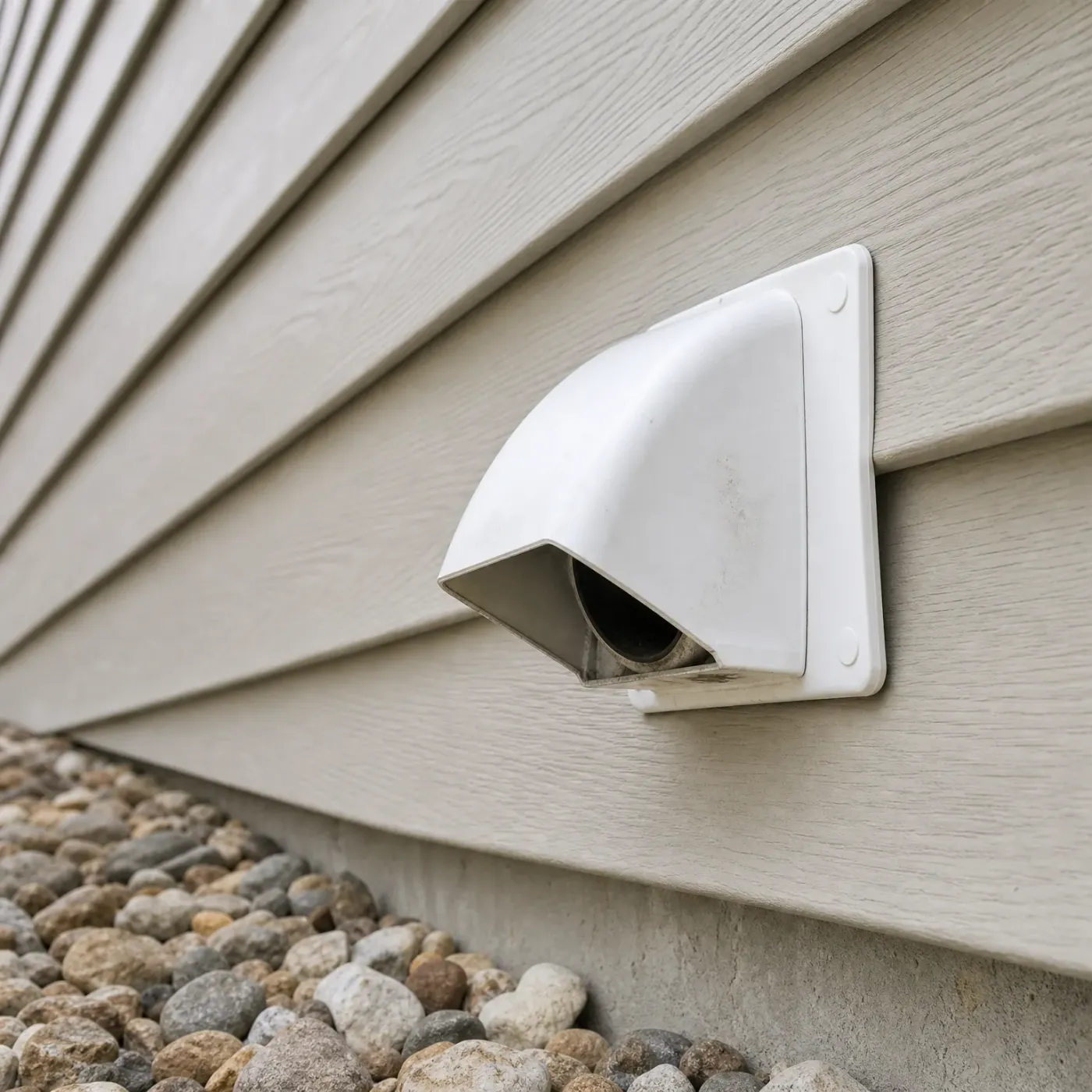
Here the flap can't close. Gray lint has packed in around the opening and built up until it props the cover open all the time. Every load through this vent is adding to what's already stuck there.
Open the dryer door right after a cycle and feel the inside of the door glass or the drum. If it's hotter than usual, air isn't moving through the way it should. Touch the vent hood outside while the dryer runs. Warm air should be pushing out steady. If you feel almost nothing, or just a weak puff, lint is sitting somewhere between the drum and the hood. Check the lint trap screen too. If it feels coated even after you pull the lint off, a film is building up that a quick wipe won't fix. Left alone, this is more than a slow dryer. A blocked vent traps heat inside the duct, and that heat has nowhere to go but back into the dryer and the room around it.

It's a little past seven and you're still in your work clothes, standing in the laundry room with a heap of towels on top of the dryer that should've been done an hour ago. You'd started them before dinner, figuring you'd fold while something simmered. Instead you pulled them out damp, ran them again, and now here they are the second time, still warm but not dry, smelling faintly like a wet basement. The room itself feels thick, almost sticky, the way it does in a Hackensack July when the windows won't help. You press a hand into the pile. Still damp. You look at the dryer, then at the clock, and start over.
At 2.68 people, most houses here keep a load going most days. A vent that's partly blocked turns one dryer cycle into two or three, and with that many loads a week, the extra time and the extra heat in the room add up fast.
ACS 2020-2024


Put the signs together and they tell one story. Heat that should leave the house is staying in the duct, and the dryer is working harder to push air through a space that's narrower than it should be. That's why clothes come out hot but damp, why the laundry room holds more warmth than the rooms around it, and why a load that used to finish in forty minutes now needs a second or third run. The burnt smell is lint sitting closer to the heating element than it should, because airflow isn't carrying it out the way it's supposed to. Outside, the hood tells you the same thing from the other end. A vent that's clear lets the flap swing open wide and drop shut the moment the cycle ends, no hesitation either way. A vent that's packed barely moves it, or doesn't move it at all. Loose screws on the cap are worth checking too. Vibration works them loose over time, but a cap that's already struggling against built-up lint shakes harder and loosens faster. None of these signs show up alone for no reason. They show up together because they're all downstream of the same blockage, air that isn't getting from the drum to the outside the way it was designed to. Catch two or three of these now and you're looking at a cleaning. Ignore all of them and you're looking at a dryer that's working harder every single load.




It's off your list after this
Answer a few questions about the dryer vent cleaning and skip the search.
