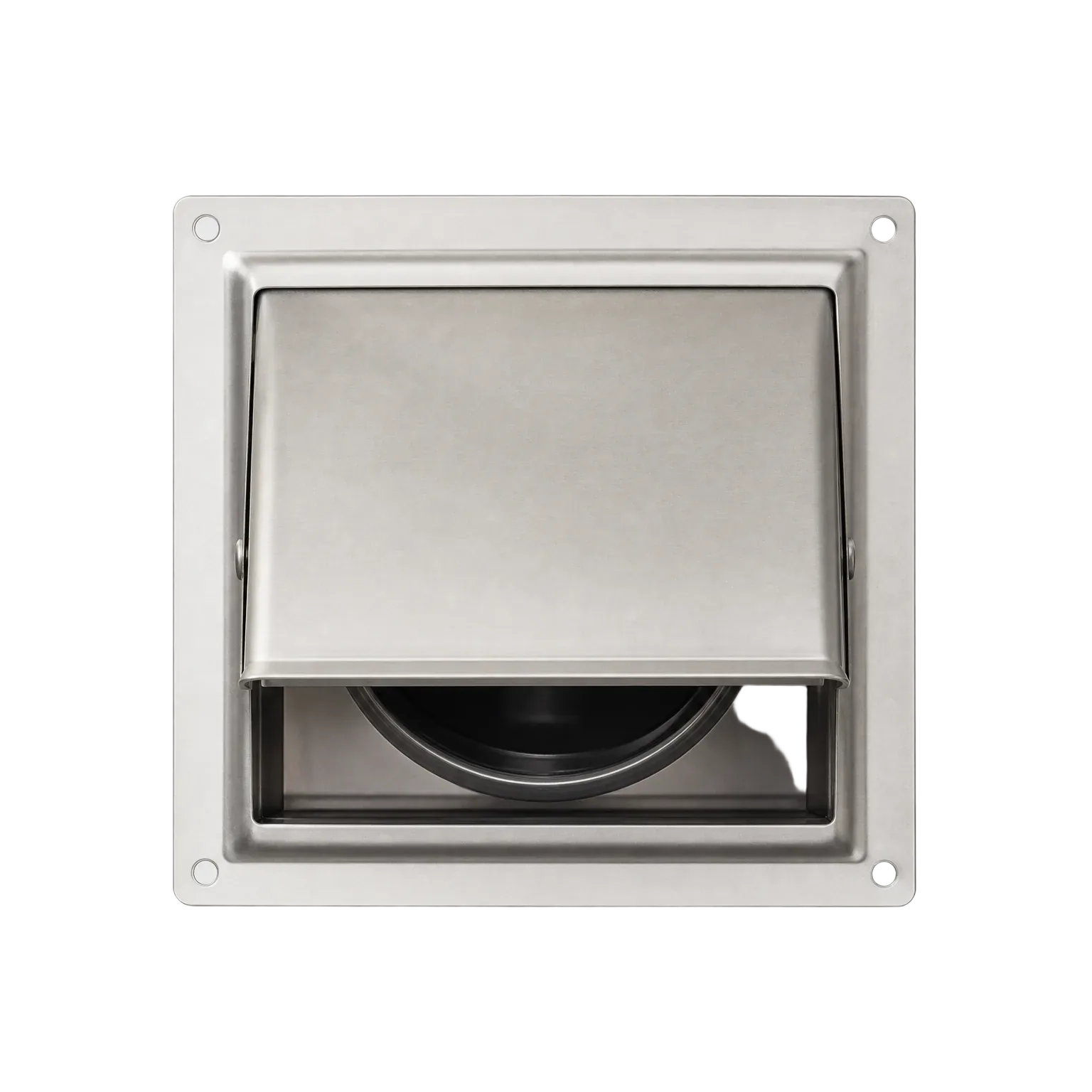

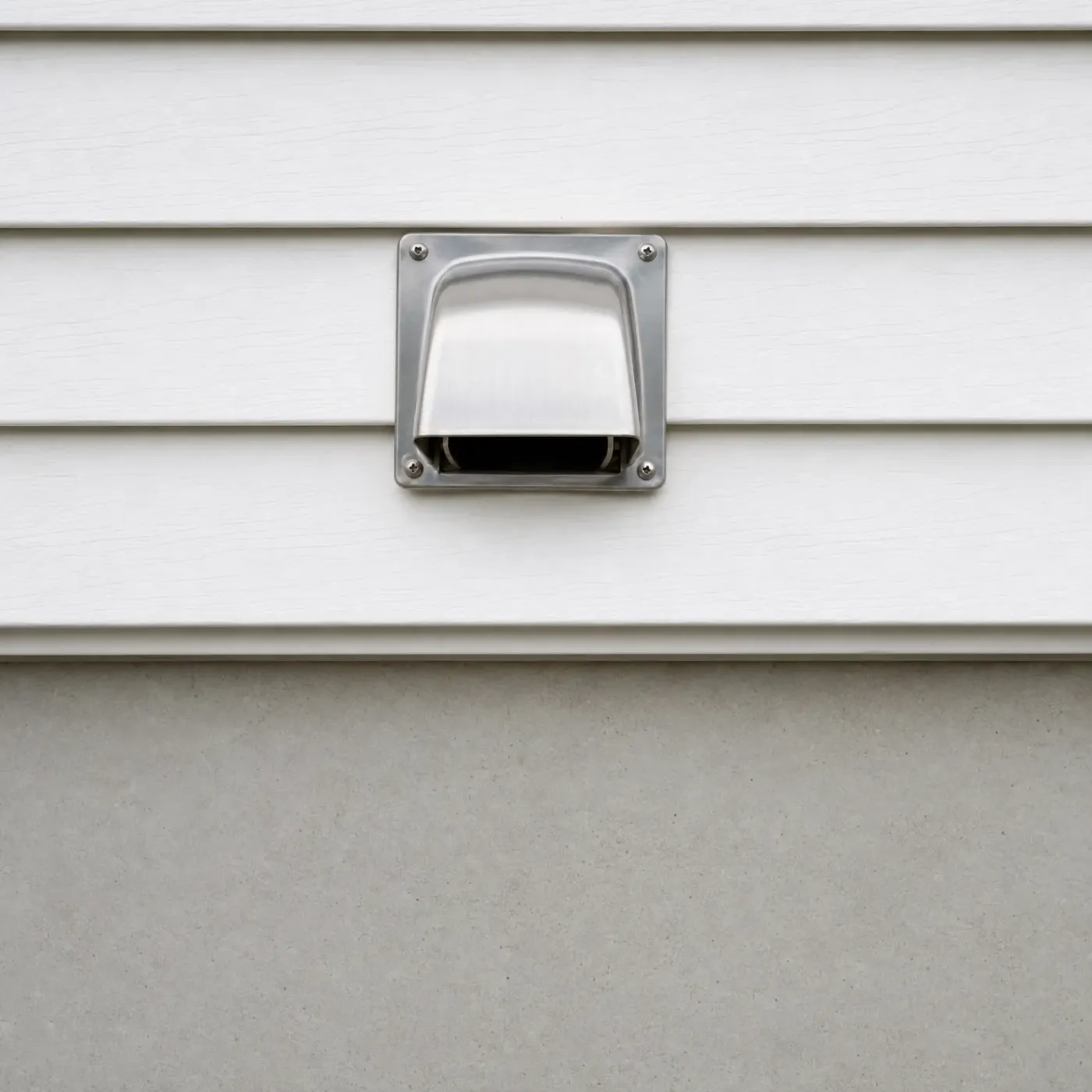
A vent that's clear
This is what the outside cap should look like. The louvers sit open, the flap moves freely, and air pushes straight out every time the dryer runs. Nothing collects here because nothing slows the airflow down.
Yes, a clogged dryer vent is a real fire risk, and it's one of the more common causes of house fires tied to a single appliance. Lint builds up inside the vent and around the drum housing, and it burns easily once the heating element sits next to it long enough. A clogged vent also traps heat and moisture inside the dryer itself, which makes the motor and heating element run harder than they're built for. In New Jersey, summers get humid, and clothes already take longer to dry in that air. A vent that's partly blocked makes drying times stretch even further, so the dryer runs longer and hotter on every load, all summer. You'll usually notice the signs before anything serious happens: clothes coming out hot to the touch, a burnt smell, or the outside vent hood barely moving air when the dryer runs. Those are worth paying attention to, since they mean lint has already built up somewhere in the line.




A dryer does not just tumble clothes. It pushes hot, damp air through the drum and out a duct to the outside. That duct is supposed to be a clear path. Lint rides along with the exhaust, and some of it sticks to the inside of the duct instead of blowing clear. Every run after that passes more hot air over the same spot, and the buildup grows. Once enough lint packs in, the air has nowhere to go but back toward the drum and the heating element. That's the part that gets dangerous. The dryer senses the load isn't drying, so it keeps running, which means more heat cycling through a duct that's already restricted. On a gas dryer, the burner and igniter sit right next to that airflow. A clogged duct with nowhere to vent puts hot air and trapped lint close to an open flame, inside a space that was built to carry air out, not hold heat in.

It's past seven on a Tuesday and you're still in your work clothes, pulling the third load out because the towels came out damp again. You reload them, bump the dial back to high, and head upstairs to start dinner. The air in the laundry room feels warmer than it should, thick the way it gets here in August, and the dryer's been running almost an hour for one load. You picture the vent hood outside, the flap that's supposed to swing open and shut with each cycle, and wonder when you last looked at it. A contractor who services vents all over New Jersey would know in a minute why this load won't dry.
Your dryer vent cleaning request goes to one local pro.
No fee to send it, and nothing to sign.
A gas dryer pushes exhaust close to 135 degrees out through that vent on every cycle. That heat has somewhere to go when the vent is clear. When lint has narrowed the path, the same heat has less room to move and lingers longer against the duct walls and the lint sitting there. Run several loads back to back, the way most households do on a weekend, and that heat stacks up load after load instead of clearing between them. Gas dryers add moisture to that exhaust too, which keeps the lint damp enough to cling to the inside of the duct rather than blow through it. That combination of trapped heat and clinging lint is what turns a vent from a drying problem into a fire problem.
Drying times are the clearest signal a vent is giving you before anything worse happens. A dryer venting properly will finish a normal load in one cycle. When it takes two or three cycles to get the same load dry, the vent isn't moving air the way it should, and heat that would normally exhaust outside is staying in the duct and the drum housing instead. The outside hood tells you the same thing from the other end. Stand outside while the dryer runs and you should feel a strong, steady push of warm air. A weak stream, or one that stops and starts, means lint is sitting somewhere between the drum and that hood.



This is what the outside cap should look like. The louvers sit open, the flap moves freely, and air pushes straight out every time the dryer runs. Nothing collects here because nothing slows the airflow down.

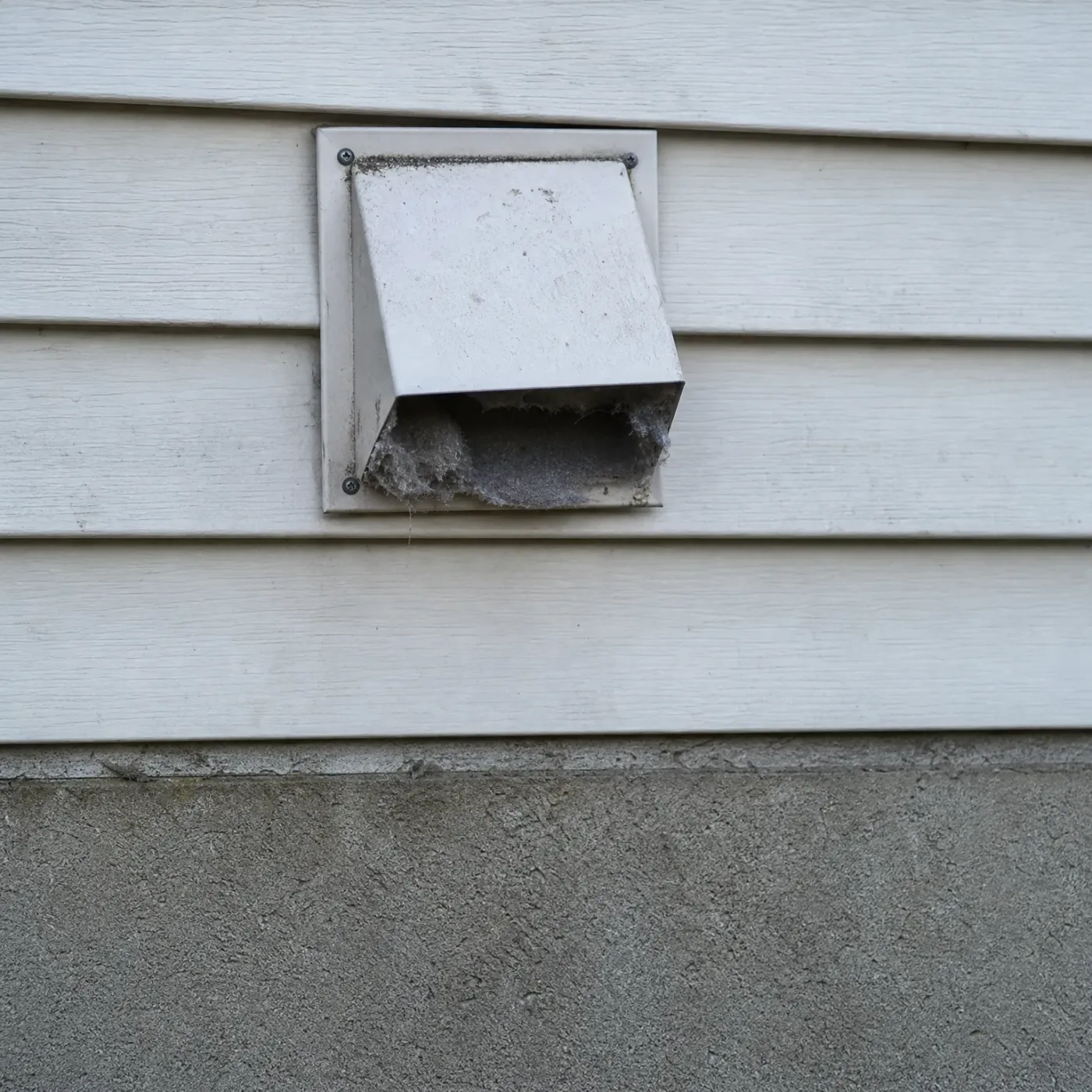
Lint has built up across the opening and the flap can't close. Every load adds more to what's already stuck there, and the exhaust that should be pushing outside is now backing up against it instead.


At 22.48 cents per kilowatt-hour, a dryer already costs more to run here than in most states. A clogged vent makes it work harder and run longer to dry the same load, so that rate hits you on every cycle until the vent is clear.
EIA-861 2025 statewide residential average
A clogged dryer vent is a fire risk, plain and simple, and nothing about New Jersey changes that fact or softens it. The mechanism is heat with nowhere to go. A gas dryer pushes exhaust near 135 degrees through that vent on every cycle, and lint sitting in that path is what catches. The higher electric rate here means a blocked vent also costs you more to run, cycle after cycle, but that's the secondary problem. The one that matters is what happens when the airflow stops moving the way it should.
You can check your own vent against what a clear one looks like: louvers open, flap swinging freely, nothing caught at the hood. If yours doesn't move like that, or your loads have been taking longer than they used to, that's the vent telling you something.
Getting it cleared is a straightforward job for someone who does it regularly, and that's who you'd be matched with. A contractor working on vents like yours all season knows where lint tends to pack in, whether that's a long run, a tight elbow, or a fitting that collects more than most. You'd hear from one licensed, local contractor, not a handful of them competing for your callback. That's a smaller, calmer version of the same decision you'd make yourself if you had the time to crawl behind the dryer and check the line end to end.

A pro who works on dryer vents



