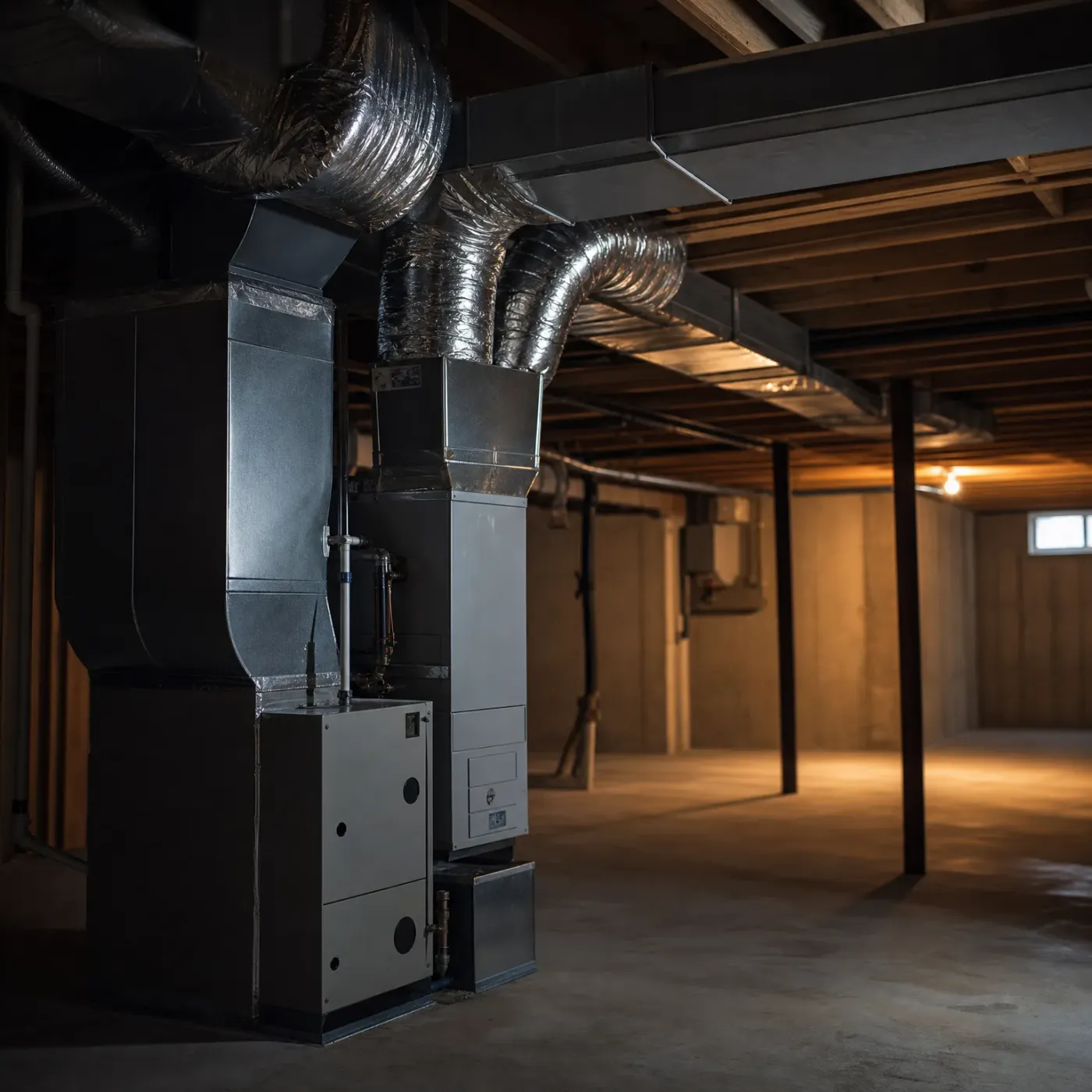
Get matched with a duct system pro in Bergen County
Musty smell from vents in Hackensack, NJ
A musty smell from your vents usually means moisture is sitting somewhere in the duct system, and with Bergen County summers as sticky as they get, that moisture has plenty of chances to build up. This page gets into what's likely growing in there and what cleaning it out involves. Answer a few questions and a contractor who handles duct cleaning in the Hackensack area will reach out to you directly.
Find my proThat musty smell is mold or mildew growing somewhere in the duct system, usually on a coil or in a section of duct that stays damp. The most common spot is the evaporator coil inside the air handler. Every time the AC runs, that coil gets cold enough to pull moisture out of the air, and that water is supposed to drain away. When it doesn't drain right, or when condensation collects on nearby duct walls instead, you get a damp surface sitting in the dark for hours at a stretch. Mold needs exactly that. With how sticky summers get in Hackensack, the coil is working hard and producing a lot of condensation most of the season, which gives mold more chances to take hold than it would somewhere drier. The smell means spores and mold are being pushed into the air you breathe every time the system kicks on, not just sitting out of reach in the ducts.
Why does this keep coming back in a Bergen County house?
Half the homes here were built by 1960
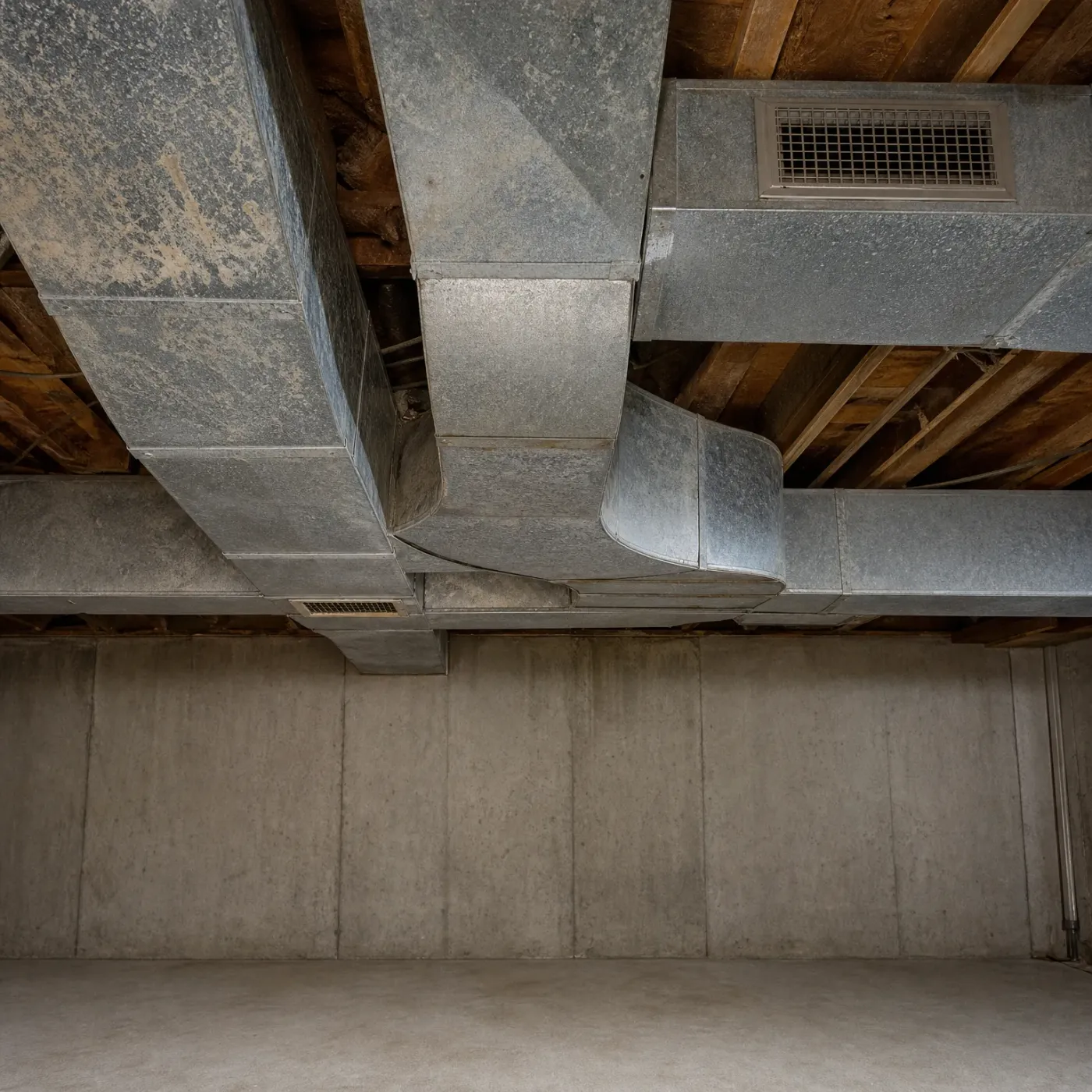
Half the homes here were built in 1960 or earlier. Older duct runs have had decades to develop seams and damp spots where mold settles in and stays.
Heat runs October through May
Heat runs October through May here, about eight months a year. The furnace moves air through those same ducts for most of the year, carrying the smell with it.
Cooling runs June through August
Cooling runs June through August. That's when the evaporator coil stays wet the longest and the smell is usually at its worst.
ACS 2020-2024 · NOAA nClimDiv 1991-2020




Is the smell coming from the coil or the ducts
Smell from the coil
- The evaporator coil sits inside the air handler and gets wet every time the AC runs, so mold growing there sends smell through every vent in the house at once.
- You will usually notice it strongest right when the AC kicks on, since that first blast of air is pulling straight across the wet coil.
- A technician can confirm this one by pulling the access panel and looking at the coil fins directly.
- Cleaning the coil itself takes care of the source; duct cleaning without it leaves the mold free to reseed the ductwork.
- This smell tends to ease up or disappear once heat season starts and the coil stays dry for months at a stretch.
Smell from the ducts
- Older duct runs, especially the sheet metal common in Bergen County homes built in 1960 or earlier, develop seams where condensation collects and never fully dries.
- This smell often shows up no matter which system is running, heat or AC, because the mold is sitting in the duct itself rather than on a coil.
- It can be stronger in some rooms than others, depending on which duct runs have the damp spots.
- A camera inspection of the ductwork will show visible growth or standing moisture that a coil check would miss.
- Duct cleaning addresses this directly, since the moisture and growth are inside the duct walls and branches rather than at the air handler.

The sun's been up for hours by the time you notice it. You're in the living room, coffee in hand, and the light coming through the window is hitting the ceiling vent just right, showing a layer of dust on the grille you hadn't clocked in months. It's on the side table too, and along the top of the picture frame below it. The AC hasn't kicked on yet this morning, but you can still catch that faint musty edge in the air, the kind that's easier to smell first thing before the house wakes up. You make a note to deal with it before summer gets going in earnest.
Find a duct system cleaning pro in Bergen County
A duct system that stays damp from May through the muggy months doesn't dry itself out once the mold's taken hold in there. Running the AC less, or wiping down the grilles, won't touch what's growing on the coil or sitting in a duct seam. That needs someone in there with the right equipment, cleaning the coil and the full run of ductwork, not just the parts you can reach from a stepladder. Hackensack houses that smell musty in July usually smell the same way next July if nothing changes. Getting a contractor out to look at it now means one less thing sitting on your list through another sticky summer and another cold stretch of furnace use. You send the request once, and from there it's on the contractor to reach out and get it handled, not on you to track down who's available and when.

Why it moves through the ducts instead of staying put
Mold needs standing moisture and something to feed on, and duct lining and the dust sitting on it give it both. Once a colony is established on the coil or in a damp seam, the system's own airflow is what spreads it. Every time the blower starts, air pulls across that spot and carries spores and the smell through the supply ducts into every room with a vent. That's why you smell it in the bedroom and the kitchen at the same time, not just near one register.
Wiping a grille or swapping a filter cleans a surface the air passes by on its way out, not the source. A cleaning crew works the other end: the coil, the plenum, the runs themselves, wherever moisture has let something take hold. Getting matched with a contractor who's handled Bergen County duct systems means someone can tell you which of those spots is actually the problem in your house, instead of you guessing at it room by room.

Power here costs 24.67 cents per kilowatt-hour
At 24.67 cents per kilowatt-hour, running the blower longer to chase a smell adds up fast. A clogged, damp duct system makes the fan work harder to push air through, and that extra draw shows up on the bill before the smell ever clears.
EIA-861 2025

A technician inspects every supply and return line with a camera.
Negative air pressure gets applied to pull debris toward the vacuum.
Agitation tools knock mold and dust loose from duct walls.
The evaporator coil and air handler get cleaned separately.

What are you noticing when the air kicks on
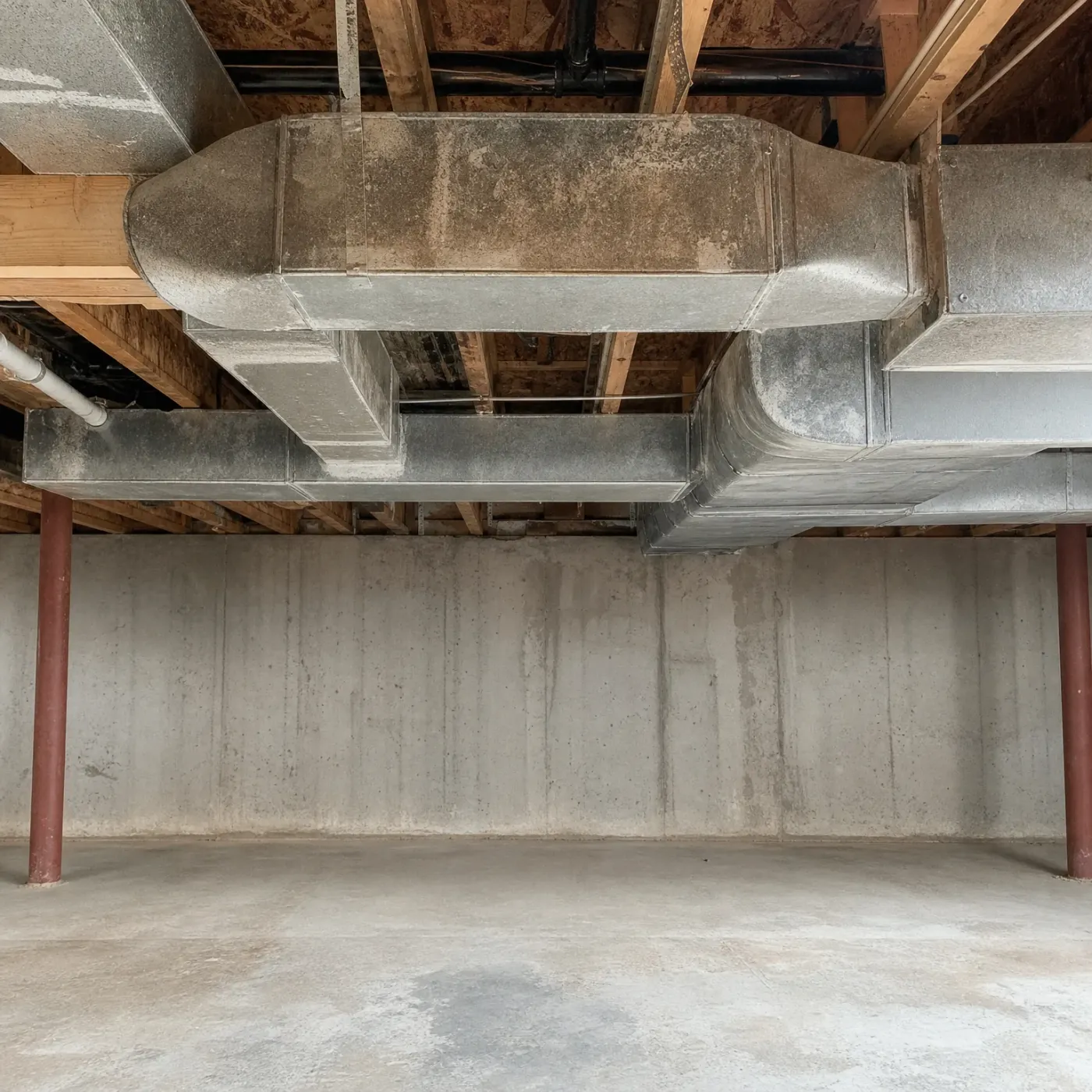
You probably catch it most near the return, or right when the thermostat clicks the system on and that first wave of air hits you. Some houses it's faint, just an earthy edge under everything else. Some houses it's strong enough that you've stopped using a room or started keeping a window cracked even when it's muggy out. You might see dust around the grille that looks darker or damper than normal dust should. If anyone in the house has allergies or asthma, you may have noticed symptoms getting worse indoors than out, which is usually the first sign that what's growing in the ducts is doing more than just making the house smell off.


Where this leaves you
- A musty vent smell almost always traces back to mold or mildew sitting on the evaporator coil or in a damp duct seam.
- The smell keeps coming back on its own because the moisture and the dust feeding the mold are still in the ducts.
- A camera inspection shows exactly where the mold and debris sit before any cleaning starts.
- Negative air pressure and agitation tools pull loose debris and mold out of the duct walls and coil.
- Once the ducts and coil are cleaned out, the vents stop pushing that smell through the house.
- Sending the form is the only step left on your end; from there, finding someone to handle it is off your plate.
The smell from your vents has a cause, and it's one a camera finds and a cleaning removes. Mold sitting on the coil or in a damp duct seam doesn't go away because you ran the fan less or swapped the filter. It sits there, fed by the same moisture and dust that let it start, and every time the system runs it pushes that smell through the house again. A thorough cleaning changes that. Once the coil and duct walls are clear of what's growing on them, the air moving through your vents isn't picking anything up on the way.
That's the whole picture. A Bergen County duct system holds onto moisture through the humid months, older homes here have had years for seams and damp spots to form, and once mold takes hold it spreads through the ductwork on its own airflow. None of that gets fixed by waiting it out. It gets fixed by someone going through the system, finding where the mold sits, and pulling it out.
From here, the only thing left on your end is sending the form. You're not the one who has to track down who's available or whether they do this kind of work. That part is off your plate the moment you send it, and what comes next is someone reaching out who already knows what you're dealing with.
Get your ductwork to the right pro