

Ductwork doing its job
This is what a sealed run looks like. Joints are tight, seams are banded, and every bit of air the blower pushes out makes it to a register instead of the basement. The furnace runs its cycle and shuts off.
Get matched with a Bergen County pro who cleans ducts.
Match me with a proLeaky ductwork usually shows up as rooms that never feel right. One bedroom stays warm in January while another runs cold, even with the thermostat set the same for the whole house. You might notice the attic or crawl space feels strangely warm in summer, which means cooled air is escaping into a space nobody uses before it ever reaches a vent. A duct system loses air at the seams, the joints where sections connect, and at the boot where the duct meets the floor or ceiling register. Those connections loosen over the years, or were never sealed well to begin with. With Bergen County summers getting sticky and winters running cold, a system has to work hard both seasons, and air lost along the way means the furnace or AC runs longer to make up for it. If your energy bills have climbed without a clear reason, or dust seems to collect fast near certain vents, leaky ducts are a common cause worth checking.




Half the homes here were built by 1960
Half the homes in Bergen County were built in 1960 or earlier. Ductwork that old has had decades of joints and seams to work loose.
Heat runs October through May
Heat runs about eight months a year here, October through May. That's eight months of expansion and contraction pushing on every seam.
Cooling runs June through August
Cooling runs June through August. Three more months of ducts moving the other way, straining the same connections twice a year.
ACS 2020-2024 · NOAA nClimDiv 1991-2020
Ductwork fails at the joints, not in the middle of a straight run. Every seam where one section meets another, every spot where a branch line splits off the trunk, is held together with mastic, foil tape, or screws. Any of those can loosen over years of the system heating up and cooling down. Once a seam opens, the duct does not stop moving air. It just starts losing some of it along the way. A supply duct running through the attic or crawl space will dump warm or cooled air into that space instead of the room it was built to reach. You paid to condition that air, and it never made it to you. A return duct works the other way around. Since it is pulling air back toward the furnace or air handler rather than pushing it out, a leak there pulls in whatever air is sitting in the attic or crawl space, dust, heat, moisture, and mixes it into the air going through your house. Where the leak sits matters too. A gap right at the trunk line near the furnace affects every room downstream of it, while a leak on one branch only shorts the room that branch feeds. Flex duct has its own weak point, the metal collar clamped around a vent boot or trunk connection, which works loose well before the duct material itself gives out.


You probably already know which room never feels right. Maybe it's the one over the attic duct run, warm in winter and stuffy in summer no matter where the thermostat sits. That's usually not the room, it's the duct feeding it losing air before it arrives. Watch the gas bill too. If it's crept up without you changing a single setting, the furnace is working longer hours to cover for air that never reaches the vents. Dust is another tell. Changing the filter should buy you some clean weeks, and if the sills and furniture are coated again within days, a return duct may be pulling air from the crawl space or attic instead of the rooms you live in. If the system seems to run constantly in mild weather, or the house stays humid through a sticky summer even with the AC working hard, both point the same direction: air leaving the ducts before it does its job. A musty smell near ductwork in the basement or crawl space often means the same seams are letting out moisture along with the air.


Skip searching for someone who cleans ducts in Bergen County.
Asking costs nothing, and the choice to hire stays yours.

A blower only has so much push behind it. When a seam opens up partway down a run, some of that pushed air escapes into the attic or crawl space instead of reaching the register. The furnace or AC has no way to tell the room fell short, so it just keeps running on the thermostat's signal, pulling more gas or more power to chase a temperature the air never delivers.

Cleaning clears dust and debris off the inside walls of the ducts, which is worth doing on its own. It does not touch a seam that has pulled apart or a joint that was never sealed well to start. A contractor doing a cleaning can tell you what they saw and whether a line is leaking, but closing that gap is a separate repair with mastic or foil tape, not part of the cleaning itself.
At 24.67 cents per kilowatt-hour, every bit of conditioned air that leaks out of your ducts before it reaches a register is money the blower already spent. A central AC pulling that power through leaky supply runs costs more to deliver the same cooled house.
EIA-861 2025
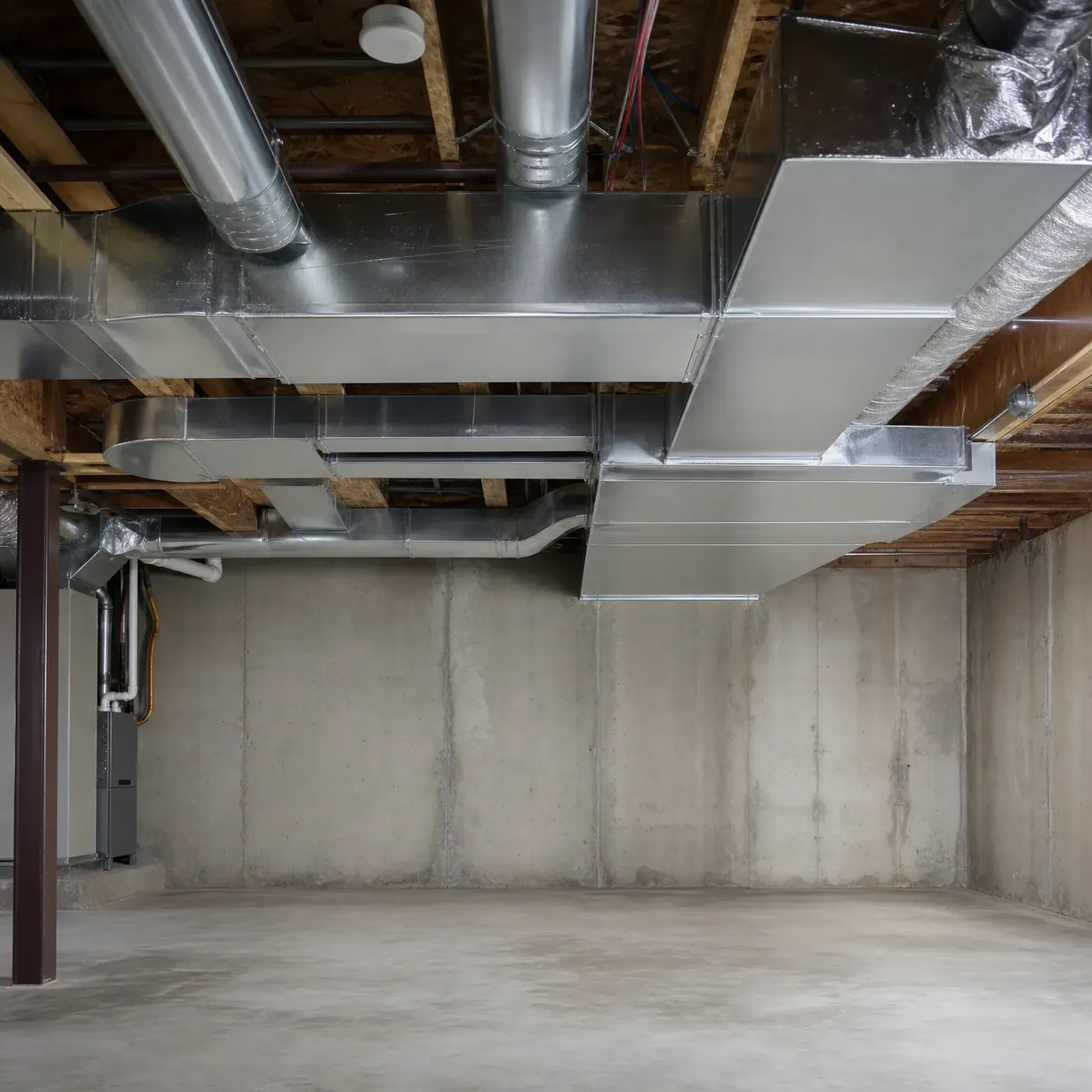
This is what a sealed run looks like. Joints are tight, seams are banded, and every bit of air the blower pushes out makes it to a register instead of the basement. The furnace runs its cycle and shuts off.
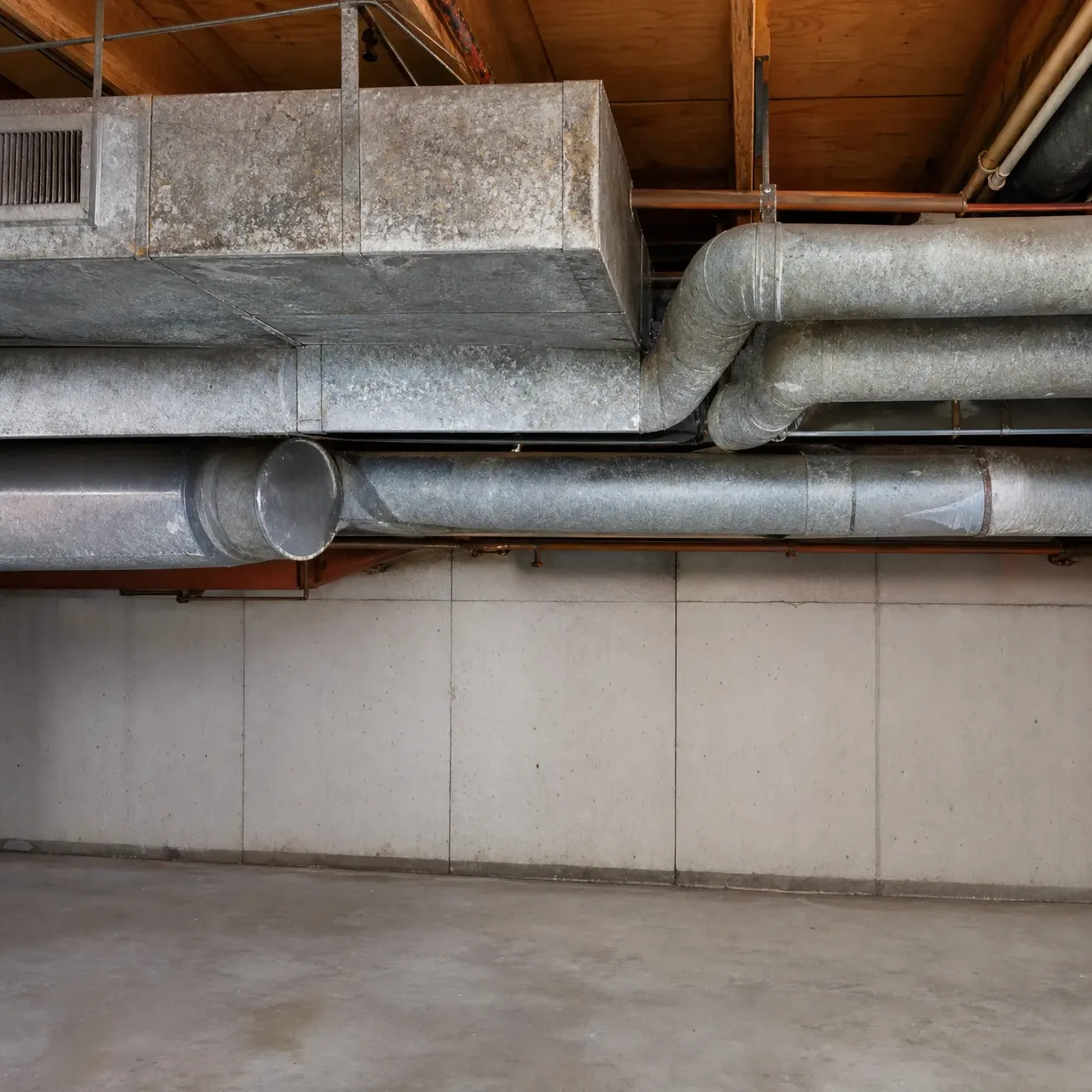
Here the runs sag and the seams have opened at the joints. Conditioned air is spilling out under the floor joists before it reaches a single room, and the furnace or AC keeps running to make up for what it's losing.
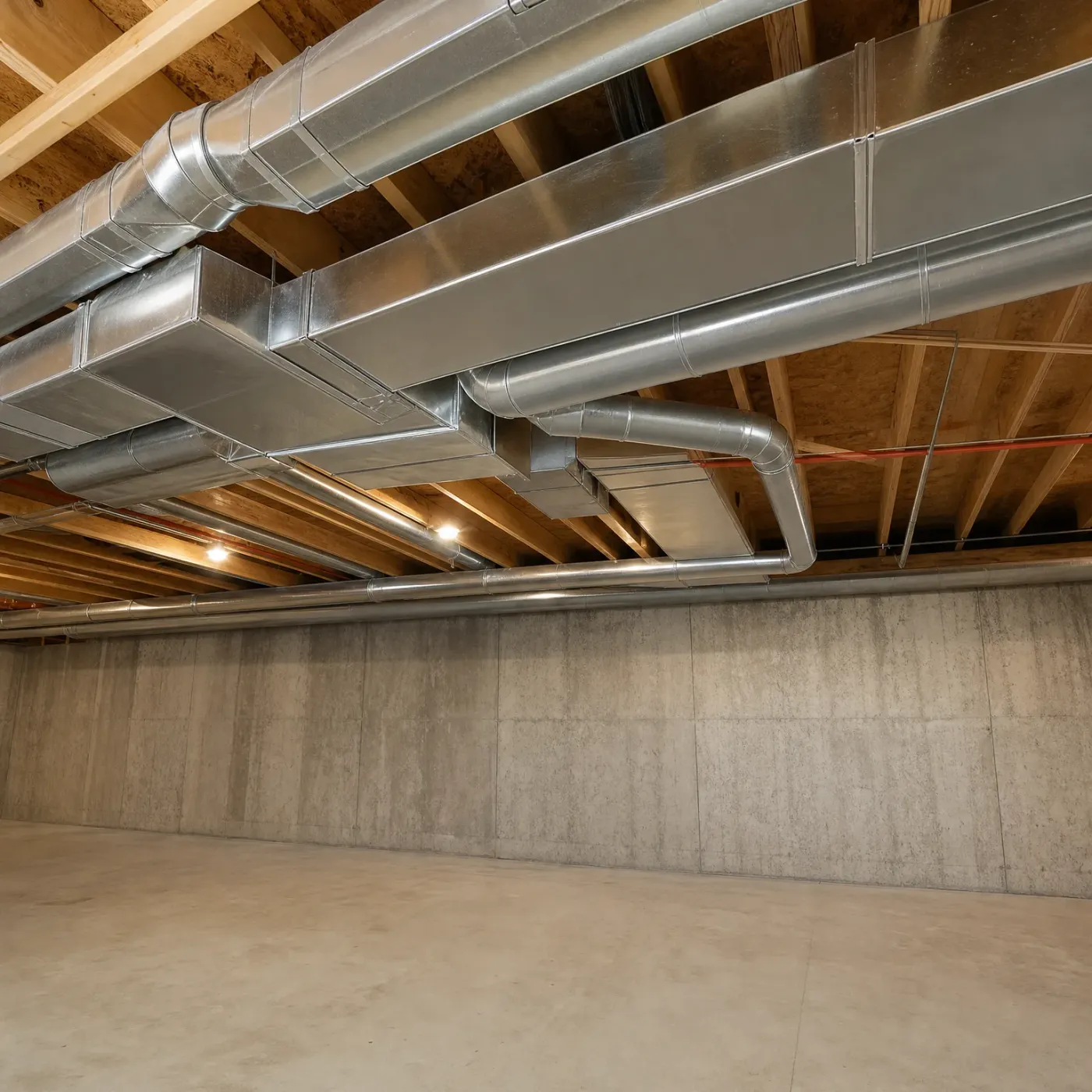
This is what sound ductwork looks like in a basement: round and rectangular metal runs still bright, joints tight against the joists. Air the blower pushes out travels the full run and lands in the register. No dust ring at the seams, no dark streaks on the metal.
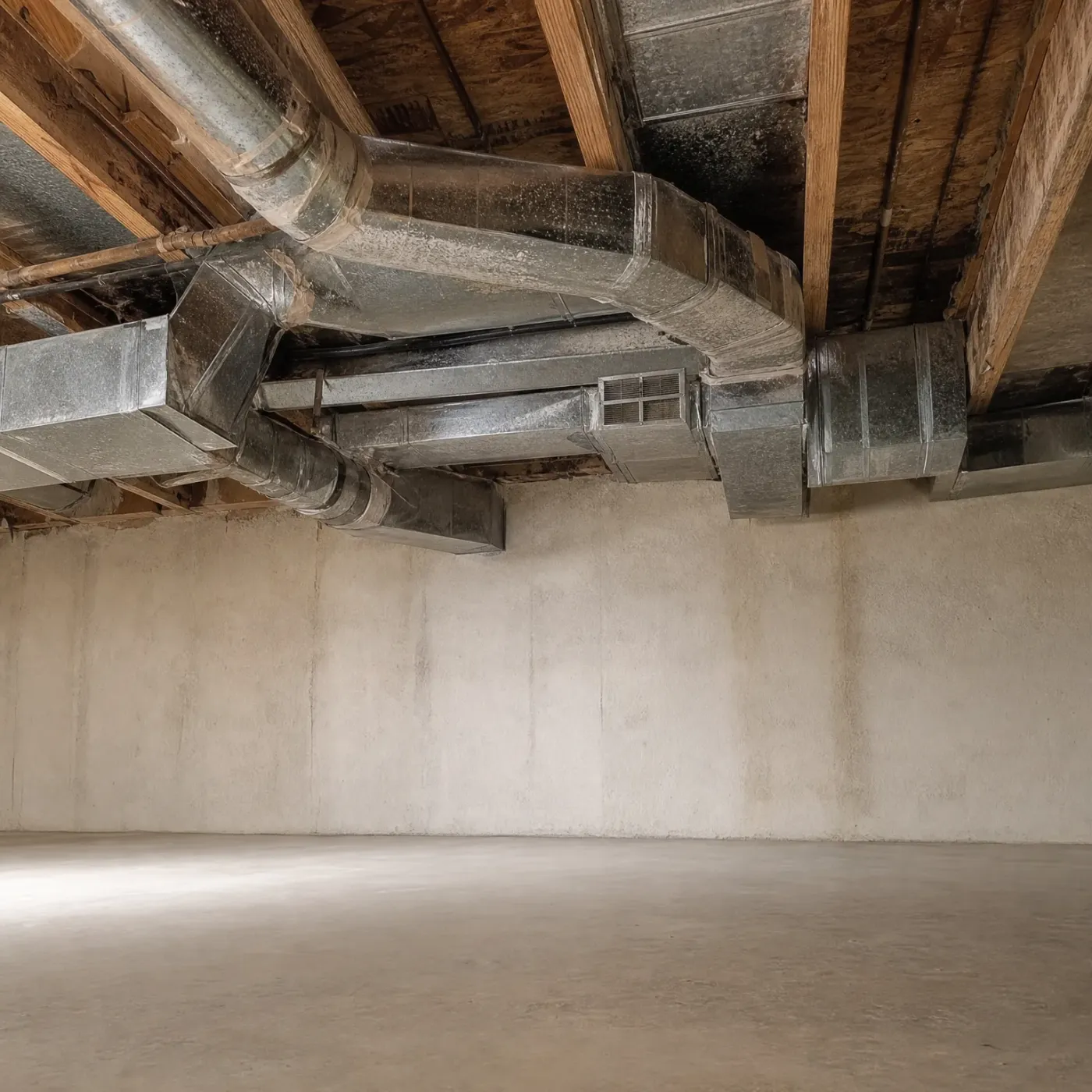
Dust and dark discoloration along the seams here mean air has been forcing its way out at those joints for a while. Every bit that escapes into the basement is air your furnace or AC paid to heat or cool and the room it was meant for never gets.

A room that won't hold temperature, a gas bill that climbs for no reason, dust around a seam in the basement. Any one of these in a Hackensack house points at the same thing: air leaving the ducts before it reaches where it's supposed to go. The furnace or the AC keeps running longer to make up for what's lost, and the house still doesn't feel right.
Checking a joint by hand or watching the bill tells you something is wrong. It doesn't tell you which runs are leaking or how bad the seams are behind a wall or under the insulation. That part takes someone who can get into the attic and crawl space and look at the whole system, not just the parts you can reach. Finding a contractor who does duct work, not just furnace repair, and getting them out to look is the part most homeowners don't want to spend their evening on. That's the step this page can take off your hands.


Skip searching for a duct system pro and answer a few questions instead.